

UNAIR NEWS – Higher education on public health is still developing. In this global era, a guarantee from the university that its graduates will be employed and acknowledged in the professional fair or in the community. Thus, public health curriculum adjustment is needed.
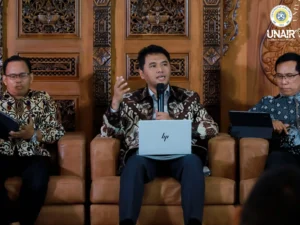
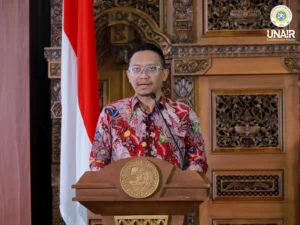
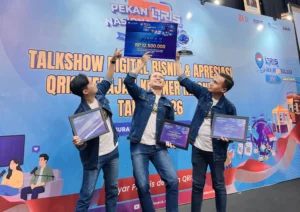
This idea was conveyed in a national workshop Pendidikan Kesehatan Masyarakat di Indonesia Masa yang Akan Datang(Indonesian Public Health Education in the Future). The workshop was held by Faculty of Public Health (FKM) UNAIR in cooperation with Indonesian Public Health Higher Education Association (AIPTKMI) and Indonesian Public Health Expert Association at Swiss-Bellinn hotel on Saturday, February 27 and attended by the members of AIPTKMI and IAKMI.
According to the Dean of FKM UNAIR, Prof. Dr. Tri Martiana, dr., MS, public health education curriculum adjustment is needed to meet the challenges of public health graduates.
“In Public Health, there are many majors such as Sanitation, Environmental Health and Occupational Safety and Health (K3). We used to concentrate in our S1 degree before, now we concentrate in our master degree (S2). For example, a Midwifery bachelor wants to continue S-2 majoring Mother and Child Health. The concentration is existing in Public Health Sciences but not all university has the program. Thus we need the adjustment,” said the Dean of FKM UNAIR.
For the curriculum adjustment, not all university with Public Health education have similar ability. Therefore, FKM UNAIR lecturers should supervise universities which need the adjustments. One way to do it was by conducting the workshop.
How about developing the concentration into an established program? According to Prof. Tri, there are many thing required before establishing a program. The university has to meet the requirements such as lecturers’ quantity, practical equipments, and lecturing classrooms. In FKM UNAIR itself, there is some more adjustments needed before the concentration becomes a program such as the lecturer-student ratio. (*)
Author: Defrina Sukma S