

UNAIR NEWS – The success of development is a post-independence challenge. Meanwhile, the success of development is determined by the health quality of the citizens. For this reason, the right of citizens to live healthy must be fulfilled. One way to achieve it is by inhibiting preventable diseases through vaccination.
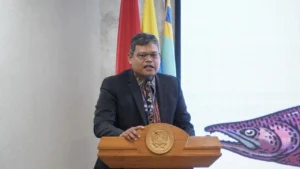
According to Nur Hasmadiar, a master student of Health Policy and Adminsitration, Indonesian citizens have not been fully aware of the importance of vaccination. This situation is exacerbated by the distribution of information in social media that is not supported by scientific facts. In fact, a number of diseases such as polio, measles, and hepatitis can be prevented by vaccination.
“The issue now is about vaccination. Many people refuse because they say it is haram and other reasons that do not make sense. Whereas immunization is a right of the child and must be given. It has been proven halal and other religious countries also require the public to be vaccinated, “said Diar.
Vaccination works to protect the body against certain viruses. When a person’s body has been vaccinated for polio, then the body’s system will have immunity to withstand the polio virus attack.
In addition, vaccination is also provided to prevent dangerous diseases. It is indicated by their attack to the body, they pose a risk of disability and even death.
“In the era of Healthcare BPJS (Social Security Agency), the country could lose money because it costs a lot to cover the spending for the treatment of the disease. In fact, it is clear that the cost of vaccination is much cheaper than treatment, “said the student who has a research collaboration with the academics in Brunei Darussalam.
Then, what is the solution? Diar said that Indonesia should increase the number of people with scientific literacy. Information literacy can start from yourself, UNAIR students, and the people closest to you.
“Do not get carried away easily. We should calm everything down when there is a problem in the community, “he said.
On the 72nd anniversary of Indonesia, Diar then hoped that the prosperity of the people is achieved with the distribution of health services to the outer regions.
Author: Defrina Sukma S
Editor: Binti Q. Masruroh