

UNAIR NEWS – The great number of motorbikes in Indonesia is followed by the high rate of traffic accidents. So, the number of cases with head and face trauma is quite high in hospital. At RSUD Dr. Soetomo, the cases reach 180-200 cases a year.
Unfortunately, the urgency of the head and facial trauma cases are not followed with skillful medical staffs. It was stated by dr. Indri Lakhsmi Putri, Sp.BP-RE(KKF). According to her, the late treatment or mistreatment on the case causes the patient treated improperly.
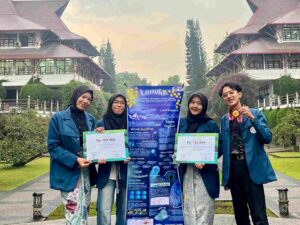
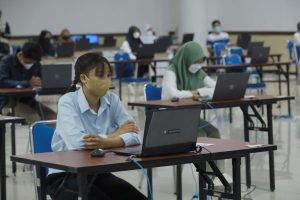
Therefore, to improve the comprehension and education of emergency medical staff on head and facial trauma, Department of Plastic Surgery with Department of Neurosurgery and Department of Anaesthesiology RSUD Dr. Soetomo – Faculty of Medicine (FK) Universitas Airlangga held a Multidiscipline lecture on “Head and Facial Trauma Emergency” in Universitas Airlangga Hospital on Saturday May 21.
“Generally, head and facial trauma needs quick treatment, while for some hospital, head and face trauma cannot be referred directly to a specialist. Therefore, medical staff in emergency room should be educated to minimize mistakes and lateness of treatment,” she said.
Zygoma Mozilla fracture
One of the topics discussed was on Zygoma mozilla fracture or mid-facial trauma. dr. Indri as an expert said that the number of cases in RSUD Dr. Soetomo was quite high, about a hundred cases a year.
“For mid-facial trauma, the treatment should not be given more than two weeks. If it was given more than that, the patient will have a risk for permanent damage. Once it happens, the treatment will be more difficult,” she said.
She hoped that through this multidicipline lecture, the medical staff will know more about various cases of head and facial trauma in various discipline. The case of head and facial damage is interrelated and complete integration of treatment is needed.
Furthermore, other important thing to consider in an emergency is life support. In most cases, first help in an accident was coming from untrained people. Not all of them knew how to give first help to casualty with head and facial trauma in accident. When they wanted to help, they could even worsen the injury.
From the condition, dr. Indri hoped that there will be a training program on life support to educate the community while the seminar like “Head and Facial trauma “ will be held annually. (*)
Author: Okky Putri Rahayu
Editor: Defrina Sukma S.