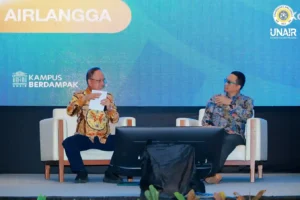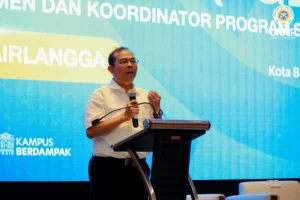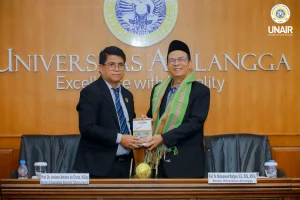


UNAIR NEWS – Universitas Airlangga Teaching Hospital on Saturday, March 3, held a One Day Course Training on the theme of ‘The Implementation of Antibiotic Resistance Control Program (PPRA) in Facing RS Accreditation (SNARS)’. The training was held in collaboration with National Committee of PPRA Indonesian Ministry of Health and PPRA Dr. Soetomo General Hospital. The event presented 3 speakers, dr. Hari Paraton, Sp.OG(K), Prof. Dr. Kuntaman, dr., Sp.MK(K)., and Mariyatul Qibtiyah S.Si, Sp.FRS, Apt.
The event held at Hall Dharmawangsa, 8th floor UNAIR hospital were attended by 60 trainees and started at 8 am. In the first session, moderated by dr. Khanisyah Erza, Sp. OG, Hadi explained the history of antibiotics, from its discovery to the current popular state now.
“Sir Alexander Fleming was the inventor of antibiotics. Antibiotics themselves in the community have been used to deal with infectious diseases widely in the world war. Unfortunately, Sir Alexander Fleming did not teach the correct use of antibiotics so there are many different ways of usage, “explained Hadi.
Hadi added that almost 60-70% of antibiotics used incorrectly causing normal flora or microbial genes in the body to die and they did not kill bacteria diseases. It will cause resistance to antibiotics consumed.
Antimicrobial resistance or AMR, Hadi added, will cause considerable problems such as failure of sophisticated and complex surgery, burdens of mordibility, mortality, and disability and excessive cost.
“Well brands stated to the point that bacterial resistance is not a health issue but also an economic problem. So, when we do not run PPRA, our money will run out for treatments. For example, poor countries will be burdened with higher costs because of high health costs with minimal income, “said Hadi.
In his explanation, Hadi provided an example of case of antimicrobial resistance infection which requires a 162-day treatment. In the World Health Organization(WHO) through its World Health Assembly (WHA) program there are 5 plans to regulate antimicrobial resistance. They are raising awareness and knowledge on AMR, strengthening monitoring and research, reducing incidence of infection, optimizing the use of anti-microbial drugs, and finally ensuring long-term investments through drugs, vaccines, new diagnoses.
“We hope that this training can raise awareness on High Quality Health Care and all components concerned with the PPRA program, understand and agree on AMR,” said Hadi at the end of the session.
Author: Hilmi Putra Pradana
Editor: Nuri Hermawan