

UNAIR NEWS – With several well-known and best universities in Indonesia, by 2020, Universitas Airlangga is expected to be among Top 500 world-class universities based on QS World Class University Rangkings (QS WUR). Therefore, in order to improve the rank and meet the target, UNAIR invited QS WUR to provide a better and more detail insights regarding the assessment of the prestigious ranking publisher.
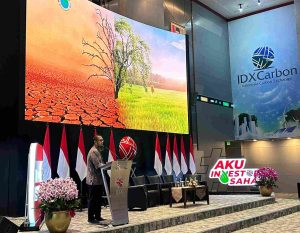
The event was attended by UNAIR Rector Prof. Moh. Nasih with the ranks of faculty, unit and institutes learderships. In his speech, Prof. Nasih said that UNAIR is in a very important moment as its QS WUR rank version was still far from the target, Top 500 worlds by 2020.
“Therefore, we must take advantage of this moment to achieve the target. At least we can enter the 600 world in 2019 and reach our goal of becoming the world’s 500 by 2020, “he explained.
Furthermore, Prof. Nasih also reminded that until now UNAIR and its elements have worked as well as possible. However, UNAIR’s position in 2018 is still ranked 750+.
“I hope this meeting can provide recommendations to achieve the target and become the Top 500 world universities,” he explained. “And of course someday we can all reach the next targets,” he added.
The event was moderated by the Head of the Planning and Development Board (BPP) UNAIR Prof. Badir Munir Sukoco, Ph.D. The representative of E Way Chong as Regional Manager of QS WUR was attending. On that occasion, he gave a presentation about the assessment component and how to optimize various aspects assessed by QS WUR.
“In this case, it is important to understand the stages and processes to achieve the target,” he said.
According to Mr. Way Chong, QS WUR uses several aspects in its assessment, from academic reputation, faculty student, scopus, employer reputation, international faculty, and international students. All of them have different percentage of composition.
“The highest is academic reputation with 40%, faculty student with 20%, scopus with 20%, employer reputation with 10%, international faculty with 5%, and international student with 5%,” he explained.
Furthermore, the regional manager who lives in Kuala Lumpur, Malaysia also explained that besides increasing these indicators to improve the rank globally, the next step that must be done by UNAIR is to improve H index of its scholars.
“Because it also becomes one of the important factors,” he said. “Then, student or staff exchange, international network research, student inbound are also the main indicators,” he added.
In the end, before entering the Q&A session, E Way Chong presented the excellences of QS WUR as a prestigious ranking institution in the world. He also showed some data and the advantages of media impact of QS WUR in several countries in the world.
Author: Nuri Hermawan