

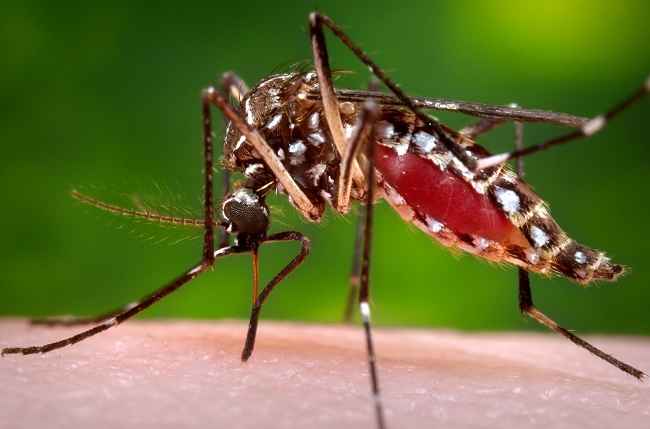
Dengue is a mosquito-borne disease caused by the dengue virus, affecting most tropical regions worldwide. According to dengue infection has been defined as dengue without warning signs, dengue with warning signs, and severe dengue. Therefore, dengue fever is more likely to be dengue without warning signs, however, a few cases of dengue fever may present warning signs. DHF will include dengue with warning signs, especially plasma leakage and severe dengue. It is estimated that between 50 and 500 million people worldwide are infected with dengue each year. Between 10,000 and 20,000 people die each year, and about two and a half billion people are in danger of infection. Recent figures have shown that 60% of the world’s population would be susceptible to dengue disease by 2080. According to this estimation, 10,000 people have died from dengue in more than 125 countries worldwide. Even though dengue deaths are 99% preventable, case fatality rates significantly greater than 1% have been recorded globally.
Dengue fever is one of the most severe and common health problems in Indonesia. Since 1968, the number of cases and the transmission of dengue fever have been rising. The government has implemented a variety of initiatives through a variety of programs to prevent the rise in incidence including preventive and promotive efforts. Preventive efforts can be described by instilling clean living habits (such as not littering, hoarding junks, and not allowing any containers to be the breeding ground for larvae). This activity is known as mosquito nest eradication (MNE). This approach, however, cannot appropriately recognize changes in prevalence
Dengue hemorrhagic fever (DHF) is one of the most widespread and deadly diseases in several parts of Indonesia. An accurate forecast-based model is required to reduce the incidence rate of this disease. Time-series methods such as autoregressive integrated moving average (ARIMA) models are used in epidemiology as statistical tools to study and forecast DHF and other infectious diseases. The present study attempted to forecast the monthly confirmed DHF cases via a timeseries approach. The ARIMA, seasonal ARIMA (SARIMA), and long short-term memory (LSTM) models were compared to select the most accurate forecasting method for the deadly disease. The data were obtained from the Surabaya Health Office covering January 2014 to December 2016. The data were partitioned into the training and testing sets. The best forecasting model was selected based on the lowest values of accuracy metrics such as the root mean square error (RMSE), mean absolute error (MAE), and mean absolute percentage error (MAPE). The findings demonstrated that the SARIMA (2,1,1) (1,0,0) model was able to forecast the DHF outbreaks in Surabaya City compared to the ARIMA (2,1,1) and LSTM models. We further forecasted the DHF cases for 12 month horizons starting from January 2017 to December 2017 using the SARIMA (2,1,1) (1,0,0), ARIMA (2,1,1), and LSTM models. The results revealed that the SARIMA (2,1,1) (1,0,0) model outperformed the ARIMA (2,1,1) and LSTM models based on the goodness-of-fit measure. The results showed significant seasonal outbreaks of DHF, particularly from March to September. The highest cases observed in May suggested a significant seasonal correlation between DHF and air temperature. This research is the first attempt to analyze the time-series model for DHF cases in Surabaya City and forecast future outbreaks. The findings could help policymakers and public health specialists develop efficient public health strategies to detect and control the disease, especially in the early phases of outbreaks.
Penulis: Rachmah Indawati
Informasi detail dari riset ini dapat dilihat pada tulisan kami di:
Mahmod Othman, Rachmah Indawati, Ahmad Abubakar Suleiman, Mochammad Bagus Qomaruddin, and Rajalingam Sokkalingam. Model Forecasting for Dengue Hemorrhagic Fever Incidence in Surabaya City Using Time-Series Analysis. Processes November 2022, 10(11), 2454. https://doi.org/10.3390/pr10112454