

UNAIR NEWS – True to be said that miner is the most dangerous job in the world, including sulfur miner in Mount Ijen crater, Banyuwangi, East Java. Besides having to take steep terrain to reach the crater, slowly but sure, their health quality is also at stake.
The portrait of the miners’ health at Mount Ijen crater is actually quite worrying. Considering that most of them do not wear proper self-protection equipment like mask or even safety respirator mask. They merely rely on a roll of wet cloth which they casually bite.
This technique is performed from one generation to another. The miners believe this technique is effective to protect the lungs as well as to avoid choking risk from the direct exposure to sulfur gas. Even though they believe this is safe, Retno Palupi, drg., M.Kes suspects this as the trigger for dental problems which are in fact encountered by most of the miners.
“They breathe in toxic gas every day for years, even reaching their oral cavity. Exposure to high sulfuric acid in sulfur can be a trigger for problems on teeth enamel. Consequently, miners’ teeth are typically troubled. Most of their teeth are experiencing erosion,” she said in the oration she delivered in the Open Doctoral Examination at Faculty of Medicine Hall (25/1).
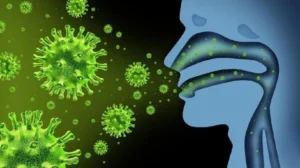
In medical definition, the term of tooth erosion means a gradual loss of the normally hard surface of the tooth due to chemical, not bacterial, processes. One of the high risk groups of having tooth erosion is sulfur miners.
In her research, Retno discovers a new finding which is the mechanism of sulfuric acid exposure in sulfur miners’ oral cavity. She proposes that one who is exposed to sulfur gas will face medium to high risk of tooth erosion. Consequently, erosion will happen and damage tooth enamel and soft tissue in the oral cavity.
Also, sulfur mining activity is still done traditionally, like breaking sulfur into pieces then carry the pieces in baskets on the shoulder. This technique definitely increases the possibility a miner is exposed directly to sulfuric acid in sulfur gas.
“High sulfuric acid in sulfur in fact contributes to tooth enamel damage and worsen tooth erosion. Therefore, preventive measures need to be taken by wearing a mask for nose and mouth protection,” she explained.
From months of observation in the location, besides experiencing tooth erosion, Retno also learns that the miners also suffer from osteoporosis, backache to muscular pain. In her opinion, the condition is affected by tooth erosion which they have had before.
“Each of these miners has to carry about 70 kg of mining result on their shoulder. No wonder that many of them complain of backache. Actually, however, there is a trigger factor where tooth erosion that they have causes calcium production downgrading in teeth. Consequently, the body must work extra harder to supply calcium, and this causes osteoporosis and other problems in their body later,” she said.
According to this born October 1974 woman, tooth erosion which becomes a problem for most of the miners requires special attention and proper treatment. Considering that dental health will affect physical condition all together.
As we all know, Mount Ijen is an active volcano which produces the most sulfur in Indonesia. The benefits of sulfuric acid in sulfur are used widely in chemical industries, from batteries, detergent, fertilizer, pharmacy to textiles. Nevertheless, on the other hand, sulfuric acid is bad for health.
For that reason, she argues that preventive measures need to be taken by doing some activities to promote health which involves the roles of regional government and local sulfur mine entrepreneurs.
“It is impossible for us to stop mining activity. Considering this activity has become the source of livelihood for the locals. What we can offer is preventive measures,” she proposed.
The locals also need guidance. For that reason, Retno is planning to approach them by doing an outreach program. She aims to raise the locals’ awareness of the importance to wear a proper mask.
“I hope this finding will be widely known by our people and can be a material to develop other researches,” she concluded. (*)
Author: Sefya Hayu
Editor: Binti Q. Masruroh