

UNAIR NEWS – Health Ministry of Indonesia (Kemenkes RI) has released the latest data on people with HIV in Indonesia. Though the HIV cases trend decreased, the data shows that the case and transmission still require special attention.
HIV is a virus that attacks the body’s immune system in fighting infections and diseases. In the final stage of infection, the patient will suffer from Acquired Immune Deficiency Syndrome (AIDS) when the body is unable to fight the infections anymore.
HIV Transmission
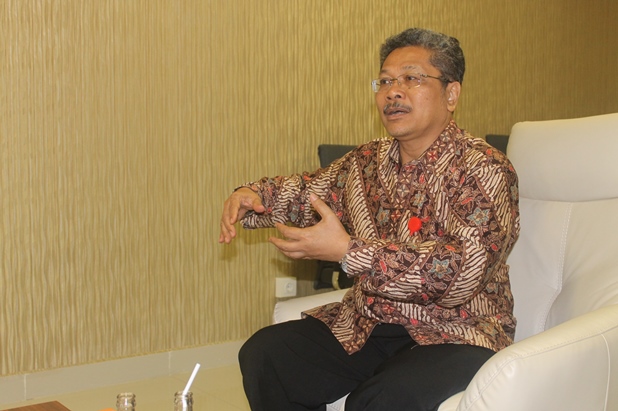
Director of Universitas Airlangga Hospital (RSUA), Prof Dr. Nasronudin dr SpPD K-PTI FINASIM explained that HIV is an infectious disease. First, HIV can be vertically transmitted from mother to child during gestation or delivery. Second, sexual transmission, including heterosexual, homosexual, and bisexual.
“Lastly, the HIV transmission through blood contact, including the intravenous drug users with shared needles/syringes,” said the author of dozens of internal medicine and infection books widely used for medical references.
Does polygamy decrease the spread of HIV?
A statement on polygamy to reduce the spread of HIV was released by the regional official some time ago. In his professional view, Prof Nasron doubted polygamy can be served as a prevention in using sex workers and reducing the spread of HIV.
“It definitely missed the target as it deviates from the moral ethics and religions,” he said.
He believed that the effective solution to cut down the spread is by avoiding the causes. In general, sex workers, partners of people with HIV, and intravenous drug users are at higher risk for HIV.
Targets of Indonesia and WHO
Upon seeing the cases of HIV, the Government of Indonesia and the World Health Organization also set the agenda to eradicate the infection cases by 2030.
“You can call it three zero, which means zero new infection cases, zero death due to AIDS, and zero discrimination against people living with HIV/AIDS,” said the UNAIR Faculty of Medicine professor.
To achieve the target, the Government comes up with the STOP strategy, which stands for Suluh (counseling), Terdiagnosis dini (early diagnosis), Obat ARV (ARV meds taken by people with HIV/AIDS), and Pertahankan (maintaining) the minimum case of HIV.
On the other hand, WHO also formulates the 90-90-90 fast track strategy, which stands for 90 percent of individuals being aware of being infected with HIV, 90 percent are early diagnosed, and 90 percent are taking antiretroviral (ARV) meds.
Author: Stefanny Elly
Editor: Binti Q. Masruroh