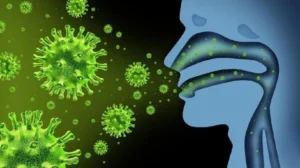


UNAIR NEWS – Health challenges in national and global level are increasing. In global level, metabolism syndrome diseases which cause the case of degenerative diseases happen more often because of life style. Let alone endemic diseases like Zika and Influenza.
In national level, a few challenges also exist. HIV Virus transmission in Indonesia is the highest all over Asia. Let alone neglected infectious diseases.
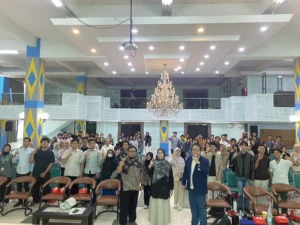
Meanwhile outside the health sphere, technology advances in high speed. Therefore medical personnel need to response to health condition in Indonesia using technology development. An innovation called telemedicine is the answer. The statement was delivered by the Director of Universitas Airlangga Hospital Prof. Dr. M. Nasronuddin, dr., Sp.PD., K-PTI, FINASIM, in the event of “A Symposium on Telemedicine: Health Service Innovation through Health Science Institute Development” held at Dharmawangsa Hall UNAIR Hospital, Wednesday (8/2).
Nasron, how he is called, mentioned that telemedicine is an innovation in health sphere which UNAIR Hospital is going to use. The existence of telemedicine can be used by doctors in a hospital to communicate with other doctors or medical personnel in a different place.
Through telemedicine doctors can give consultation, determine diagnosis, and even do operation management.
“In the case of referring a patient to UNAIR Hospital, the patient is still in unstable condition when he is going to be taken here and an operation is needed. The patient only needs to call and we will guide him from here. It is beneficial for the hospital where the patient is,” explained Nasron.
Telemedicine can also be used to build networks with health care centers in Indonesia or around the globe.
In Japan, one of the hospitals which use telemedicine is St. Mary Maternity Hospital. Junichiro Okada, MD., detailed the use of telemedicine in the hospital. “One day we received a call, the neonatologists and nurses worked together to check the baby’s condition, and then chose the right staff to be sent there,” he said.
Usually doctors at St. Mary make a video call from the hospital via Google Hangouts and Skype to other doctors or nurses in other clinics or hospitals.
The beneficial use of telemedicine is also agreed by Lucky Andrianto, dr., Sp.An-KAP. The anesthetic specialist said that if there is a difficult case of anesthetic specialist field in far away, they often use WhatsApp Messenger application, either chat or video call.
“If there is a difficult case from an anesthetic doctor out town, they use WhatsApp. We forward it to senior staff, and then an answer will be given by them,” Lucky explained.
However, in an emergency like disaster, the effective kind of telemedicine to be used is radio wave.
The last speaker in the symposium presentation session that time was Tedy Apriawan, dr., Sp.BS. This neurosurgery specialist of UNAIR Hospital delivered about the deficiency and advantages from the use of telemedicine.
“Telemedicine is easier to be accessed, helps health cost saving, improves service quality for patients, is a modern method, and able to keep medical records,” he said.
The challenges are, telemedicine can be used only by trained personnel, needs cutting-edge technology, and is high cost.
Author: Defrina Sukma S
Editor: Nuri Hermawan