


Biodiesel is a product of methyl esters produced from transesterification reactions of fatty acids or plant oils. Biodiesel produced from the transesterification reaction still contains these impurities and is not qualified according to the Indonesian National Standard (SNI) or international standard ASTM D6751 (North America), EN14214 (Europe). The small content of impurities in biodiesel might cause problems during its use in internal combustion engines and storage. The problems include engine oil degradation, water-induced corrosion, blockage of fuel injectors due to soap, and engine leakage due to alcohol. Moreover, the impurity could induce smoke containing acrolein, a hazardous photochemical compound. Therefore, before being used as fuel, biodiesel must be purified from free fatty acids, glycerol, soap, and the catalyst left over.
A promising method for biodiesel purification is the utilization of inorganic-organic composite membranes (IOCMs) for the filtration and adsorption processes. Compared to the conventional ultrafiltration membrane for biodiesel purification, the novel membrane application in this study is also known as a membrane adsorber because it is embedded with adsorbent particles. Recently, in renewable fuels, IOCMs have been developed using different membrane matrices to remove water content such as polyethersulfone and polydimethylsiloxane. Developed IOCMs have achieved a high removal of more than 90% of impurities, especially glycerol, during biodiesel production. In comparison to the conventional wet washing method, biodiesel purification using an IOCM could practically avoid the excessive use of water and wastewater yield. Nonetheless, the previous reports often used commercial materials to construct the IOCM, resulting in expensive and non-renewable materials.
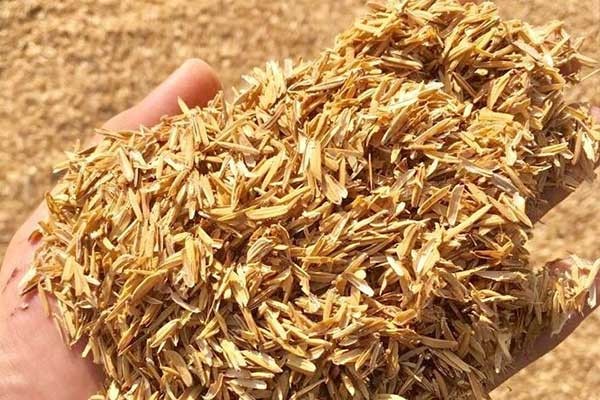
Bio-based adsorbents, after the activation process, could be used for the removal of water and organic and inorganic compounds; therefore, they are compatible with biodiesel purification. A potential biomass-derived adsorbent is a silica, which has been reported to work on a wide spectrum of impurities. Silica could be obtained either from the synthesis process or through isolation from biomass such as rice husks. Silica derived from rice husks could be obtained straightforwardly through the process of ignition and extraction using alkalis. Silica itself has been famously applied in the purification of biodiesel, attributed to its large surface area and inert properties. Using the agricultural biomass, rice husk, as a feed material for silica allows for an inexpensive production cost and supports the circular economy.
To increase its practical aspect, the silica can be embedded into the chitosan membrane matrix. Chitosan can be obtained from chitin through a deacetylation reaction, resulting in a multifunctional polymer with N- and O-containing functional groups. These functional groups are responsible for the excellent performance of an adsorbent in the separation process. In multiple reports, chitosan has shown its ability to remove heavy metals, biodiesel impurities, dyes, and pesticides. Furthermore, chitosan can easily dissolve in acetic acid, allowing a simple and eco-friendly process for its membrane matrix preparation.
In this study, chitosan–silica-based IOCMs for biodiesel purification were developed, indicated by the reduction of free glycerol and acid number. The combination of silica and chitosan for biodiesel purification purposes has been scarcely reported. Granulated commercially available chitosan–silica biosorbent has been investigated for its application in biodiesel impurities removal. The impurities contained in biodiesel upon its production include salts, soaps, methanol, and residual fatty acids (or glycerol). Silica, however, could be derived from rice husk waste. A study conducted in Indonesia suggested that rice husk ash could yield silica of around 60% (w/w rice husk ash) through extraction using an alkaline solvent. The applications of silica deriving from rice husk have been reported multiple times for the adsorptive entrapment of various compounds. However, in terms of biodiesel production, rice husk-derived silica has only been commonly applied as the catalyst—not for the adsorption of biodiesel impurities. In the present study, sodium hydroxide was used to extract the silica from rice husk ash, which has been reported to produce a silica adsorbent with a high microporosity and surface area. Furthermore, the silica was embedded in a polymeric membrane, allowing easier separation after the batch purification and filtration process.
METHODS
Silica was extracted by rice husk by furnaced at 700°C to obtain rice husk as then it was refluxed by using NaOH. The crystallinity of silica was analyzed using a Shimadzu X-ray diffractometer (XRD)-700 and functional group analysis using a Shimadzu 8400 Fourier transform infrared (FTIR) spectroscope. Micro-surface images of the silica particles were produced by scanning electron microscopy–electron dispersive spectroscopy (SEM-EDS) using a JEOL JSM 6510 LA. Furthermore, the surface area of the prepared silica was analyzed using Brunauer–Emmett–Teller (BET) and Barrett–Joyner–Halenda (BJH) isotherm equations based on the nitrogen adsorption–desorption at 77.3 K on QuadraSorb Station 1 (ver. 5.06).
Chitosan with a concentration of 3% (w/v) was added to a mixture of dimethylformamide 10% (v/v) and acetic acid 1% (w/v). The mixture was stirred in a tightly sealed Erlenmeyer for 24 h at room temperature and 250 rpm. Silica particles (varied from 10–60% w/w) were added to the previous mixture to obtain the IOCM. The doping solution was then printed on a glass plate. The solvent was allowed to evaporate at room temperature for 24 h. The membrane obtained was washed with NaOH 1% (w/v) and rinsed with distilled water, then air-dried at room temperature overnight. The membrane was cut to 2.5 cm2 for further use. For the membrane samples, either IOCM or neat chitosan, the instrumental characterizations were carried out using the Shimadzu 8400 FTIR spectroscope, JEOL JSM 6510 LA for SEM-EDS (Tokyo, Japan), and Shimadzu XRD 7000 (Kyoto, Japan). The membrane produced in this research was characterized by porosity, swelling degree, and pure water flux.
Furthermore, the performance of the prepared IOCM was evaluated toward biodiesel purification employing a batch system. Three sheets of the membrane (2.5 cm2) were weighed and put in an Erlenmeyer containing 25 mL crude biodiesel. The purification was carried out at 200 rpm using a rotary shaker at room temperature. The contact times of 10, 20, 30, 60, and 120 min were used to obtain the optimum contact time carried out using IOCM with a silica particle load of 10%. Afterward, the study continued with the investigation of the effect of particle loading employing the optimum contact time obtained previously. The adsorption isotherm studies were carried out under the optimum contact time and particle loading with glycerol concentrations of 0.01, 0.05, 0.1, 0.15, 0.2, 0.25, and 0.3%. Acid number, soap level, and free glycerol content were calculated before and after the batch purification treatment.
The membrane was assumed to contain biodiesel impurities after being removed from the batch purification process. The membranes with biodiesel impurity contents were recovered using an organic solvent, methanol, as suggested previously. The membrane was immersed into 250 mL of methanol in a sealed container at room temperature for 24 hours. Afterward, the membrane was removed and rinsed with ultrapure water to wash out the remaining methanol until a neutral pH was achieved. The regenerated membrane was tested for the subsequent cycles of batch purification using the optimum conditions obtained earlier.
RESULTS
Silica particles extracted from rice husk ash were obtained with properties supporting high impurities uptake from crude biodiesel. The silica particles were then embedded into the chitosan matrix, resulting in an IOCM with a porous structure. The investigated chitosan-silica IOCM was used in biodiesel purification, with the final product that is acceptable in SNI quality. Contact time and silica particle loading significantly affect batch purification performance. At optimum contact time and filler loading, the removal successfully reduced the soap level, free glycerol level, and acid number from 547.9 to 12.2 mg/L, 54 to 0.041%, and 2.02 to 1.12 mgKOH/g, respectively. The glycerol removal could be best predicted using the Sips isotherm model. Meanwhile, regeneration remains a challenging factor in this study, though the IOCM demonstrated a good performance in the biodiesel filtration processes. The regeneration method was using the pressure of the methanol to pass through the developed composite membrane.
Author: Yanuardi Raharjo, Ph.D.
View research detail
https://www.mdpi.com/2077-0375/12/4/435/htm
Saiful, Ulfa Riana, Muliadi Ramli, Muhammad Iqrammullah, Yanuardi Raharjo, and Yusuf Wibisono
Development of Chitosan/Rice husk-based silica composite membranes for biodiesel purification, Membranes, 2022, 12, 435