

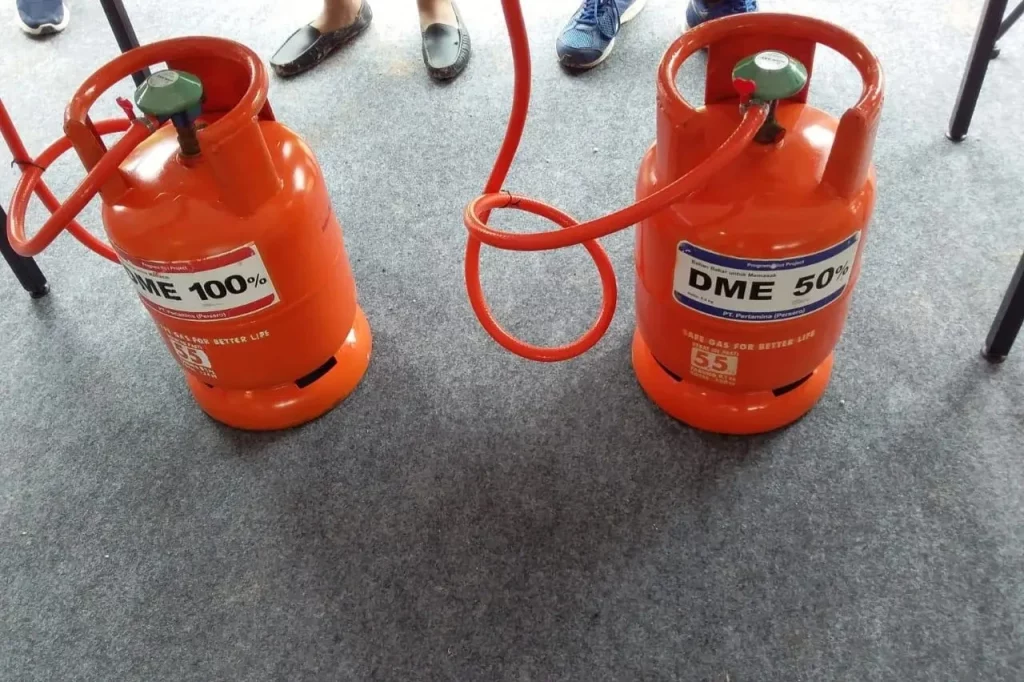
UNAIR NEWS – The government continues to advance its coal gasification project to produce Dimethyl Ether (DME) as an alternative to Liquefied Petroleum Gas (LPG) without relying on foreign investment. This initiative aims to reduce dependence on LPG imports while strengthening the nation’s energy downstream sector.
The use of DME has the potential to significantly cut LPG imports, which currently account for approximately 70% of Indonesia’s total consumption, equivalent to around 7 million tons per year. Additionally, Indonesia’s abundant coal reserves ensure a stable long-term supply of raw materials for DME production.
According to Wahid Dianbudiyanto, S.T., M.Sc., a faculty member in Environmental Engineering at the Faculty of Science and Technology, Universitas Airlangga, coal downstreaming into DME is a strategic step. This transition not only reduces reliance on imported energy but also enhances the added economic value of domestic resources.
“By leveraging abundant coal resources, Indonesia can strengthen its energy security while reducing the trade deficit caused by excessive LPG imports,” he stated.
Technological and infrastructure challenges
Coal gasification technology presents significant challenges due to its high costs and complex processes, requiring substantial investment. Additionally, DME distribution cannot rely on existing LPG infrastructure, as its energy density is lower than that of LPG.
Dianbudiyanto explained that replacing approximately 3 million tons of LPG per year would require at least four to five large-scale gasification plants. “DME has different physical characteristics from LPG, necessitating adjustments in storage and transportation systems to optimize its use,” he noted.

Environmental impact
Coal-derived DME has a higher carbon footprint than LPG due to the carbon-intensive nature of the gasification process. While DME combustion produces lower emissions due to its cleaner burning properties, the overall life-cycle emissions (production + usage) remain higher than those of natural gas-based LPG. However, DME could become more environmentally friendly if integrated with Carbon Capture and Storage (CCS) technology.
“Coal gasification has the potential to increase carbon emissions. However, these impacts can be mitigated through the implementation of CCS technology or by blending biomass as an alternative raw material. Such measures can help lower the carbon footprint and position DME as a more sustainable energy option,” Dianbudiyanto explained.
Funding and regulations
The government has opted to finance this project independently through the Daya Anagata Nusantara Investment Management Agency (BPI Danantara) and state-owned enterprises (BUMN). However, dependence on foreign technology remains a challenge, as it could drive up production costs.
“The government must establish a reference price for DME to ensure its viability for both producers and consumers. Additionally, fiscal incentives such as tax holidays or import duty exemptions should be provided to ease the production and distribution burden,” he added.
Author: Rosali Elvira Nurdiansyarani
Editor: Khefti Al Mawalia