UNAIR NEWS – Kalikatir Village, located in Gondang Subdistrict, Mojokerto Regency, faces ongoing challenges due to its humid climate and low public awareness regarding proper waste sorting. These issues prompted Universitas Airlangga students from the Community Service Program – Learning with Community (KKN BBK 6) to introduce an environmentally friendly mosquito repellent spray made from lemongrass.
Mirna Dea, a member of the KKN BBK 6 team assigned to Kalikatir, explained that the village’s unsorted waste has contributed to a spike in mosquito populations. “Many residents lack awareness about waste segregation and disposal, which leads to trash buildup. In a humid environment, that creates an ideal breeding ground for mosquitoes. This raises serious health risks, particularly the spread of dengue fever and malaria,” she said on Sunday (July 20, 2025).
Launching SIRANA Program
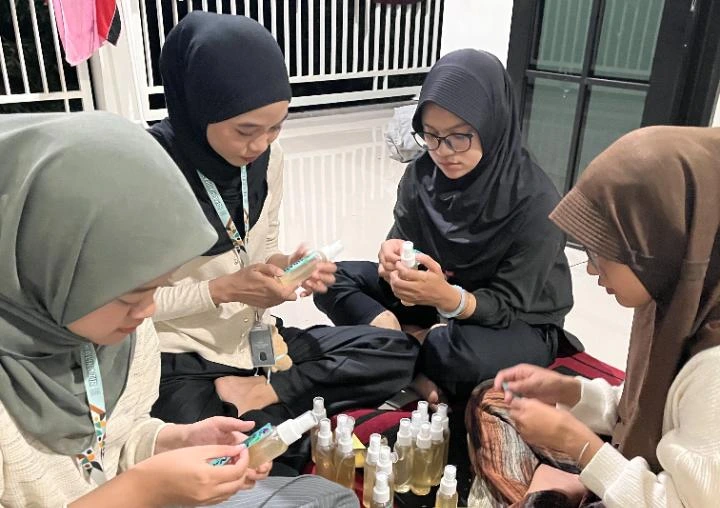
To address the issue, the group launched SIRANA (Spray Insektisida Ramah Lingkungan untuk Membasmi Nyamuk), an eco-friendly insecticide spray designed to combat mosquitoes. The spray is made from locally sourced lemongrass stalks. After production, the team distributed it directly to 20 households, accompanied by educational leaflets to ensure residents understood how to use and replicate the product.
“We formulated the spray using lemongrass, a natural resource available in the area, and added 70 percent ethanol to dissolve the boiled extract and act as an antiseptic. The leaflets provided include details on the spray’s benefits, usage instructions, and a step-by-step guide for making it at home,” Dea explained.
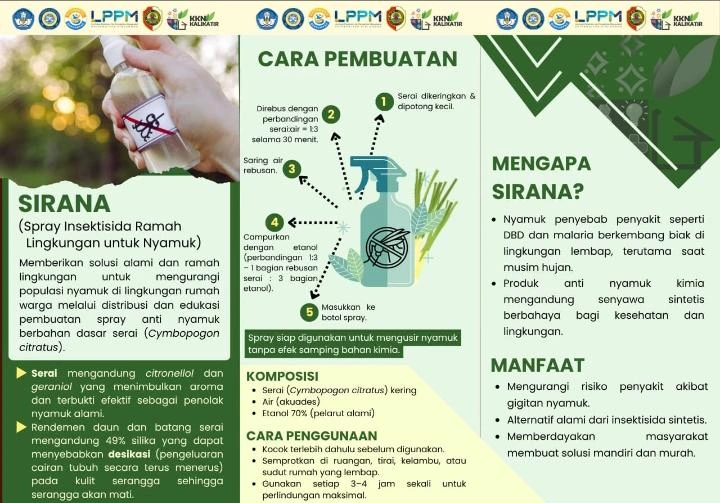
Mirna added that the initiative aims to protect the community from mosquito-borne illnesses while promoting a solution that is safe, affordable, and easy to prepare.
“The goal is to empower both natural and human resources within the village so residents can independently produce mosquito repellent. Commercial products can be costly or unreliable, so this effort also serves as an educational tool to highlight the value of local resources in improving public health,” she said.
The Faculty of Humanities student expressed hope that the SIRANA program will offer a sustainable alternative in maintaining environmental health and raise collective awareness about the dangers of chemical-based products.
Author: Ersa Awwalul Hidayah
Editor: Yulia Rohmawati