

UNAIR NEWS – Observing that many residents of Gebangangkrik Village in Ngimbang Subdistrict, Lamongan Regency, are tobacco farmers and smokers, students from Universitas Airlangga (UNAIR) developed an innovative approach to transform cigarette butts into natural pesticide. These students are part of UNAIR’s Community Service Program – Learning with Community (KKN-BBK 6), currently stationed in the village.
“Most villagers here are tobacco farmers, and many are smokers. This has led to a significant accumulation of cigarette waste,” explained group representative Wulandari Anggraini Putri. “We saw this as an opportunity to help residents repurpose cigarette butts and unused plastic bottles—resources that have remained largely untapped.”
Through their program titled “Pestibako: Natural Pesticide from Tobacco Waste,” the UNAIR students not only aimed to reduce environmental waste but also empower farmers to independently produce their own pesticide. This dual-purpose initiative could potentially bring economic value to the farming community.
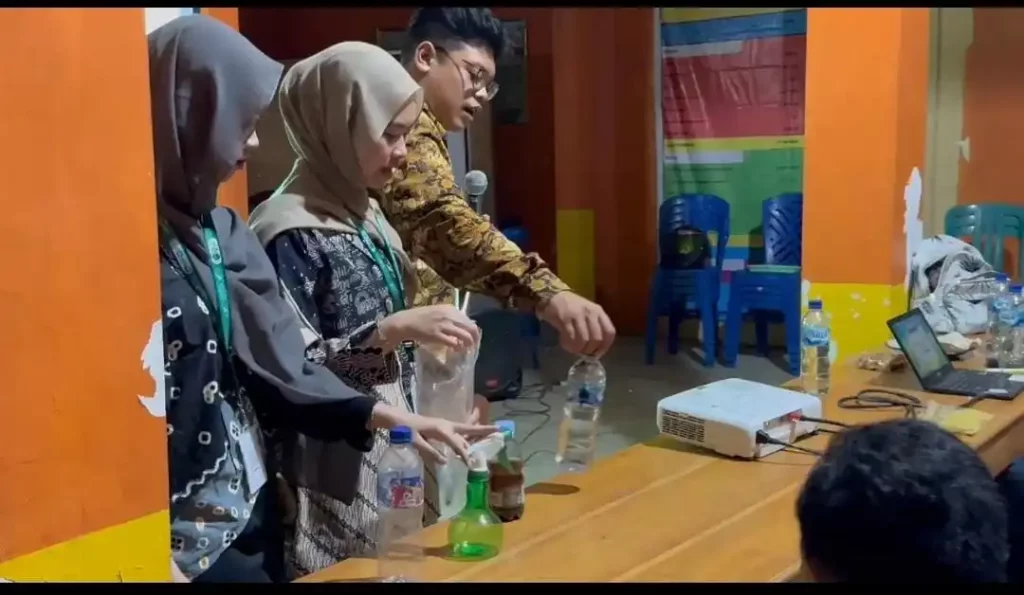
Putri noted that the program was conducted in a single-day event involving both a socialization session and a hands-on workshop with local residents on Thursday (July 24, 2025). “Once we concluded the introductory session, we proceeded straight to the practical portion, making the pesticide together with the villagers,” she said.
Making pesticide from cigarette butts
According to Putri, the pesticide is made using approximately 30 cigarette butts and a tablespoon of cream detergent. The process begins by soaking the cigarette butts in 500 ml of water. Then, a tablespoon of the detergent is added to the mixture.
“The mixture is stirred until evenly blended and then left to sit in a sealed container for at least 24 hours. Afterward, it’s strained and transferred into a spray bottle—ideally one made from recycled plastic bottles or gallons,” she explained.
The resulting liquid, an extract of the cigarette butts, must be diluted before application. Putri shared that 20 ml of the extract should be mixed with 1 liter of water before being sprayed on plants.
“The extract must be diluted because it contains nicotine, which can damage or burn plants if the concentration is too strong,” she cautioned.
Prior to introducing the method to villagers, the pesticide was tested with the Head of Jeruk Hamlet on Wednesday (July 16, 2025). Wiji, the hamlet leader, confirmed that the initial trial was successful. “The first test went well—it helped prevent the spread of caterpillars between plants,” he said.
Through this initiative, the KKN-BBK 6 team hopes to increase local awareness about cigarette and plastic waste management. They also aspire for the program to continue independently within the village even after their community service period concludes.
Author: Septy Dwi Bahari Putri
Editor: Khefti Al Mawalia