UNAIR NEWS – Caesareza Aurelya Heroedin, a student at Universitas Airlangga’s Faculty of Medicine (FK UNAIR), has been selected for an international student exchange program in Europe. The program, organized by the International Federation of Medical Students’ Associations (IFMSA), is coordinated in Indonesia by the Center for Indonesian Medical Students Activities (CIMSA) for all medical students across the country.
Known as Cesa, she participated in the Standing Committee on Professional Exchange (SCOPE) program alongside fellow FK UNAIR student Kinesha Kotsya. While they were enrolled in the same program, each was placed in a different hospital department.
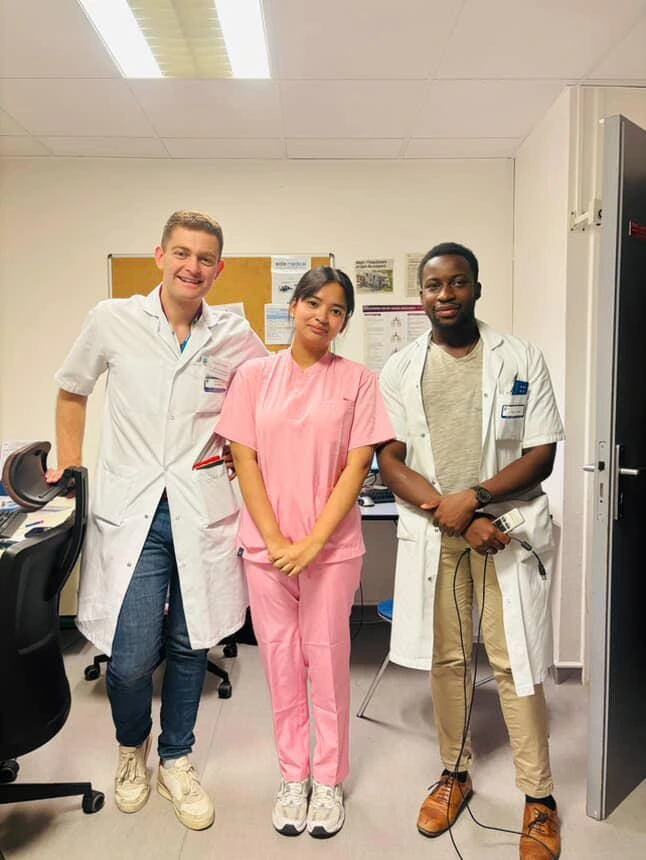
Cesa’s program ran for about a month, from Monday, July 7, 2025, to Friday, August 1, 2025. She completed her clinical rotation (clerkship) at Trousseau Hospital, part of the Centre Hospitalier Régional Universitaire (CHRU) Tours in France.
Advancements in European medical technology
During the exchange, Cesa worked directly with residents and professors in various clinical settings. She found the medical cases she encountered to be complex and engaging, offering significant learning opportunities.
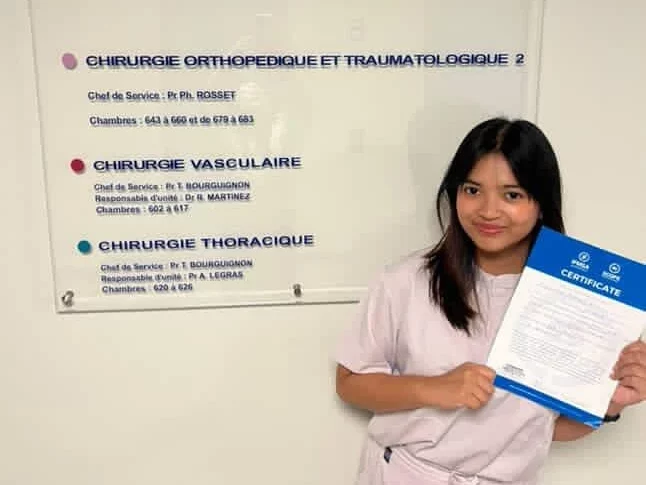
She also observed notable advancements in European surgical technology, with many hospitals already integrating robot-assisted surgery into their procedures.
“The hospital’s diagnostic technologies were diverse and highly sophisticated. I also saw robot-assisted surgery being used in several cases. Medical care often prioritizes non-invasive procedures, which help patients feel more comfortable and secure,” Cesa said.
Platform for self-development
In addition to academic insights, Cesa gained valuable experiences through cross-cultural interactions. She engaged in discussions and exchanged perspectives with doctors, residents, and medical students from countries such as Brazil, Peru, Sweden, and Slovenia.
However, the program also came with challenges. The French academic environment required students to be proactive and take initiative. Language barriers added another layer of difficulty, as not all medical staff were fluent in English.
To adapt, Cesa learned basic French for daily communication and continually refined her interpersonal skills.
“You have to adapt quickly, be more responsive, and pick up some basic French for everyday conversations. That’s why this exchange program was truly a meaningful step for my personal growth,” she concluded.
Author: Rosa Maharani
Editor: Yulia Rohmawati