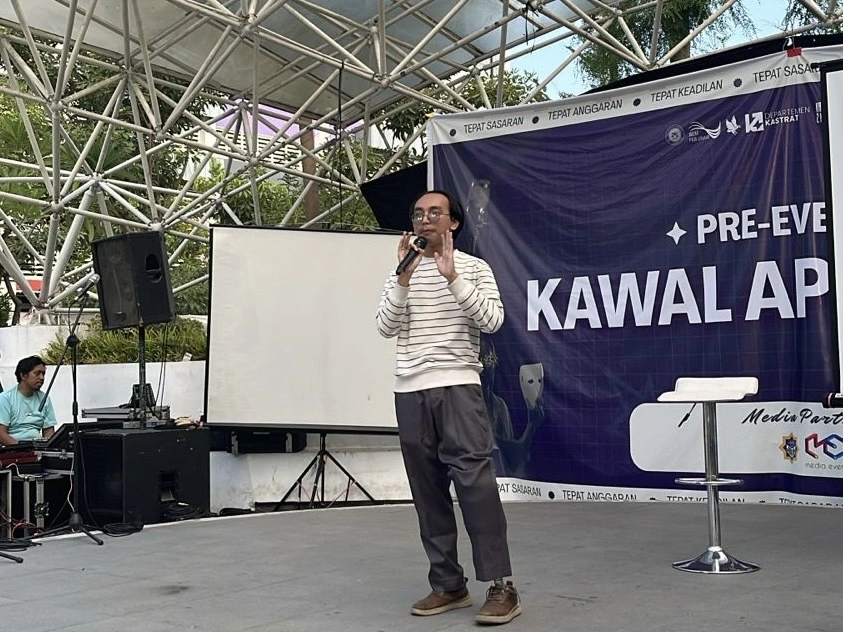
UNAIR NEWS – Surabaya, Indonesia’s second-largest metropolitan city, is home to both local residents and students who migrate for education. Yet many continue to voice concerns that learning facilities have not kept up with modern needs. Addressing this issue, the Student Executive Board (BEM) of Universitas Airlangga’s Faculty of Economics and Business (FEB) held a discussion forum to assess conditions and gather student input on how to improve education quality in the city.
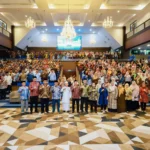
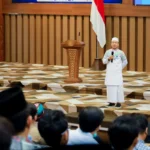
The forum, held Friday (Aug. 22, 2025) at the Dharmawangsa-B Campus Amphitheater, was the second pre-event in the “Kawal APBD 2025” series organized by BEM FEB’s Department of Strategic Studies and Action. The session featured a keynote presentation by Muhammad Faqih Akbar, coordinator of the Kok Bisa Community.
Education facilities and budget allocation
The quality of education facilities in Surabaya depends heavily on how the city allocates its Regional Revenue and Expenditure Budget (APBD). According to the Surabaya City Government’s official website, surabaya.go.id, 2.35 trillion Rupiah has been earmarked for education. Although this figure meets the national requirement of dedicating 20 percent of the local budget to education, Faqih argued it still falls short of meeting real needs.
“The funds are divided into three posts: first, operational expenses such as salaries for civil servants (PNS) and government contract workers (PPPK). Second, school facilities. And finally, the smallest portion goes to paying honorary teachers,” he explained.
This funding gap, he warned, creates problems ranging from low wages for honorary teachers to inadequate school infrastructure.
Role of student participation
Educational facilities extend beyond schools and campuses. Students in Surabaya also need supporting infrastructure such as reliable public transportation, pedestrian walkways, and public study spaces.
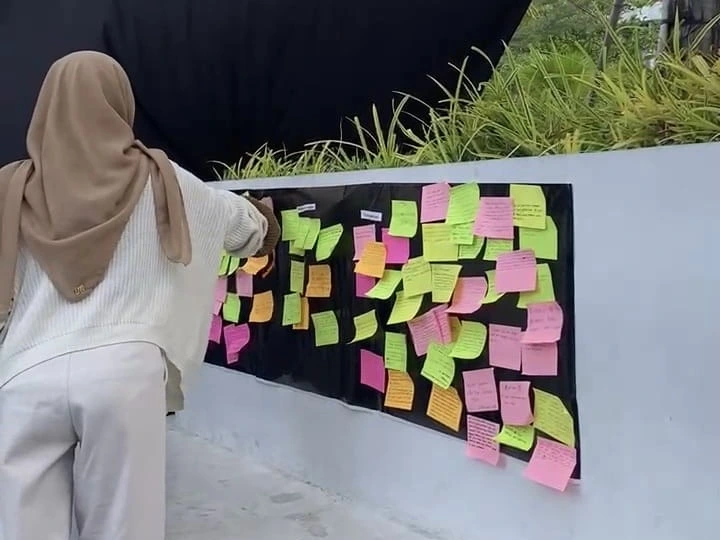
With adequate facilities both inside and outside classrooms, Surabaya could become an ideal education hub. Faqih underscored that students must have a voice in deciding the facilities they receive.
He outlined three ways for students to participate actively in improving education. First, through political engagement, by helping shape policy and regulations. Second, through individual action, by expressing ideas and critiques through films, writings, or other creative work. Third, through collective action, by organizing discussions with peers and channeling their findings to government.
Of these, Faqih highlighted collective action as the most effective strategy. “Each of us has skills, perspectives, and concerns. But when we unite and act together, we have the power to transform this nation,” he concluded.
Author: Selly Imeldha
Editor: Ragil Kukuh Imanto