

Corporations are considered to have limited status as subjects of international law. This status differs from other international legal subjects, such as countries or international organizations. Based on this proposition and the fact that individuals (natural persons) are also legal subjects, with the existence of rights and obligations based on international human rights law, corporations must also be considered to have the same rights and responsibilities. The logical consequence of this equation is that corporations can be held accountable or prosecuted if they are proven to have violated obligations under international law. The relationship between human rights and corporations is often interpreted and understood as very different. A corporation is always associated with an artificial person or legal entity formed by or based on the authority of a country’s or nation’s laws.
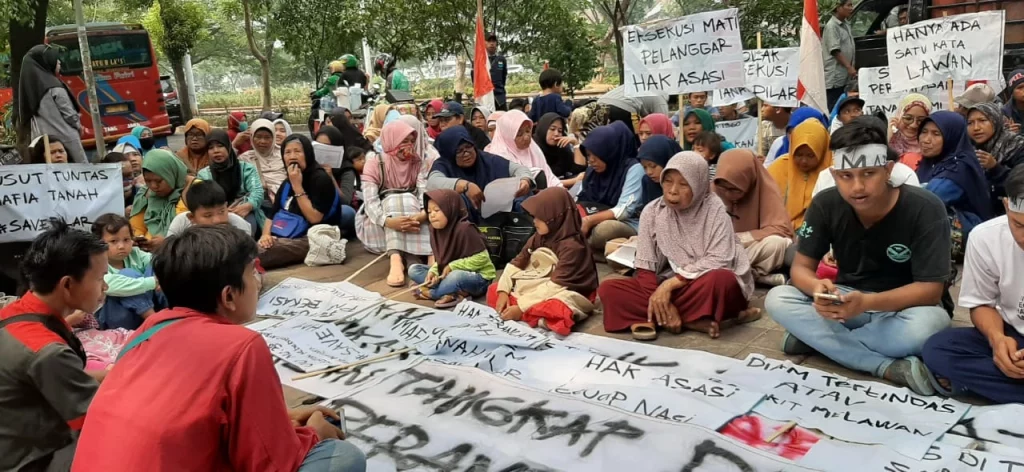
Serious human rights violations committed by corporations in Indonesia occur frequently. This can be seen based on data from the National Human Rights Commission of the Republic of Indonesia (Komnas HAM RI) from 2019 to September 2021, which received 1,366 complaints regarding alleged human rights violations committed by corporations. These violations span various sectors, particularly the palm oil and nickel industries, which have systematically harmed both the environment and workers’ rights. In the palm oil sector, major companies have been reported to exploit laborers under dangerous conditions, with inadequate pay and exposure to harmful chemicals without proper protection. Meanwhile, the nickel industry, especially within the Indonesia Morowali Industrial Park (IMIP) in Central Sulawesi, has faced intense scrutiny due to a high number of workplace accidents, including dozens of worker deaths since 2015, largely attributed to poor safety standards.
Historically, multinational corporations have also been implicated in serious abuses, such as ExxonMobil’s case in Aceh, where the company was accused of complicity in torture and killings by military personnel it hired to secure its gas operations. Normatively, Indonesia has laid the foundations for human rights protection in Pancasila as a state philosophy, a basic value that is relatively fixed (unchanged). This concept is contained in the preamble to the 1945 Constitution of the Republic of Indonesia (UUD NRI 1945). Ideal values are related to the essence of the five principles of Pancasila. These basic values are universal, containing good and true ideals, goals, and values. Implementing human rights in Pancasila relies on the teachings of the second principle, namely regarding the implementation of “kemanusiaan yang adil dan beradab” (just and civilized humanity). Therefore, the concept of human rights in Pancasila, when explained philosophically, can be interpreted as the essence of human nature as an individual and/or social being in society. The concept of human rights in Pancasila should also be based not only on the free exercise of each individual but also on social obligations in society to create a balance between rights and obligations between fellow social humans and/or humans as independent creatures and God’s creatures who have a balance of body and soul.
The recognition of the principle of criminal liability for corporations and relevant sanctions is an aspect that has been recognized internationally. First, the discussion will cover the principles of corporate criminal responsibility and applicable penalties. The relationship between human rights law and corporations that carry out transnational business and investment law is a matter of debate among international jurists. Certain parties believe that international human rights law only has a role in accompanying the interpretation of international investment law. The jurisprudence of international investment dispute resolution arbitration only refers to the concept and understanding of human rights law to clarify the knowledge of a particular concept.
Acts of international crime will attract the world’s attention when corporations carry out international investments in seeking as much profit as possible by using any means that cause serious crimes that lead to serious human rights violations. According to paragraphs 3 and 4 of the Preamble to the International Criminal Statute, these acts need to be known. Court (ICC), the ICC is a legal body that criminalizes “the most serious crimes of concern to the international community” because “they threaten the peace, security and prosperity, the existence of the world”. Concerning state responsibility for serious violations of human rights, state responsibility for acts of basic human rights violations is not a new concept in international law. At the beginning of its development, an important element of the request for state responsibility required an element of damage, injury, or loss that occurred to another party or state to be used as a basis for filing a claim. However, in the modern era, “loss” is no longer considered a necessity in every case for the emergence of state responsibility.
This provision applies, among other things, to violations of international law provisions relating to human rights, which are condemned according to international law, even though they do not harm other parties or countries Several countries, have carried out corporate criminalization from various countries providing comprehensive references, including using the principle of universal jurisdiction in a measurable manner which can prosecute serious human rights violations even if committed abroad or transnationally and applying international law directly to national law with a focus on customary international law. Compliance with jus cogens norms as used in Canada, including many qualifying acts in serious violations of human rights in Australia, which is also carried out to eliminate impunity, and as in the Netherlands, provides comprehensive punishments for corporations that commit crimes so that it will prevent corporations from committing crimes or repeating crimes in the future.
Jus cogens is a normal general international law accepted and recognized by the international community, with its main characteristic being non-derogable rights. The concept of jus cogens is based on accepting fundamental and superior values in the system. It is similar to public order and public policy in the domestic legal order. Therefore, the state should take legislative, administrative, judicial, and practical policy steps to ensure that the rights that are its obligations can be fulfilled. Hence, corporations that commit serious violations of human rights need to be prosecuted based on state policies that aim to respect and protect and fulfil fully the human rights of every individual.
This development is also implied in Articles 42 and 48 of the Draft Articles on the Responsibility of States for Internationally Wrongful Acts, International Law Commission August 2001 which eliminates the requirement for damages regarding acts that can be blamed under international law as a new right for injured states, especially, right to claim responsibility. Likewise, the provisions of Article 48 letter and letter d of the European Convention for the Protection of Human Rights and Fundamental Freedoms (1950) give each participating country the authority to file a lawsuit against another participating country even though the country suing is not a victim of human rights violations committed by the government accused of committing the violation. The existence and application of jus cogens in international legal institutions is not limited to the ICC Statute and the European Convention but also the entire international legal system in general, which has previously included corporations as subjects of international law so that states as members of the global community within the framework of international law can sue.
The basic theory of corporate criminal liability is rooted in the recognition that a corporation, although a legal fiction, acts through its organs—namely, its directors, employees, and agents—and therefore can be held accountable for crimes committed in the course of its operations. This liability may be constructed through various models, including the identification doctrine, vicarious liability, and the aggregation theory, which allow for attributing criminal intent and action to the corporate entity. This framework is crucial in the context of international and transnational crimes, particularly when corporations are involved in conduct that leads to gross human rights violations. This important breakthrough regarding state responsibility, as mentioned above, is formally clear not only based on violations of international agreements or customary international law but also because the crime is considered to fulfill the principle of hosti humani generis (enemies of all mankind) so that it becomes an act that violates International Criminal Law as a serious violation of human rights whose jurisdiction applies universally.
Based on the description above, the main legal issue is how to apply criminal law to corporations and their accountability for serious human rights violations and the implementation of law enforcement for serious human rights abuses by corporations in Indonesia by analyzing the qualifications of criminal acts of perpetrators of human rights violations in Indonesia.
Author: Adhyransyah; Iman Prihandono; and Taufik Rachman
Full access to this publication: https://e-journal.unair.ac.id/MI/article/view/57628/28997