

UNAIR NEWS – The Student Executive Board (BEM) of the Faculty of Health, Medicine, and Natural Sciences (FIKKIA) Universitas Airlangga (UNAIR) held a community outreach program titled “FIKKIA Mengajar: One Healthy Step for a Thousand Good Deeds.” The event, held on Wednesday, October 8, 2025, at the Graha Disabilitas of the Banyuwangi Social Service, received an enthusiastic response from people with disabilities and their caregivers. The initiative aimed to raise awareness about healthy living while fostering empathy, compassion, and a spirit of social responsibility among students.
Event coordinator Shema Hunava explained that the program represented FIKKIA students’ commitment to promoting inclusive public health. “We wanted to share our knowledge and experiences with our friends at Graha Disabilitas. Through this simple activity, we hope to inspire healthy habits while building empathy and mutual understanding,” she said.
Inclusive health education
The FIKKIA Mengajar program featured three core sessions designed to be engaging and hands-on. The first session focused on Clean and Healthy Living Behavior (PHBS), followed by a practical workshop on making natural hand sanitizer using easy-to-find household ingredients. Participants learned the importance of maintaining personal and environmental hygiene as a key part of daily life.
Speaker Annisa Dwi Cahyani highlighted that developing clean living habits is an essential step in preventing illness. “PHBS is more than just washing hands or staying clean—it’s about cultivating the awareness and consistency needed to live healthily every day,” she explained.
She added that making their own hand sanitizer empowered participants to be more independent and prepared for health emergencies. “By learning to make hand sanitizer themselves, participants discovered that hygiene can be maintained simply and affordably,” she added.
Balanced nutrition
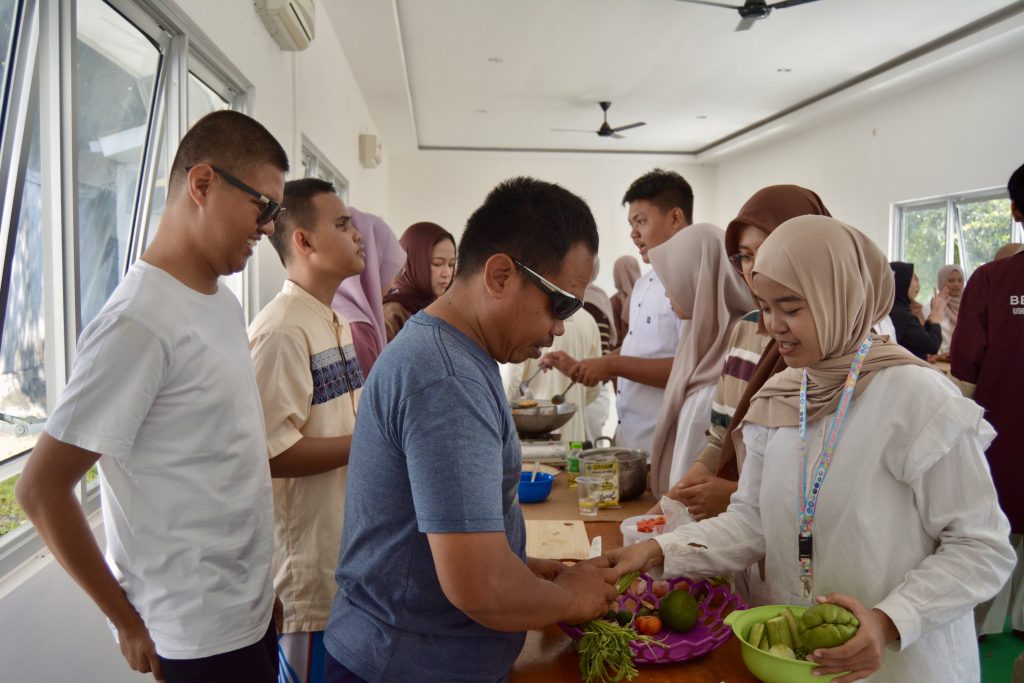
Another speaker, Regina Saraswati, discussed the importance of balanced nutrition and led a cooking competition to make the learning process interactive. Participants explored the concept of eating according to their body’s nutritional needs and learned about locally available, nutrient-rich ingredients. “Healthy meals don’t have to be costly. With local foods like vegetables, tempeh, and eggs, we can prepare nutritious and delicious dishes,” Saraswati said.
During the cooking session, participants eagerly experimented with recipes and shared insights about each ingredient’s benefits. The activity aimed to encourage awareness of balanced nutrition, self-reliance, and healthy living practices. It also provided a meaningful experience for both participants and students—reinforcing UNAIR’s dedication to serving the community through impactful, inclusive, and sustainable education initiatives.
Author: Dheva Yudistira Maulana
Editor : Khefti Al Mawalia