UNAIR NEWS – In today’s increasingly competitive job market, foreign language proficiency and cultural awareness have become essential assets for young professionals. Recognizing this, Niseikai, the student association of Japanese Language and Literature Program, Faculty of Humanities (FIB), Universitas Airlangga (UNAIR), organized a guest lecture titled “Japanese Language and Literature as Gateway to Internationalization.” The online event was held via Zoom on Saturday (Oct. 25, 2025).
The session featured two speakers, both alumni of UNAIR FIB’s fast-track program: Manuela Bernarda Serang and Laily Raff Firdausy. They shared insights on how graduates of Japanese Language and Literature can build international careers and explore diverse professional opportunities.
Also in attendance was Dr. Nunuk Endah Srimulyani, S.S., M.A., Ph.D., Head of the Japanese Language and Literature Program, who expressed appreciation to the organizers and participants for making the event successful.
“These two alumni serve as excellent role models in time management. They successfully balanced academic life, organizational activities, and personal responsibilities, allowing them to graduate on time and secure employment soon after. I hope their stories will inspire everyone here today,” said Dr. Srimulyani.
Building global competence
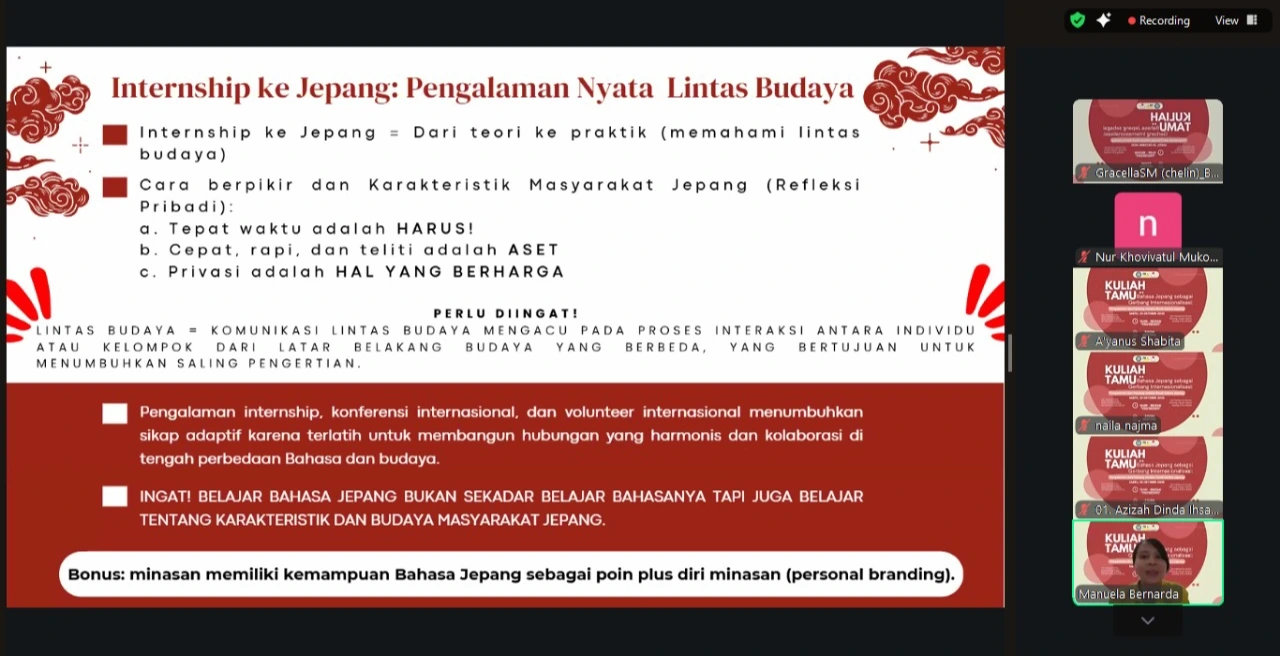
Opening the discussion, Serang shared her experience as a graduate of Japanese Language and Literature. She recalled that her interest in the subject began in elementary school when she was first introduced to the Japanese language.
“Studying Japanese language and literature is more than just learning the language, it’s also about exploring literature, understanding cultural values, and appreciating the character of Japanese society,” she explained.
Serang emphasized that students should focus not only on mastering the language but also on developing global competencies that help them adapt in diverse environments. Critical thinking, cross-cultural understanding, and effective communication, she said, are crucial for competing in the international job market.
“When global competence aligns with our field of study, it builds intercultural communication skills. That’s what allows Japanese Literature graduates to pursue careers in many sectors, not just in teaching or translation,” she added.
Opportunities in Japanese companies
Meanwhile, Laily Raff Firdausy shared her journey of working in Japan and discussed the growing demand for international professionals there.
“Japan’s working-age population continues to decline, yet the need for skilled labor remains high. The country is now actively seeking professionals in various areas, not only in translation or hospitality but also in human resources, logistics, and the creative industries,” she said.
Firdausy offered several tips for students aspiring to work in Japan. “Be prepared and stay informed. Always keep yourself updated. While still in college, take every opportunity to improve your value, pursue language certifications like JLPT N2, participate in organizations, and build experience for your résumé,” she advised.
She also highlighted the importance of understanding Japan’s work culture, which places great emphasis on discipline and professionalism. “Fluency in Japanese is important, but openness, politeness, and a strong willingness to learn are equally valued traits when working in Japanese companies,” she concluded.
Author: Nur Khovivatul Mukorrobah
Editor: Ragil Kukuh Imanto