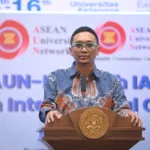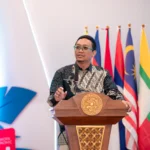
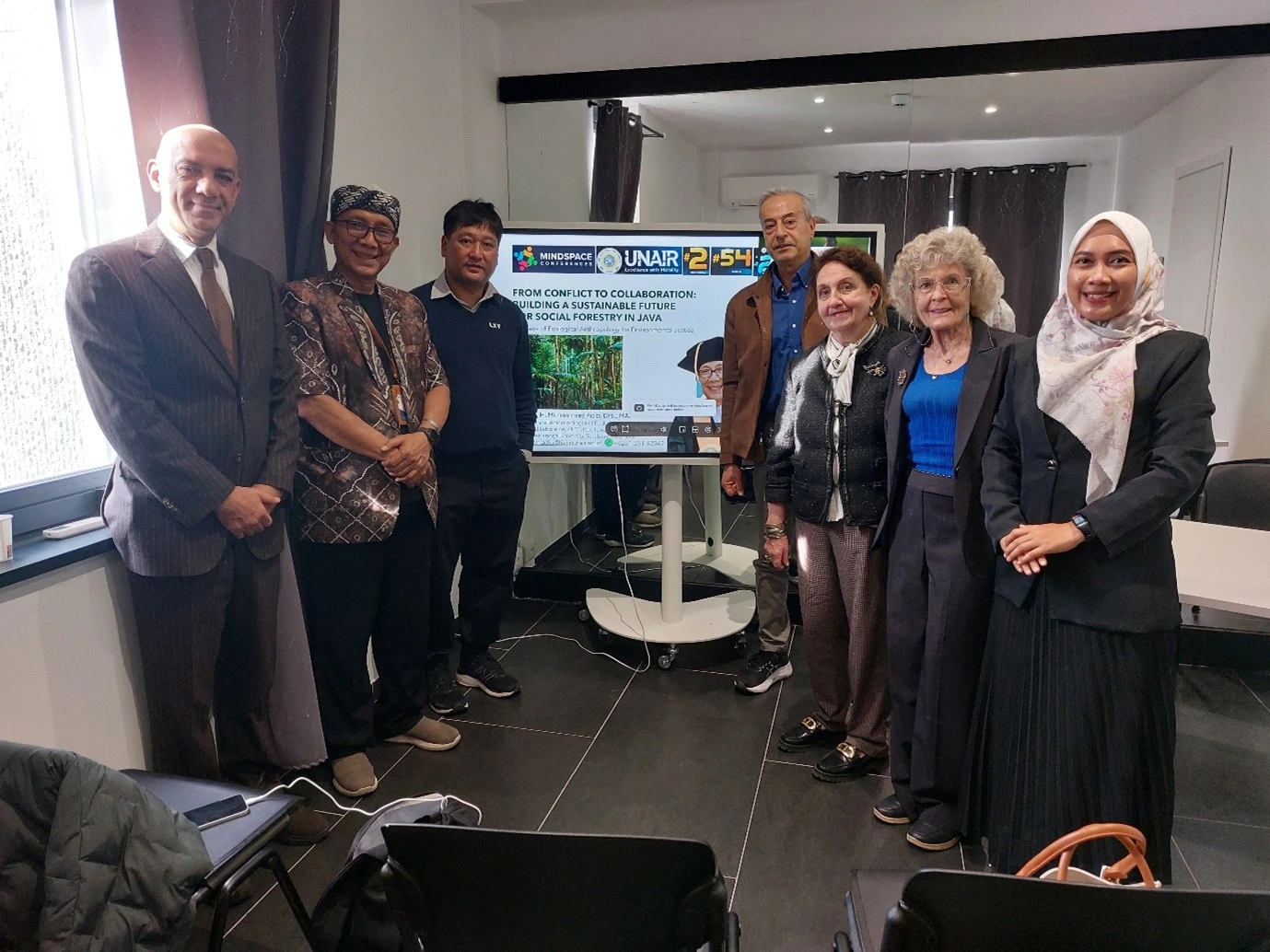
UNAIR NEWS – Prof. Dr. H. Muhammad Adib, Drs., M.A., a senior professor from the Faculty of Social and Political Sciences (FISIP) Universitas Airlangga (UNAIR), served as a keynote speaker at an international conference titled The Global Symposium on Earth–Environment–Energy–Food Sciences (MindSpace Conference). The event was held from Monday to Wednesday (November 17–19, 2025).
The symposium, hosted in Rome, Italy, brought together experts from five continents. Participants represented Asia (Indonesia, Saudi Arabia, India, Iran, Malaysia), Europe (Italy, the United Kingdom, Georgia, Germany, Normandy, Spain, Bulgaria), Australia (Australia), Africa (South Africa, Egypt), and the Americas (the United States, Mexico).
Introducing transformative approaches to social forestry challenges
Prof. Adib delivered two core sessions at the symposium: an opening address setting the tone for the conference and a keynote presentation proposing transformative approaches to Indonesia’s social forestry issues.
In his opening speech on the Four Pillars of 21st-Century Challenges, he emphasized that the symposium’s core themes: Earth, environment, energy, and food science, represent interconnected pillars that shape today’s most pressing global issues. He stressed that these areas are not separate fields but part of an integrated system.

“These are not four isolated disciplines,” he said. “They are four tightly linked pillars that together define humanity’s greatest challenges and opportunities in the 21st century.”
He further explained that solving one issue requires understanding its effects on others. “Sustainable food science practices, for instance, can reduce pressure on environmental resources such as water and soil,” he noted.
Shifting from conflict to collaboration
During his keynote session, Prof. Adib presented From Conflict to Collaboration: Building a Sustainable Future for Social Forestry in Java. In this 25-minute presentation, he discussed findings from his research on conflicts surrounding social forestry policies in Java, particularly after the release of Ministerial Decree No. 287/2022 on KHDPK (Special-Management Forest Areas). His analysis highlighted gaps between regulators and ground operators, largely caused by miscommunication and differing interpretations of policy.
To transition from conflict toward collaboration, he proposed three foundational strategies: (i) Strengthened Communication and Transparency: Reducing disharmony through transparent decision-making; (ii) Community Welfare–Driven Programs: Creating inclusive initiatives that deliver economic, social, and ecological benefits across communities; (iii) Applying Ecological Anthropology: Leveraging local knowledge and cultural values as critical components for environmental sustainability and social justice.
“Conflict is not a failure, it is a signal,” he said. “It represents an opening for reform. Integrating local knowledge and cultural values is essential for achieving environmental sustainability and social equity. KHDPK must become a turning point for adopting Ecological Anthropology to advance environmental justice and protect our tropical forests.”
Prof. Adib’s participation on the global stage underscores UNAIR’s and Indonesia’s expanding role as contributors to global solutions, institutions committed not only to identifying problems but also to advancing human-centered, research-driven, and sustainable innovations.
Author: Nadia Tsaurah
Editor: Yulia Rohmawati