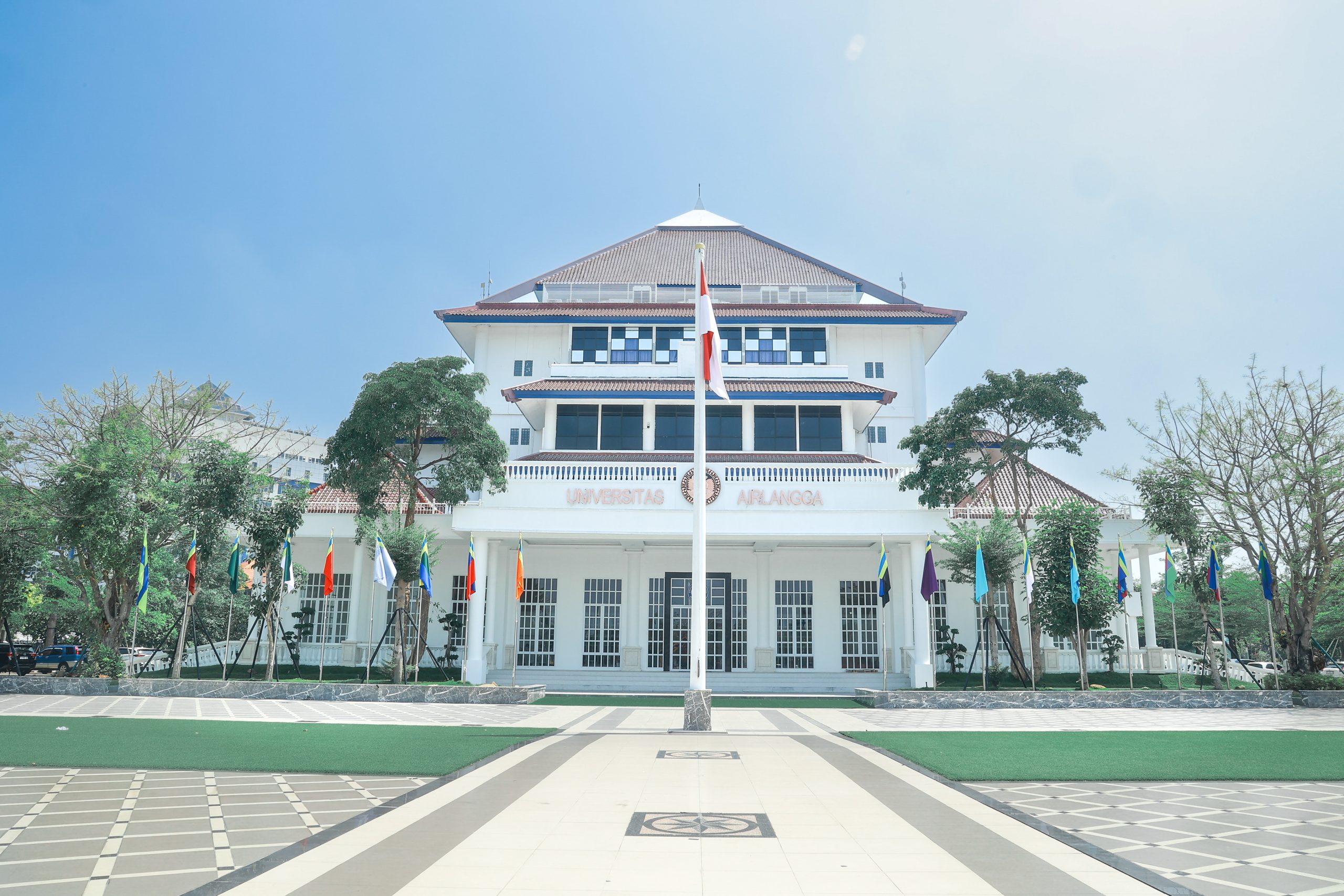
UNAIR NEWS – Universitas Airlangga (UNAIR) has secured another notable achievement on the international stage. In the latest Times Higher Education (THE) Interdisciplinary Science Rankings (ISR), released Thursday (Nov 20, 2025), UNAIR placed 134th in the world. The score reflects the university’s steady and expanding capacity in interdisciplinary research.
The THE Interdisciplinary Science Rankings, developed in partnership with the Schmidt Science Fellows, serve as an important global benchmark for measuring universities’ effectiveness in fostering cross-disciplinary research collaboration. This ranking is designed to advance scientific excellence while enabling institutions to track their interdisciplinary research performance.
Interdisciplinary research, which blends multiple fields of study, is increasingly vital in developing innovative and impactful solutions. This method helps generate breakthroughs that not only propel academic progress but also support meaningful contributions to global development.
Assessment indicators
In this edition, THE Interdisciplinary Science Rankings assessed 911 universities across 94 countries. The evaluation uses 11 indicators grouped under three major pillars. The first, Inputs, includes research funding. The second, Process, examines a university’s ecosystem, infrastructure, policies, and administrative support for interdisciplinary research. The third, Outputs, measures research results, including volume, quality, influence, reputation, and scholarly publications.
Rector of UNAIR Prof Dr Muhammad Madyan SE MSi MFin expressed his appreciation for the achievement. He emphasized that placing 134th worldwide is a testament to the transformation of UNAIR’s research ecosystem.
“This ranking is more than a statistic. It is an international acknowledgment of UNAIR’s interdisciplinary collaboration, which has become our defining strength over the past decade. We have successfully positioned ourselves among the world’s top universities that integrate health sciences, social sciences, humanities, science, technology, and public policy to tackle global challenges,” he said.
Third best nationally in two pillars
Nationally, UNAIR demonstrated its strength by achieving a shared third-place position in Indonesia for two key pillars: Process and Output. Its ranking in the Process pillar highlights UNAIR’s success in building a solid research ecosystem, supported by strong policies, facilities, and administrative frameworks that sustain interdisciplinary work. Meanwhile, the Outputs ranking reflects the quantity, quality, impact, and reputation of UNAIR’s interdisciplinary research outcomes.
“Being ranked third nationally in the Process and Outputs pillars underscores that UNAIR’s research ecosystem is capable of driving innovation in a systematic, sustainable, and solution-driven way,” he added.
Evidence of collaborative success
Prof Madyan also extended his gratitude to all researchers, laboratories, faculties, and industry and government partners who contributed to the accomplishment. He noted that this recognition affirms UNAIR’s commitment to developing interdisciplinary collaborations that address global challenges. “This achievement demonstrates that UNAIR excels not only in research funding and capacity but also in producing high-quality outputs that benefit society,” he said.
The Professor of the Faculty of Economics and Business (FEB) hopes UNAIR will continue strengthening interdisciplinary research as part of the university’s core identity. He stated that pressing global challenges, such as public health, food insecurity, climate change, artificial intelligence, the digital economy, and sustainability, cannot be solved through a single field of study. For this reason, UNAIR plans to continue advancing interdisciplinary integration through flagship initiatives, consortium research, international partnerships, and expanded use of big data and digital technologies.
With momentum from the ISR results, UNAIR reaffirms its commitment to maintaining its excellence and credibility as a leading research university, while expanding its contributions within the ASEAN region and globally. “We aim to ensure that every research effort extends beyond publication. It must be socially relevant, deliver real-world impact, and support national and international development agendas. Our goal is clear, UNAIR’s research must become more collaborative, more influential, and more beneficial to society,” he affirmed.
Author: Yulia Rohmawati, Oemar Moechtar
Editor: Oemar Moechtar