

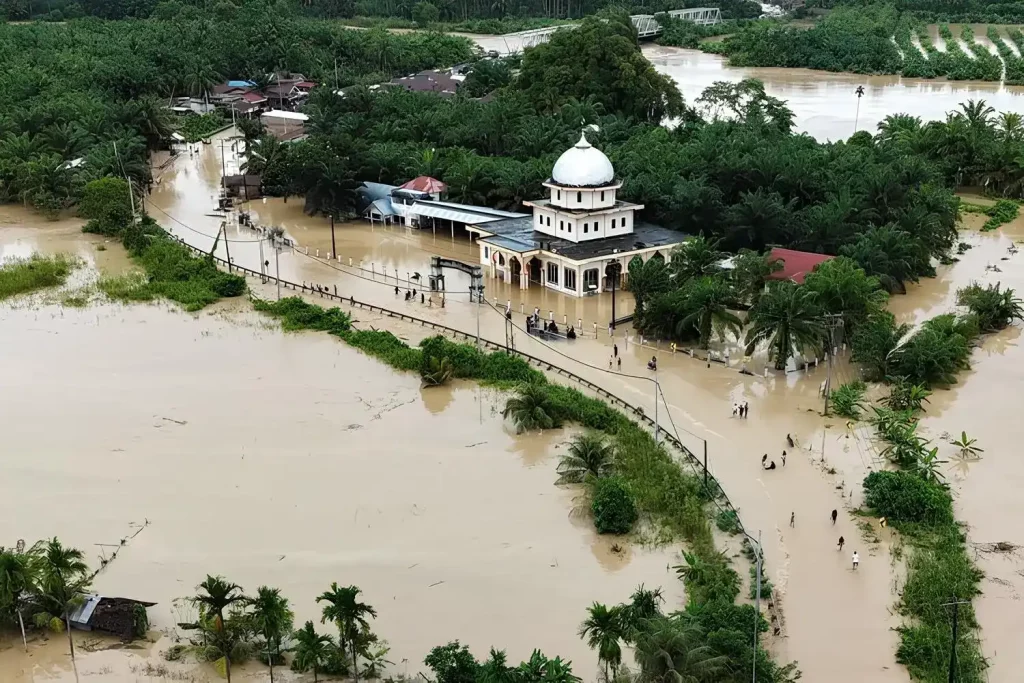
UNAIR NEWS – Recent disasters in Aceh, North Sumatra, and West Sumatra have left communities reeling. The scale of destruction and the large number of affected residents have drawn national concern and raised questions about the causes behind these events. The situation has also prompted commentary from experts, including Prof Dr Mohammad Adib Drs MA, a senior scholar at the Faculty of Social and Political Sciences (FISIP), Universitas Airlangga (UNAIR).
Drawing from ecological anthropology, Prof Adib argued that what people often describe as “natural disasters” are, in reality, human-driven crises. These events, he explained, stem from human behavior rather than nature acting on its own. He believes the public needs to rethink how it interprets disasters because floods, landslides, and extreme drought are not expressions of nature’s “anger” but consequences of how humans manage, or mismanage, their environments.
“Rain is part of a natural cycle, but flooding reflects failures in our social and cultural systems to respond to that cycle. It shows that we have surpassed the environment’s carrying capacity. Nature isn’t angry; it is simply reacting to the physical pressures we place on it,” he said.
Ecological inequality
Prof Adib also underscored the ongoing crisis of land-use governance, which he considers a major factor behind recent events. He noted that development decisions often favor short-term human interests. In doing so, they neglect the ecological rights that nature should hold. Areas that once served as natural buffers, such as water absorption zones, riverbanks, and urban forests, have increasingly been converted into built-up spaces.
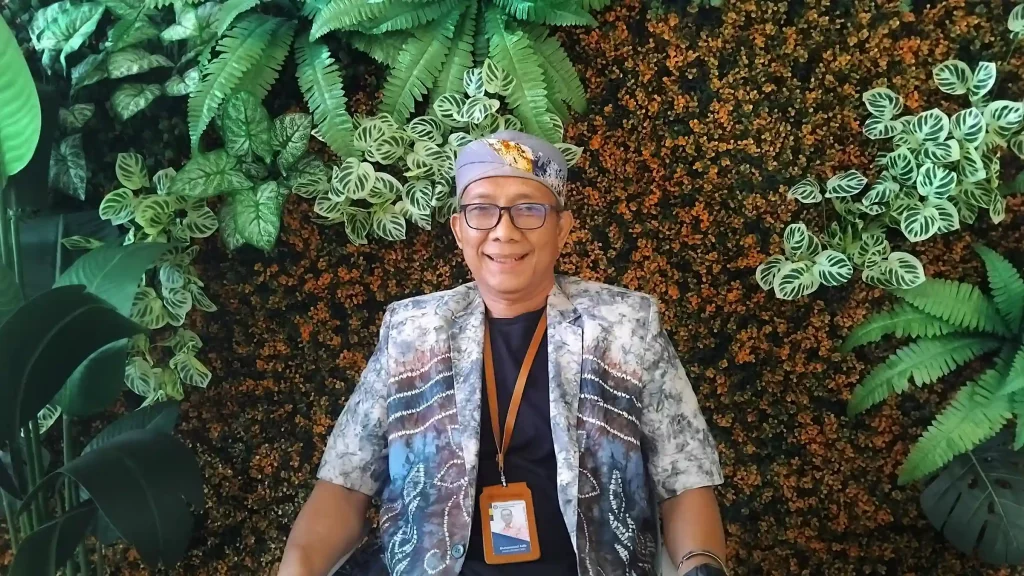
“The tragedy is that the burden of this environmental damage rarely falls on policymakers. Instead, it impacts marginalized communities that end up living in disaster-prone areas. This is a clear form of ecological injustice,” he said.
Modern lifestyles
Beyond governance issues, Prof Adib pointed to cultural changes that have widened the disconnect between humans and nature. Traditional communities, he said, saw nature as a partner in life, a view that gave rise to protective practices such as pamali taboos and sacred forests. These customs helped maintain ecological balance. Today, however, modern lifestyles focused on ownership and consumption have encouraged people to treat nature as a resource to be exploited.
“At the root of this crisis is an ontological shift: a change in how modern humans perceive nature. Consumerist culture drives us to keep extracting resources without allowing the environment time to recover,” he explained.
Because of this, Prof Adib argued that disaster mitigation cannot rely solely on physical infrastructure. What is needed, he said, is a profound shift in mindset, an ecological moral transformation that restores environmental ethics and reconnects local wisdom with contemporary urban planning.
Embracing local knowledge
Prof Adib added that the government, as the main regulator, holds the responsibility to steer development toward environmental resilience. Yet he observes that Indonesia still lacks a long-term, coherent environmental roadmap, resulting in fragmented and inconsistent policies across sectors. “Without firm direction from the government, efforts to maintain environmental balance will simply stagnate,” he noted.
In closing, Prof Adib emphasized that disasters are not fixed destinies. Instead, they are social outcomes shaped by lifestyles and policies that exceed ecological limits. He urged all stakeholders to rebuild a more harmonious relationship with the natural world. “We must shift from an extractive relationship to an adaptive one, rooted in local wisdom as our strongest ecological safeguard. This is a call grounded in our cultural values,” he concluded.
Author: Fania Tiara Berliana M
Editor: Yulia Rohmawati