

UNAIR NEWS – The resurfacing proposal to redenominate the rupiah, aimed at simplifying its numerical value, has prompted renewed criticism from economic observers. Addressing the issue, Prof. Dr. Wasiaturrahma, S.E., M.Si., a Professor of Monetary Economics and Banking at the Faculty of Economics and Business (FEB), Universitas Airlangga (UNAIR), voiced a series of fundamental reservations.
She emphasized that the policy lacks immediate necessity and could instead introduce serious vulnerabilities to Indonesia’s economy, particularly at a time when global economic uncertainty remains high and continues to affect household welfare.
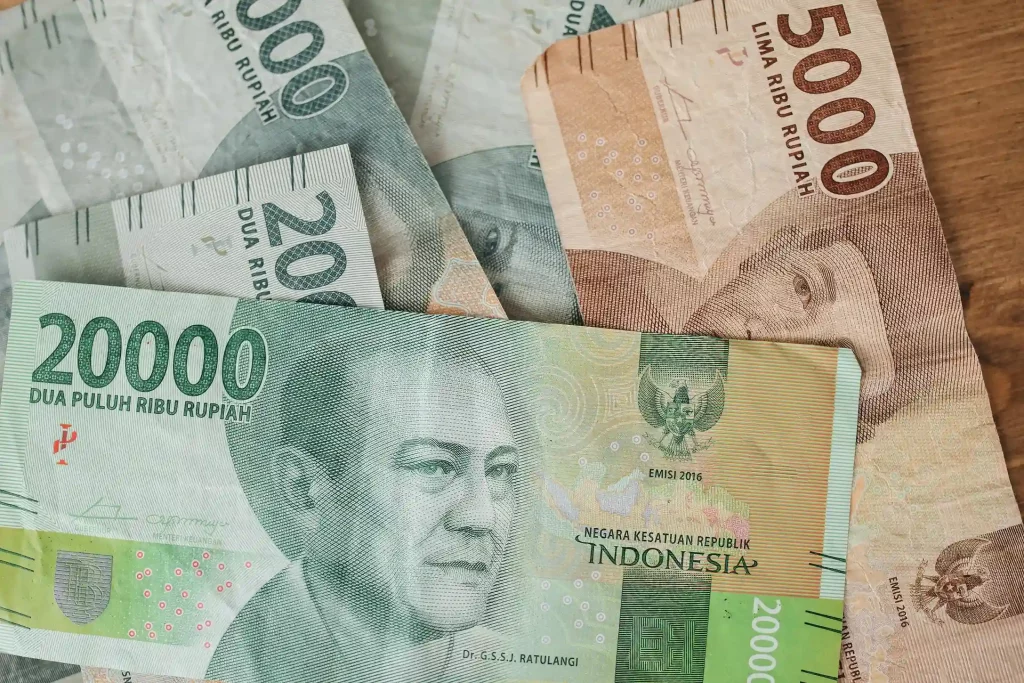
“There is no pressing need for redenomination. Businesses are not demanding it or saying it must be done. On the contrary, it could be risky because many goods are still priced at one or two thousand rupiah. If one thousand is reduced to a single unit, price adjustments become difficult at smaller denominations. When prices eventually increase, the impact could be inflationary,” she said firmly.

Psychological impact
Beyond economic consequences, Prof. Wasiaturrahma cautioned against the psychological effects that may arise. She noted that redenomination could abruptly alter public perceptions of income, particularly among low-income groups.
“We also have to consider the psychological dimension. Around 190 million Indonesians live on roughly 50,000 rupiah per day. If that amount suddenly appears as 50 units, people may feel as though their purchasing power has collapsed overnight,” she explained.
She further highlighted that global economic stability remains fragile. According to her, fiscal pressures in many countries, including the United States, where the deficit has reached about six percent, add to the risks surrounding major monetary policy shifts.
“The probability of a U.S. recession may be around 30 percent, but that is already a significant figure for financial markets. This situation will inevitably affect Indonesia. Economic conditions are still unstable, with growth challenges, inflation risks, external pressures, unresolved domestic structural issues, and persistent uncertainty,” she said.
Message to government
Prof. Wasiaturrahma also pointed out that banks and financial institutions are not yet fully prepared to support such a transition. Weak public outreach and poor implementation, she warned, could erode trust. “Many people, especially those without strong financial literacy, may interpret redenomination as a form of currency devaluation or sanering. This misunderstanding could trigger panic buying,” she said.
She concluded by urging policymakers to exercise caution and avoid hastily promoting ideas that could unsettle the public. “At the moment, households are focused on safeguarding their own financial stability amid slowing economic growth and limited job creation,” she said.
Author: Mohammad Adif Albarado
Editor: Ragil Kukuh Imanto