

UNAIR NEWS – For university students, taking part in community service is often a defining experience. These programs allow students to apply classroom knowledge to real-world problems while serving communities in need. More importantly, working directly with residents helps sharpen social awareness and sensitivity to local challenges, an essential preparation before entering professional life after graduation.
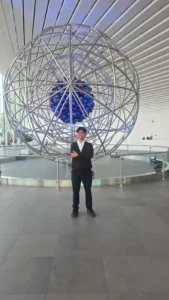
Three Electrical Engineering students from the Faculty of Advanced Technology and Multidiscipline (FTMM) Universitas Airlangga (UNAIR) recently played a role in recovery efforts following flash floods and landslides in Agam Regency, West Sumatra. The students, Ardhiansyah Farhan Hernanda, Afrizal Hasbillah Akbar, and Reza Arifin Sori Harahap, joined efforts to help disaster-affected communities regain essential services.
Restoring power and communication networks
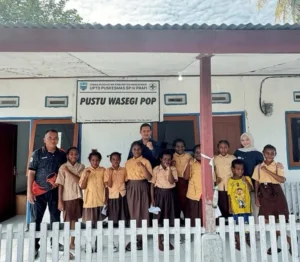
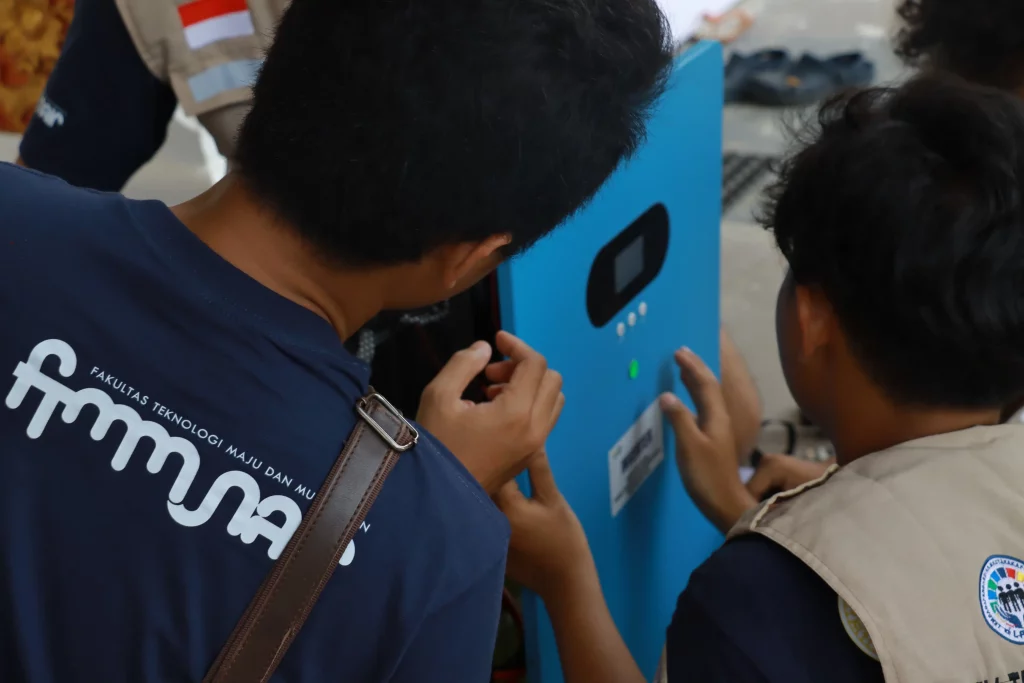
Akbar said he and his teammates assisted residents in restoring access to electricity and communications by installing solar panels and Starlink systems. Their work was supported by faculty mentors, including Yoga Uta Nugraha, ST, MT, and Rizki Putra Prastio, SSi, MT.
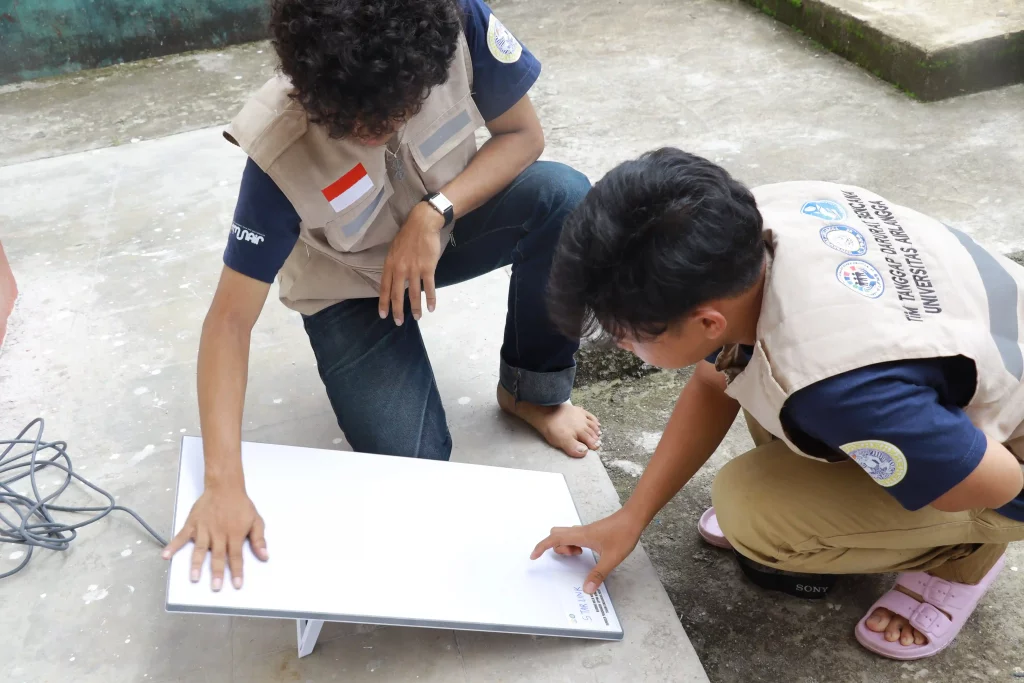
“We’re here in Malalak Subdistrict to help install solar panels for the community. We also assisted with setting up three Starlink units to bring back internet access,” said Akbar, a member of the class of 2023. He explained that the opportunity came through an invitation from a lecturer, which he and his teammates accepted without hesitation.
Challenging terrain, unshaken resolve
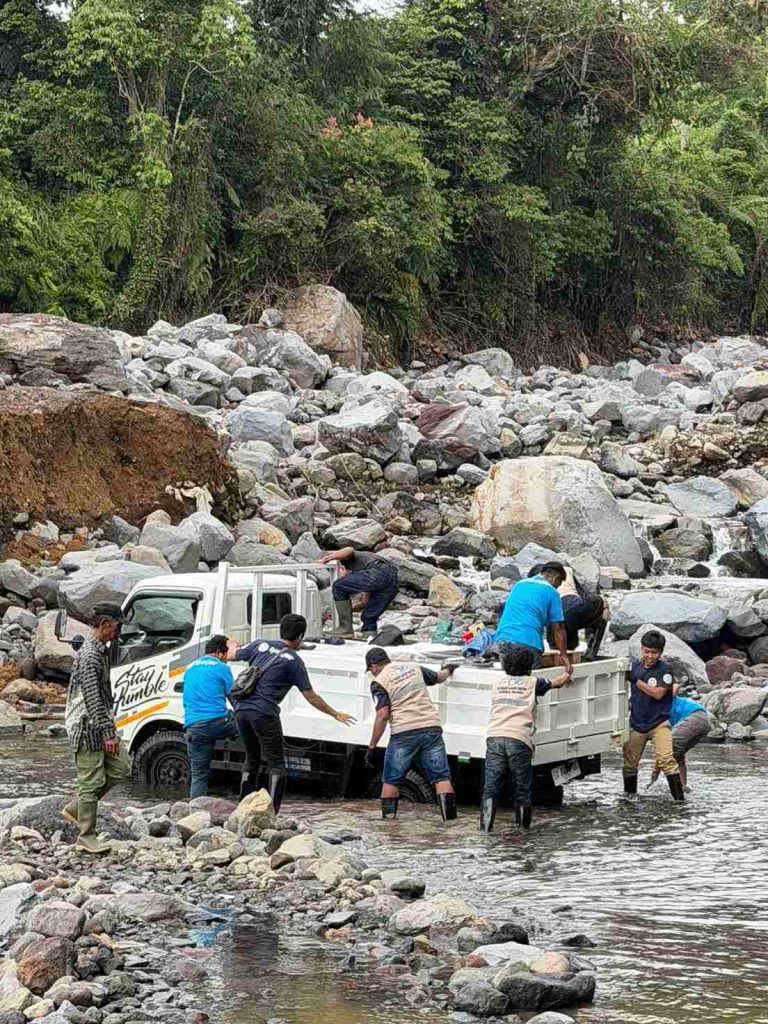
While the systems are now operational, the installation process was far from easy. Harahap recalled that steep, uneven terrain posed a major logistical challenge, particularly when transporting heavy equipment to the site.
“To move the equipment, we had to use a truck to cross a river. Because it was heavily loaded, the truck got stuck on a temporary bridge, with its tires caught on rocks,” Harahap said. Even so, the difficulties did not dampen the team’s determination to support the Malalak community.
This was not the trio’s first experience with community service. They had previously taken part in similar programs in Madiun and Madura. However, working directly in a disaster-stricken area presented a new level of challenge.
Hernanda admitted he initially assumed the Sumatra assignment would be similar to previous projects. “At first, we thought this would be like other community service activities, just a few days of work. But once we were on the ground, we realized it was much more demanding,” he said.
Ready on all fronts
Hernanda added that completing the humanitarian mission required full readiness, not only in terms of time, but also physically, mentally, and morally. “Our energy and skills are greatly needed here. But beyond that, we carry UNAIR’s principle of ‘excellence with morality’ in serving disaster-affected communities,” he said.
The work carried out by FTMM students as part of UNAIR’s Disaster Emergency Response Team aligns with the Sustainable Development Goals (SDGs), particularly SDG 7 on affordable and clean energy, as well as goals related to strengthening infrastructure and technological innovation. Through these efforts, the students demonstrated their concrete role in reconnecting communities and restoring access to information and essential services.
Author: Yulia Rohmawati