

UNAIR NEWS – Research in dentistry should move beyond academic publication and lead to real-world application. That principle guides Prof. Dian Agustin Wahyuningrum, drg., Sp.KG., Subsp.KE(K), a faculty member of Faculty of Dental Medicine (FKG), Universitas Airlangga (UNAIR), who has advanced the development of a biphasic calcium phosphate (BCP)–based bone filler toward downstream utilization.
Prof. Wahyuningrum is currently overseeing several research initiatives aimed at downstream implementation. One of her main projects focuses on developing a BCP-based bone filler combined with stem cell’s derived conditioned medium. The combination is designed to enhance osteogenesis, or new bone formation.
Advantages of BCP
According to Prof. Wahyuningrum, the innovation is driven by Indonesia’s continued reliance on imported medical materials. Through BCP development, she seeks to produce a domestically developed research output that is not only competitive but also offers improved biological performance.
“Our goal is for BCP combined with conditioned medium to demonstrate stronger osteogenic capability than materials without this combination,” she said.
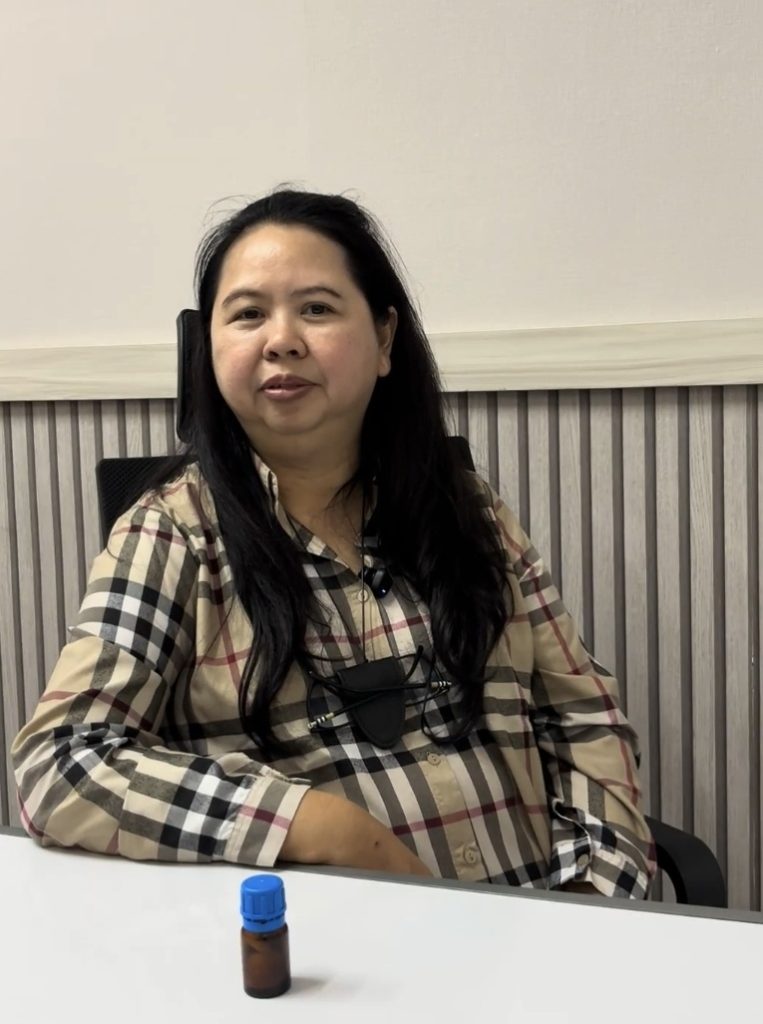
She added that this approach remains relatively uncommon, as most commercially available biomaterials still rely on single-material compositions. The strength of this innovation lies in its dual function: supporting bone regeneration while also providing antibacterial properties. This is particularly relevant in dental practice, where bone damage is often caused by root canal infections involving microbial invasion.
Toward practical application
Prof. Wahyuningrum noted that transforming research into a usable product involves several challenges. One of the main hurdles was combining BCP with conditioned medium, a method that is not yet widely adopted. Through targeted research collaboration, however, these challenges were successfully addressed, resulting in an innovation that optimizes the biological environment for stem cells.
Given the high demand for bone graft materials, Prof. Wahyuningrum hopes the product can soon enter the pre-commercial phase. Her team has begun exploring collaboration with PT Hexa Dental Indonesia, a dental materials manufacturing company, to assess opportunities for scaling the product for industrial use.
“Research should not stop at a single study, but should reach a point where it can be applied. If we want research to truly benefit society, it must be brought into downstream processes that deliver real value to the public,” she said.
Author: Adinda Octavia Setiowati
Editor: Yulia Rohmawati