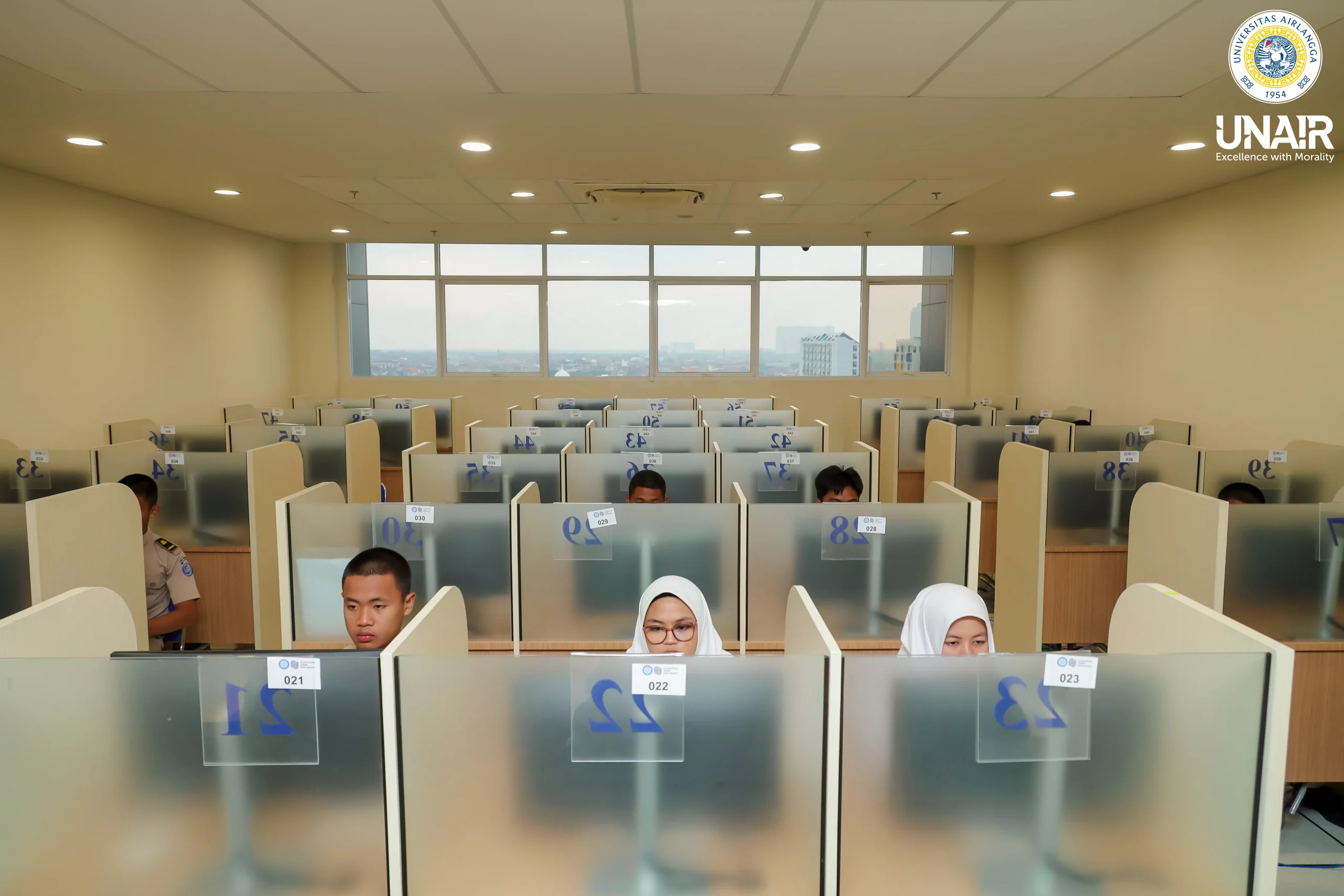
UNAIR NEWS – The Ministry of Primary and Secondary Education (Kemendikdasmen) released the results of the Academic Ability Test (Tes Kemampuan Akademik/TKA) for senior high school students on Tuesday (December 23, 2025). The findings reveal a notable drop in performance nationwide. At the senior high school (SMA) level, average scores stood at 57.39 in Indonesian Language, 37.23 in Mathematics, and just 26.71 in English. Vocational high school (SMK) students recorded similarly low averages, with scores of 53.62 in Indonesian Language, 34.74 in Mathematics, and 22.55 in English.
Factors contributing to TKA scores decline
Prof. Dr. Tuti Budirahayu, a professor of Education Sociology at Universitas Airlangga (UNAIR), pointed to several reasons behind the disappointing results. She noted that many students no longer view the TKA as a high-stakes examination that could influence their future. This contrasts sharply with perceptions of the former National Examination (UN) or the National Selection for State Universities (SNBP), which students often regard as decisive milestones.
“Those examinations were widely seen as effective in pushing students to study seriously and functioned as strong selection mechanisms for identifying top-performing students. The pressure was so intense that some students, lacking strong moral and ethical standards, even resorted to dishonest practices simply to pass,” she said.

Another major factor, Prof. Budirahayu added, is the overwhelming influence of the digital age on students’ learning habits. Many young people are immersed in an instant-gratification culture shaped by social media, where stories of rapid success are constantly on display, fostering the impression that achievement requires little effort. “Senior high school students today face continuous digital distractions from gadgets, whether through social media platforms like Instagram and TikTok or online games. This weakens critical thinking, reduces sustained concentration, and undermines reading endurance and analytical reasoning,” explained the UNAIR Faculty of Social and Political Sciences lecturer.
Education quality concerns
Beyond individual behavior, Prof. Budirahayu emphasized broader concerns regarding the overall quality of education in Indonesian schools. She described TKA results as a reflection of classroom learning standards. When teaching quality is inadequate, students’ exam outcomes are unlikely to be strong. This suggests that current instructional approaches have yet to effectively promote deep understanding of academic concepts.
“If this pattern continues, comprehensive education reform is unavoidable. Learning methods and objectives must be reoriented. Students should move away from memorization-based instruction toward approaches that prioritize reasoning, conceptual mastery, and higher-order thinking skills (HOTS),” she said.
Addressing TKA performance decline
Addressing these issues, Prof. Budirahayu stressed, requires concrete and coordinated action. One priority is restoring students’ understanding of the purpose and value of learning itself. Schools should help students connect academic subjects to real-world challenges, including those they will face in the workplace. She also highlighted the importance of critical digital literacy so that technology becomes a learning tool rather than a source of constant distraction.
She further called for deep, systemic education reform. “This includes improving the quality of teachers as the central human resource in education, while also reducing disparities between regions, between public and private schools, and among institutions managed by different ministries,” she added.
In closing, Prof. Budirahayu underscored the need for stronger collaboration among schools, parents, and local governments to support students’ learning. “School-based mentoring and counseling programs must be strengthened to support students who need extra academic or psychological assistance. Strong cooperation among all stakeholders will help create a learning environment that supports students’ academic achievement and emotional well-being,” she concluded.
Author: Saffana Raisa Rahmania
Editor: Yulia Rohmawati