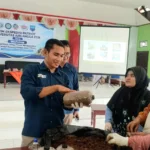
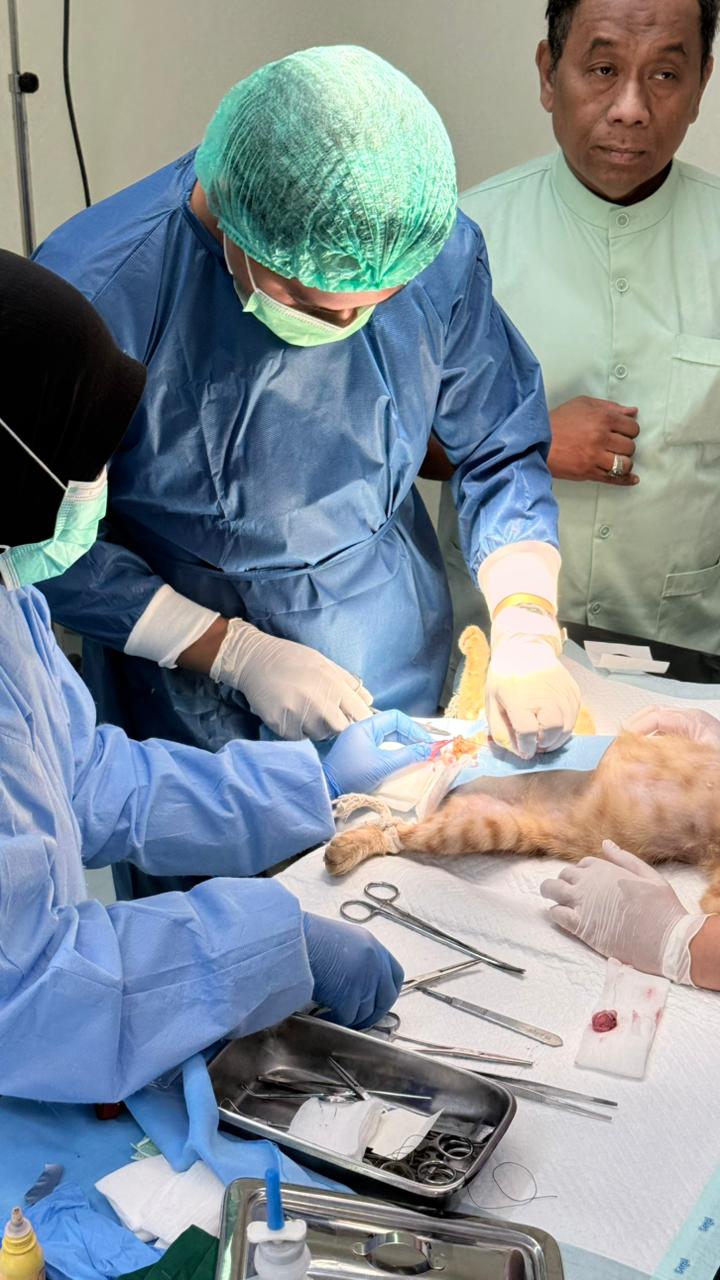
UNAIR NEWS – The Faculty of Veterinary Medicine (FKH) Universitas Airlangga (UNAIR), in collaboration with the UNAIR Veterinary Hospital (RSH), has launched a Campus Cat Population Control Program across the university. The three-day initiative was held from Saturday to Monday (January 3–5, 2026) at the UNAIR Animal Hospital.
The program is part of the celebration of FKH’s 54th anniversary and was initiated in response to the increasing number of stray cats in multiple campus areas. The presence of stray cats on Campuses A, B, and C has prompted the need for a coordinated approach to ensure it does not compromise the comfort and health of the university community.
Student concerns and institutional responsibility
FKH Dean Prof. Dr. Lilik Maslachah, DVM, M.Kes., said the neutering program followed student concerns raised during a formal hearing with university leaders. After discussions, FKH was officially tasked with addressing the issue through a structured and long-term strategy.
“The issue of stray cats has been a longstanding concern for students. Following consultations with university leadership, we were given the mandate to manage it comprehensively. We chose the momentum of FKH’s 54th anniversary as the starting point for a large-scale neutering initiative,” she said.

As part of the program, FKH targeted the neutering of approximately 30 to 50 male stray cats living on campus. After receiving medical treatment in accordance with established procedures, the cats were returned to their original environments, while adoption opportunities remained open to members of the academic community.
Prof. Maslachah emphasized that the initiative is not intended to remove cats from campus, but to manage their population in an ethical manner. “The goal is not elimination, but control. Once neutered, the cats can no longer reproduce, allowing population growth to be reduced sustainably,” she said.
One Health approach and animal welfare education
Deputy Director of RSH, Dr Nusdianto Triakoso drh MP, explained that the neutering program also reflects the application of the One Health approach, which highlights the close relationship between animal health, human health, and environmental sustainability.
“Managing the stray cat population is not only about numbers. It is also directly linked to the health of the campus environment. Neutering is a preventive step to reduce the risk of zoonotic diseases while ensuring the welfare of the animals,” she said.
She added that neutering remains the most effective and ethical method for controlling stray cat reproduction. In addition to slowing population growth, the procedure also contributes to improved behavior and overall health in cats.
The program involved faculty members, veterinarians, paramedical staff, and FKH students. Beyond medical services, the initiative served as a practical learning opportunity focused on professional ethics and animal welfare practices within a campus setting.
Going forward, FKH plans to expand the population control program through broader Communication, Information, and Education (CIE) initiatives aimed at the public. These efforts are expected to raise awareness that animal health is a vital component of public health and environmental sustainability.
Author: Muhammad Afriza Atarizki
Editor: Yulia Rohmawati