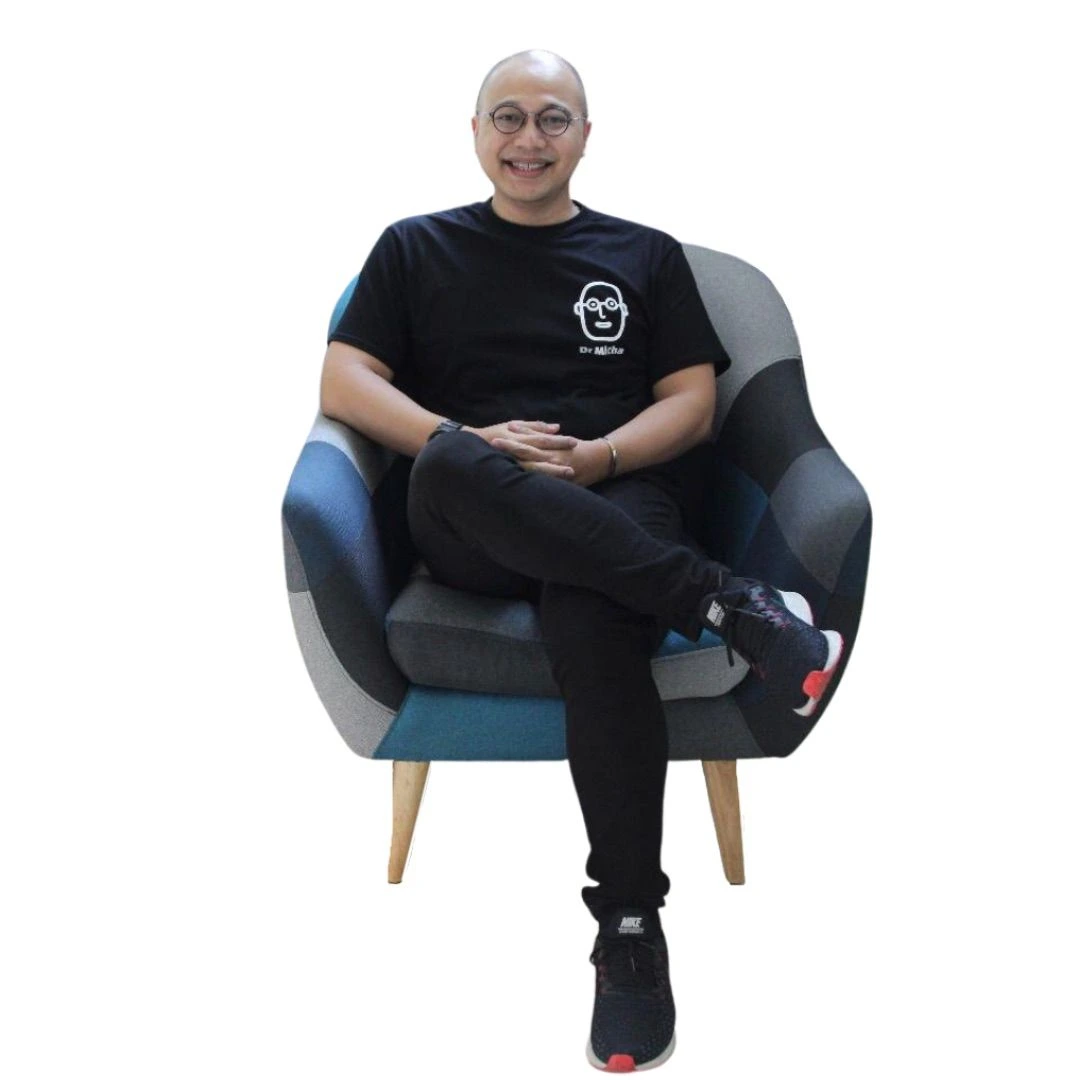
UNAIR NEWS – Every personal journey begins from a different place. For Dr. Micha Catur Firmanto, M.Psi., Psychologist, an alumnus of UNAIR’s Faculty of Psychology, his path into psychology was rooted in a deeply personal motivation. He said his decision to pursue the discipline was driven not primarily by professional ambition, but by a desire to better understand himself.
“I initially entered psychology to ‘fix’ myself. At the time, I was someone who lacked confidence,” he said. His experiences during high school prompted serious self-reflection, particularly after moments when his confidence suddenly faltered. During that period, his father offered advice that has stayed with him ever since.
“Trust the process, because the journey itself will shape you and eventually resolve your doubts,” he recalled.
That process led him to explore several universities before ultimately choosing the Faculty of Psychology at UNAIR. He felt an immediate sense of comfort when interacting with its students. “I came straight from high school without any special background, yet people spoke to me openly and respectfully. That was when I felt I could truly be myself and feel confident,” Dr Firmanto said. The supportive atmosphere reinforced his decision to enroll at UNAIR as part of the 2001 cohort.
Academic training and environment that shaped character
During his studies, Dr Firmanto focused on the clinical psychology track. He viewed the academic experience at UNAIR as more than theoretical training, noting that it shaped his perspective on both personal development and social dynamics. One lesson that left a lasting impression was behavior modification.
“That’s when I realized behavior is shaped by the interaction between individuals and their environment. If change is the goal, it’s not enough to change the person alone, the environment also has to change,” he explained.
He stressed that all coursework proved relevant in the long run. Subjects such as psychometrics, quantitative and qualitative research, and academic discourse, he said, continue to inform his professional practice. “Quantitative thinking supports measurement and research, while qualitative approaches are crucial for profiling and engaging with management,” he said.
Outside the classroom, Dr. Firmanto’s involvement in student organizations played a key role in his growth. As a member of the Faculty of Psychology’s Puppet Theater group, he developed skills in self-expression and narrative building. “The storytelling skills I learned there are still useful today, even when I’m speaking to boards of directors,” he said.
Building Life Tree Psychology
After years of experience in the corporate sector, completing professional training, and earning a doctoral degree, Dr Firmanto and his wife decided to establish Life Tree Psychology in 2021. The move was not an easy one, as it required leaving a stable career and starting anew.
“Financial capital isn’t the most important factor. What matters first is the value proposition, what sets us apart,” he said.
He explained that building Life Tree Psychology began with clearly defining its values and target market. “You have to know which segment you want to serve and what the market truly needs,” he said. Supported by extensive experience and a strong professional portfolio, Life Tree Psychology has steadily grown and now offers a range of consultation, training, and mentoring services.
Through his experience, Dr Firmanto encourages UNAIR students to make the most of their academic years while preparing early for professional life. He believes campus learning lays a critical foundation, but must be complemented by readiness for real-world challenges.
“Everything you learn at university is important, but the workplace demands preparedness, practical skills, and effective ways of working,” he said.
He therefore urges students to stay active in organizations, pursue internships, and engage in real-world projects with industry partners and alumni. “All of these experiences build adaptability and stronger readiness when you graduate and enter the professional world,” Dr Firmanto concluded.
Author: Tsabita Nuha Zahidah
Editor: Khefti Al Mawalia