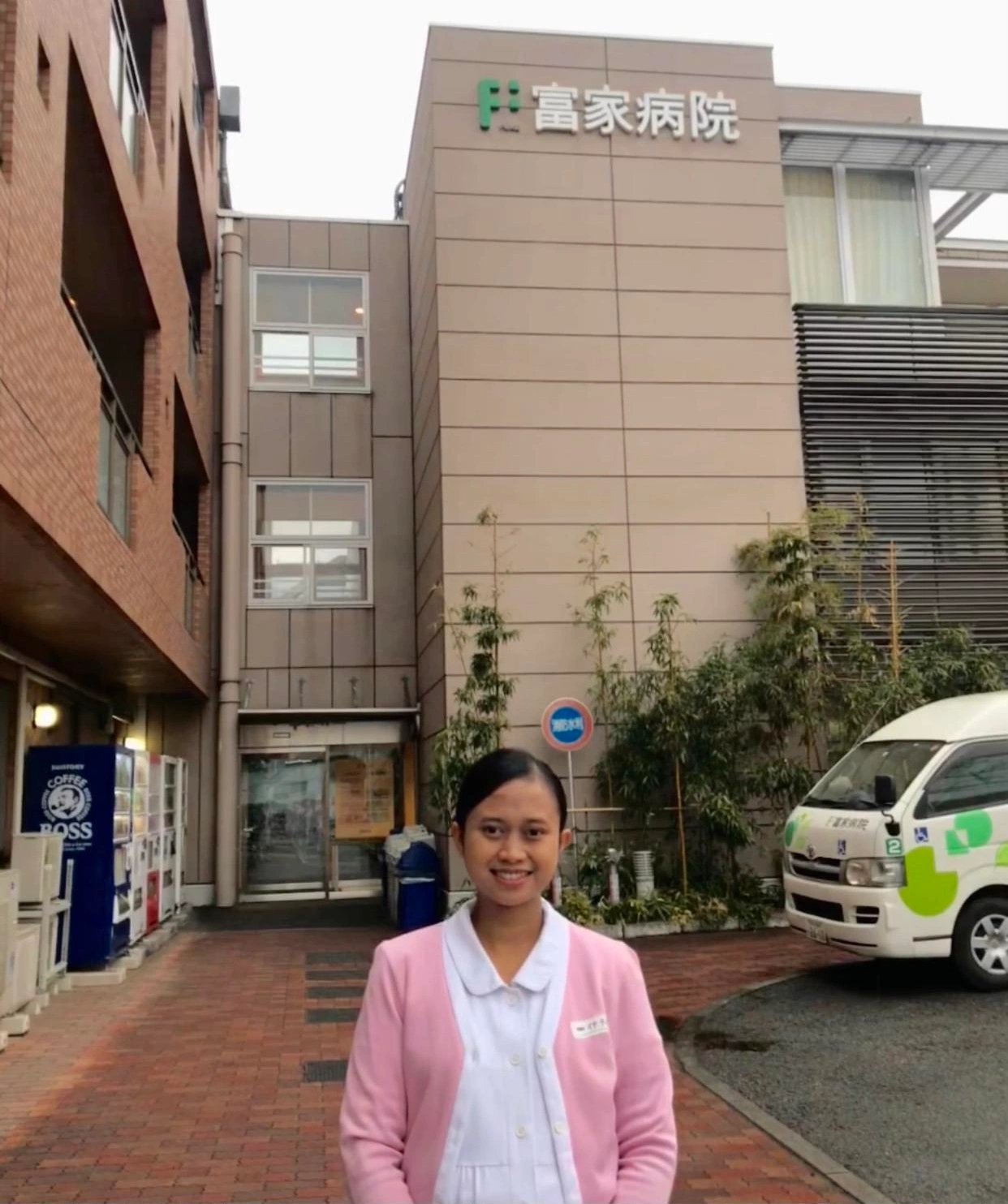
UNAIR NEWS – Building a career overseas is a long-held aspiration for many healthcare graduates, yet concerns about cultural differences and contrasting work systems often create hesitation. Ina Titi Sri Wulandari, S.Kep., Ns., RN, has shown that such barriers can be overcome. A graduate of the Faculty of Nursing (FKp) Universitas Airlangga (UNAIR), Wulandari is currently employed as a nurse at Fuke Hospital in Saitama, Japan. Her professional journey illustrates how stepping beyond one’s comfort zone can lead to unexpected global opportunities.
Taking first step with courage
Before working abroad, Wulandari was actively involved in Indonesia’s healthcare sector. She previously worked at PHC Hospital in Surabaya and later served as a lecturer at Widya Mandala Catholic University. Her career direction shifted when she learned of nursing opportunities in Japan through the government-backed G2G IJEPA (Indonesia–Japan Economic Partnership Agreement) program.
“At the time, I applied just like any other fresh graduate would. By coincidence, I was the only one who applied for the position in Japan,” she said.
The process did not stop at recruitment. Wulandari was required to complete intensive training to prepare for Japan’s demanding healthcare standards before officially beginning her work at Fuke Hospital.
Facing culture shock and language challenges
Working in Japan, Wulandari said, involves more than relocating to a new workplace, it requires a fundamental shift in work culture and mindset. She admitted experiencing significant culture shock due to differences in workflow systems and Japan’s highly disciplined professional environment. Strict expectations regarding punctuality and procedural accuracy leave little room for error. “Even though I was considered a senior nurse in Indonesia, in Japan I had to let go of that status. I had to start over from the beginning,” she said.
According to Wulandari, adapting to Japan demands humility and a willingness to become a “newcomer” who follows local rules closely. She noted that the greatest challenge was not solely mastering the Japanese language, but developing the mental resilience needed to meet the country’s high expectations.
“We have to fully understand what Japanese society expects from healthcare professionals. Like it or not, mental strength is essential. We are not only learning their medical system, but also their way of thinking and interacting,” she added.
Daily work routines at Fuke Hospital require nurses to operate with a high level of independence in every medical procedure. Over time, the strict emphasis on precision has shaped Wulandari into a more resilient and disciplined professional. Her experience underscores that technical nursing skills alone are not enough to compete globally; strong mental endurance and cultural adaptability are equally critical to succeeding in an international work environment.
Author: Marissa Farikha Siti Fatimatuzzahra
Editor: Yulia Rohmawati