

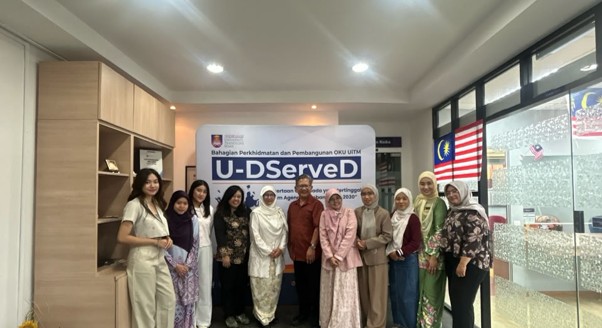
UNAIR NEWS – Commitment to inclusive education became a key experience for the Faculty of Public Health (FKM), Universitas Airlangga (UNAIR) delegation during a series of academic activities at Universiti Teknologi MARA (UiTM), Shah Alam, Malaysia. Following the International Collaborative Workshop on Innovative Delivery & Learning on August 11-12, 2026, the UNAIR delegation continued its agenda by attending Disability Management Trained Person (DMTP) Training at UiTM on Thursday (August 13, 2026).
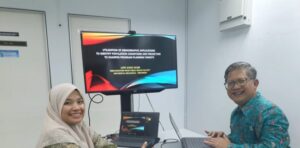
The UNAIR delegation consisted of three lecturers, namely Prof Ira Nurmala PhD, Prof Dr Lutfi Agus Salim MSi, and Dr Muthmainnah MKes, along with four students: Eunike Merry Crismatea, Dina Kinanti Dewi, Siti Mudmainah, and Fania Ayu Harsanti. Their participation in the DMTP training also received official approval from UiTM.
“What’s interesting about this event is that we didn’t just learn the theory. We were able to see firsthand how the procedures and support system were implemented at UiTM, including how the academic community members with disabilities are able to carry out their academic duties and work,” Prof Nurmala said in her reflection on the event.
Learning about inclusivity in campus
For Prof Nurmala, the practices demonstrated by UiTM serve as an important lesson for UNAIR. “We learned that inclusivity must be present in the system, not just in rhetoric. When the campus provides support, adequate accommodations, and a welcoming environment, both students and lecturers with disabilities can continue to thrive and produce remarkable work,” she said.
This training provided a distinctive learning experience, offering participants not only disability-related material but also a firsthand look at how universities build inclusive academic environments. The speaker, Associate Professor Ts. Dr Roslinda Alias CDMP, who also served as Director of UiTM Disability Services and Development Division (U-DServeD), shared UiTM’s experience in supporting the academic community with disabilities.
The UNAIR delegation was introduced to a range of UiTM standard operating procedures (SOPs) for managing and supporting members of the academic community with disabilities. Participants also observed how students and lecturers with disabilities continue to carry out their academic and professional responsibilities. The experience illustrated that appropriate support is not meant to limit individuals, but rather to ensure that everyone can contribute optimally.
The experience became even more remarkable when the UNAIR delegation was invited to share a meal at a restaurant that also employed workers with disabilities. Through this, they gained an understanding that empowerment does not stop at the campus environment, but can extend into the workforce and social life.
Strengthening understanding
For its part, UiTM welcomed the UNAIR delegation. Dr Roslinda Alias noted that sharing experiences like this is key to strengthening understanding and collaboration between universities in building an education system that leaves no one behind.
“Collaborations like this are important as we can learn from one another. Each institution has experiences and practices worth sharing. We hope the relationship between UiTM and UNAIR can continue to grow through the exchange of knowledge, research, and joint academic programs,” Dr Alias said. This spirit aligns with U-DServeD UiTM’s commitment to ensure people with disabilities receive the support and opportunity to grow within the university environment.
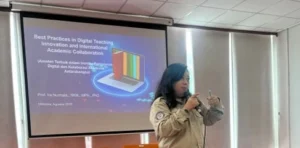
The series of activities held on August 11-12 also brought together members of the academic community from both universities, ranging from a 360-degree video introduction, hands-on workshops, and virtual and immersive learning, to sharing innovative digital learning practices and strategic discussions on research, publication, and academic mobility.
These activities also reinforced UNAIR and UiTM’s contribution to the Sustainable Development Goals (SDGs), particularly SDG 4 on Quality Education, through strengthening inclusive and equitable education; SDG 8 on Decent Work and Economic Growth, through empowerment and employment opportunities for people with disabilities; and SDG 10 on Reduced Inequalities, by ensuring no member of the academic community is left behind due to disability. This spirit also aligns with UiTM’s message, “No One Left Behind in the 2030 Development Agenda.”
For students who took part firsthand in this series of activities, the visit to UiTM served as a reminder that higher education is not only about academic achievement, but also about creating spaces that enable everyone, without exception, to learn, work, create, and grow.
Author: Bian Shabri Putri Irwanto
Editor: Yulia Rohmawati