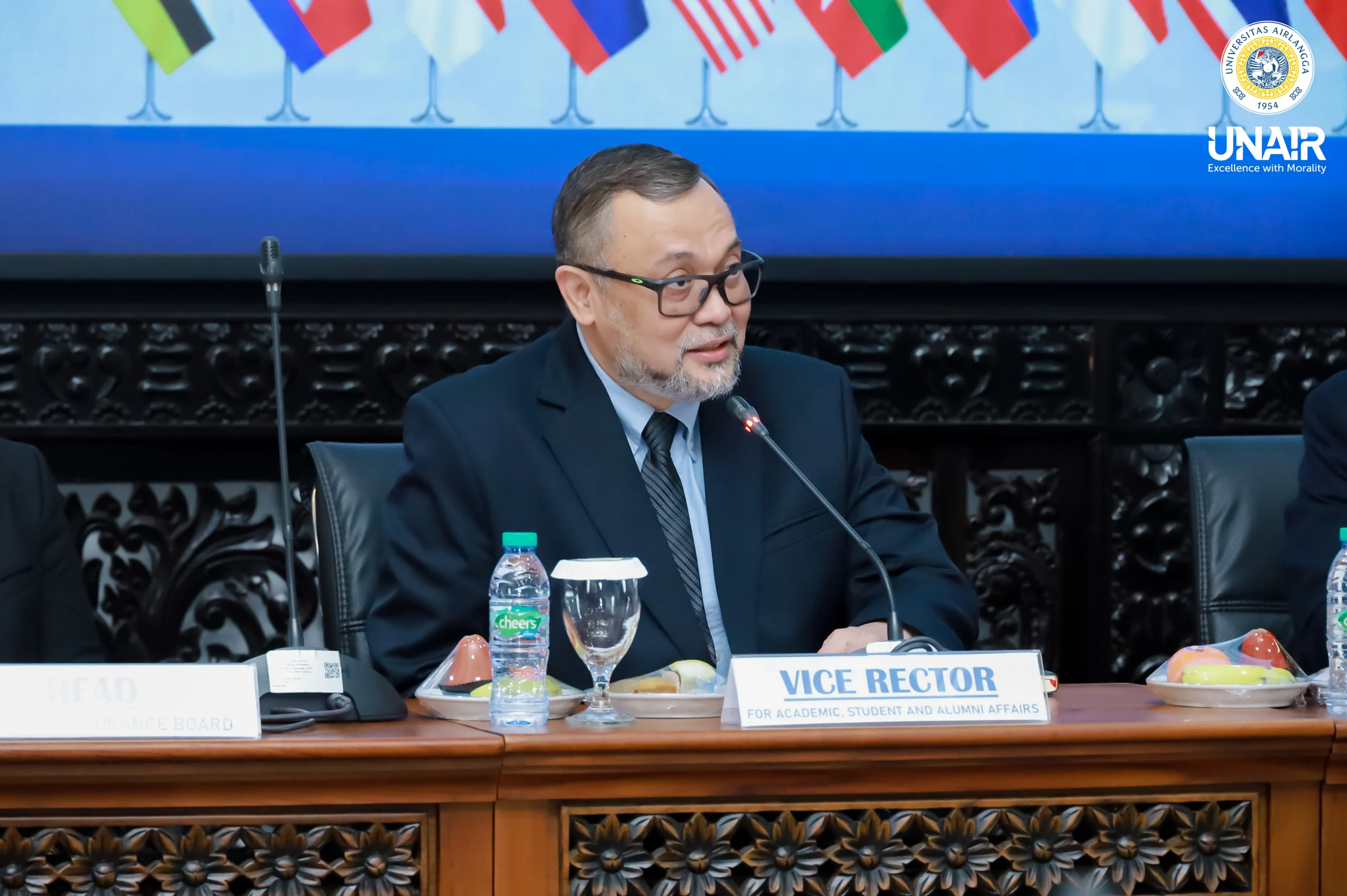


UNAIR NEWS – Three Faculty of Public Health (FKM) Universitas Airlangga (UNAIR) lecturers, Prof Ira Nurmala SKM MPH PhD, Prof Lutfi Agus Salim SSi MKes PhD, and Dr Muthmainnah SKM MKes had the opportunity to share experiences and academic ideas during an international collaboration event at Universiti Teknologi MARA (UiTM), Malaysia.
Three of them attended the event with different yet complementary perspectives. Prof Nurmala discussed innovations in digital learning and international academic collaboration. Prof Salim addressed the use of demographic data and information for development. While Dr Muthmainnah discussed digital innovations and artificial intelligence (AI) in education and community development.
This event served as a platform for knowledge exchange between Indonesian and Malaysian academics. This collaboration also demonstrates that public health development is increasingly linked with technology advancement, the use of data, and the strengthening of cross-national academic networking.
The material presented by the three of FKM UNAIR lecturers were also relevant to the direction of the learning development at UiTM. Through the Centre for Innovative Delivery & Learning Development (CIDL), UiTM promotes innovation in the learning process and the use of technology, including through a “high tech and high touch” approach that combines technology with human interaction.
Enhancing learning through digital innovations
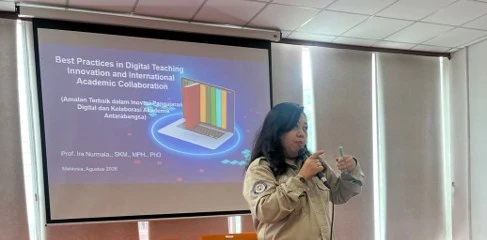
Prof Nurmala presented a session titled ‘Best Practices in Digital Teaching Innovation and International Academic Collaboration’. She emphasized that the use of technology in education is not merely about moving conventional learning into a digital platform, but it should be directed toward building a more interactive learning experience.
“Digital innovation in teaching is not merely moving classroom materials to PowerPoint or Zoom, but rather building an interactive learning ecosystem,” said Prof Nurmala.
According to her, digital learning innovation covers several components, ranging from digital devices and platforms, digital pedagogy, and the use of multimedia content. Various approaches such as flipped classroom, gamification, microlearning, and AI-assisted learning can be part of this ecosystem.
UNAIR’s experiences also become a model for the implementation of digital learning innovation. These include interactive learning, HEBAT e-Learning, Health Educator for Youth (HEY) program, and Konco SREGEP app which integrates technology with learning, health promotion, and youth empowerment.
In addition to technology innovation, Prof Nurmala highlighted the importance of international academic collaboration. According to her, cross-national partnership can be developed through comparative research, international peer educators, and the use of academic networking to establish research consortia and receive international grants.
Demographic data as the foundation of development
Meanwhile, Prof Salim presented demographic perspective through his presentation titled ‘Utilizing Demographic Data and Information as a Tool for Advocating for Demographic-Oriented Development’.
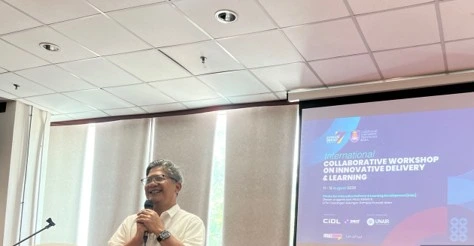
In his presentation, Prof Salim explained the importance of data in evidence-based policymaking and development. Data can be used for identifying issues, conduct analyses, generate research findings, and compile development recommendations.
He also introduced several tools that can assist with demographic analysis, such as Gapminder World, Spectrum-DemProj, RAPID, and MORTPAK. These tools can be utilized to understand demographic conditions, analyze the impact, and develop projections.
One of the tools introduced was RAPID. This model can be used to examine the impact of changes in birth rates and population growth on various development sectors, including the labor force, education, health, urbanization, and agriculture.
AI for education and community empowerment
Another perspective was presented by Dr Muthmainnah through her presentation titled ‘Digital Innovation and Artificial Intelligence in Education and Community Development’.
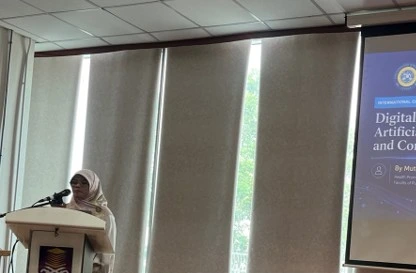
According to her, AI can support the creation of learning experiences that are more personalized, adaptive, inclusive, and data-driven. In community development, this technology also has the potential to support data-driven decision making, improve service quality, expand participation, and strengthen community capacity at the local level.
Dr Muthmainnah offered a framework that links data, participation, and empowerment, However, the implementation must still be supported with ethics principles, privacy protection, equity and institutional support.
During this event, she also shared several practices relevant to the context of public health, including educational innovations, digital-based health promotion, and the development of SMART Posyandu Prafi. These innovations are designed not only to support healthcare services, but also advance digitalization, build the capacity of community health workers, and promote family economic empowerment.
Aligned with the SDGs agenda
The exchange of ideas between UNAIR and UiTM is linked to several Sustainable Development Goals (SDGs). Digital learning innovation, AI-assisted learning, inclusive learning, and capacity building for academics are aligned with SDG 4: Quality Education.
Meanwhile, the utilization of technology for health promotion and community empowerment are aligned with SDG 3: Good Health and Well-being. The development of AI, digital platforms, and data analytics are also aligned with SDG 9: Industry, Innovation and Infrastructure.
On the other hand, academic collaboration between UNAIR and UiTM reflects SDG 17: Partnerships for the Goals, which emphasize the importance of cross-institutional and cross-national partnership in order to support the achievement of sustainable development.
Through this event, three of UNAIR lecturers not only shared their knowledge, but also introduced best practices for discussion in the context of education and community development in Malaysia. This collaboration showed how technology, data, and AI can be developed in a more meaningful way when directed toward supporting education, health, empowerment, and the well-being of the community.
Author: Bian Shabri Putri Irwanto
Editor: Yulia Rohmawati