
UNAIR NEWS – The Ministry of Higher Education, Science, and Technology (Kemdiktisaintek) through the Directorate General of Higher Education (Ditjen Dikti) held the 2026 Indonesian Higher Education Summit (KPPTI) as a platform for sharing best practices, aligning goals, and strengthening collaboration to enhance the benefits of higher education for society.
KPPTI is taking place on Wednesday through Friday (November 11-13, 2026) at UNAIR MERR-C Campus, with a series of activities beginning on Tuesday (November 10, 2026). This conference brought the theme of “Transforming Higher Education Toward Impact: Integrating Technology and Local Wisdom in an Inclusive and Humanistic Manner”.
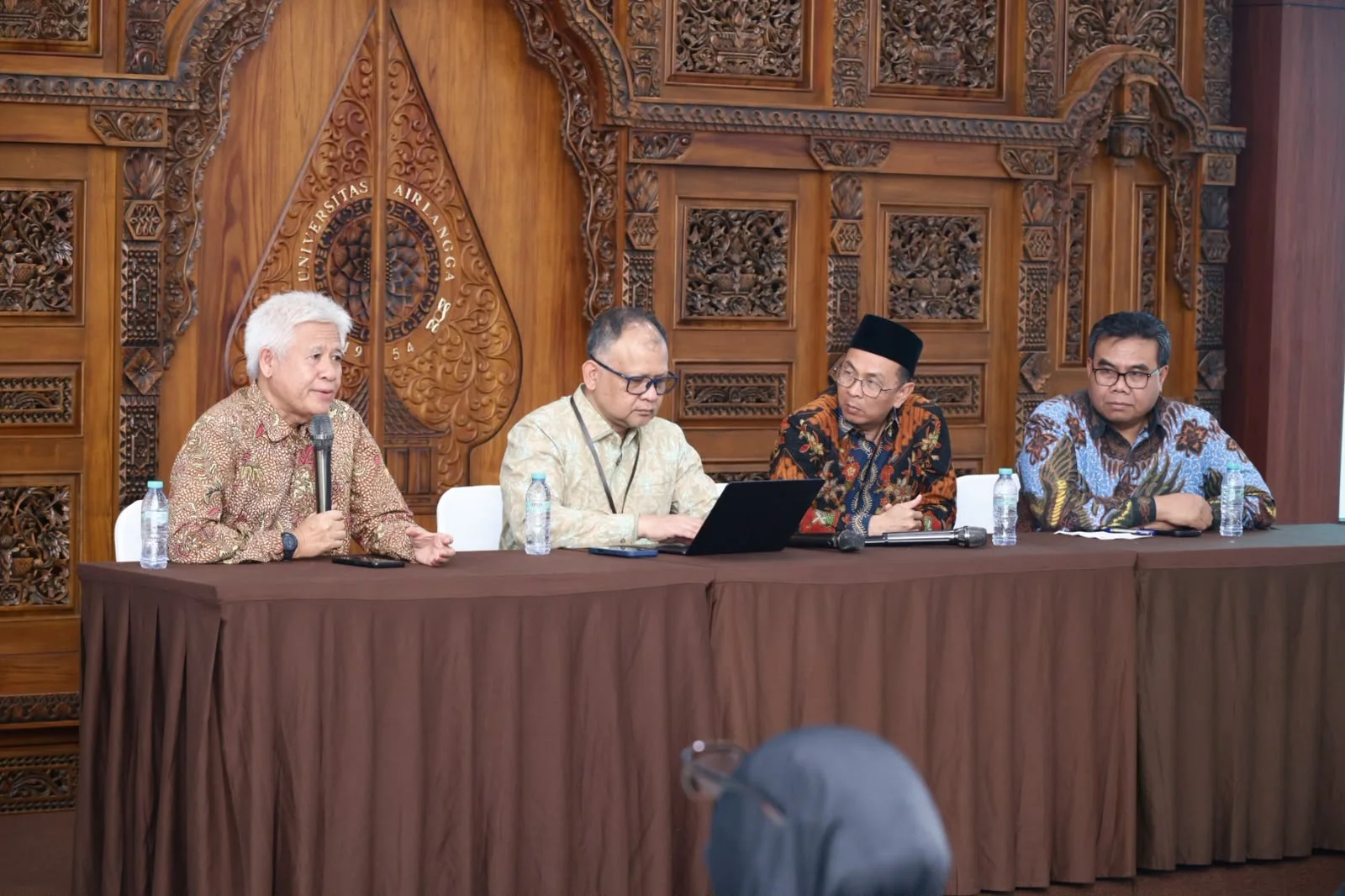
In preparation for KPPTI, Ditjen Dikti together with UNAIR as the host, held a media briefing or press conference on Monday (November 11, 2026), in THE IX Hall, UNAIR MERR-C Campus. In attendance at this press conference were the Director General of Higher Education (Dirjen Dikti), Prof Dr Khairul Munadi ST MEng; Head of KPPTI Steering Committee, Prof Drs T Basaruddin; UNAIR Rector, Prof Dr Muhammad Madyan SE MSi MFin; and Head of KPPTI Technical Executive as well as UNAIR Secretary, Prof Dr Dwi Setyawan SSi MSi Apt.
The Dirjen Dikti, Prof Khairul Munadi emphasized that the transformation of higher education must address the needs of students, workforce, local government, and society. “The transformation of higher education must be reflected in the quality of learning, opportunities for students, and benefits for society. Through KPPTI, we bring together best practices so that the experiences of one campus can strengthen many others,” he said.
KPPTI 2026 continues the foundation laid by the inaugural event in 2025 at Universitas Negeri Surabaya, these are sharing best practices, consolidating common goals, and fostering collaboration within the higher education ecosystem. This spirit is reinforced through the exchange of experiences that can be learned from and adapted to the needs and characteristics of each higher education institution.
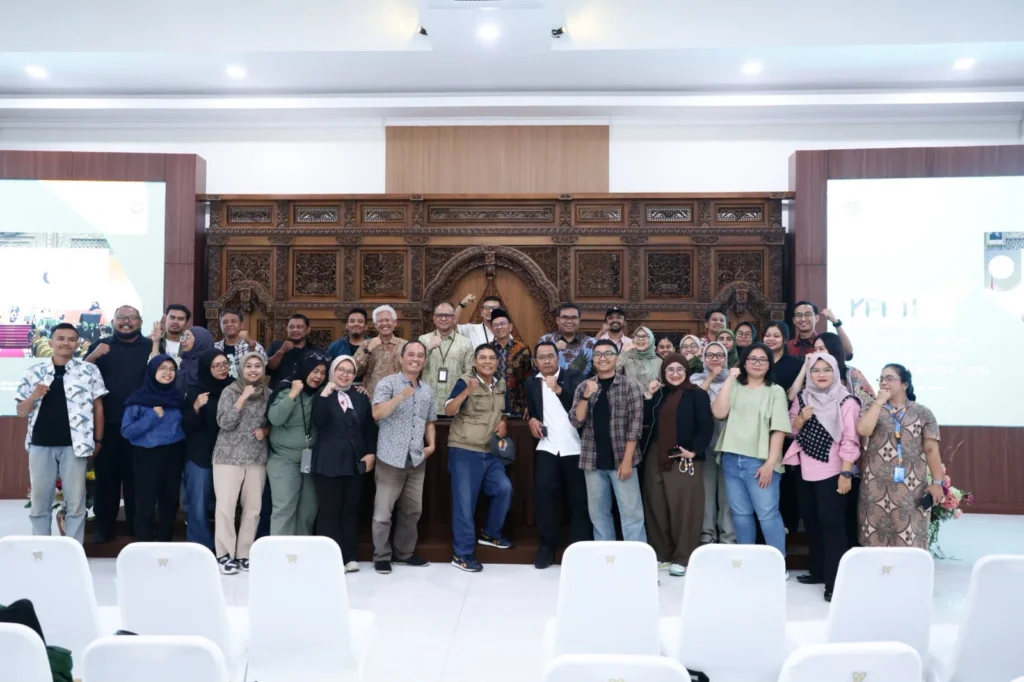
According to the Dirjen Dikti, the diversity of Indonesia’s higher education institutions is a source of shared learning. Campuses across various regions have experience in developing educational programs, improving governance, expanding access, and building partnerships with the community.
“When those experiences are shared, higher education institutions can learn from one another and find partners to solve common problems. Through this process, we hope to expand the Kampus Berdampak (Campus with Impact) movement,” said Prof Munadi.
Four clusters of higher education transformation
Discussions on the KPPTI 2026 are focused on four interrelated clusters. The first cluster covers governance, leadership, and sustainability of higher education institutions. The discussions emphasize strengthening institutional capacity, leadership capable of driving change, and accountable governance to improve the quality of campus services.
The second cluster focuses on learning transformation, digitalization, and graduate relevance. Digital technology advancement and artificial intelligence must be accompanied by updates to teaching methods, the readiness of lecturers and students, and the strengthening of academic ethics and integrity.
The third cluster addresses partnerships and the impact of regional development. Higher education institutions are encouraged to align their teaching and community service with real-world needs, including in the areas of food, health, energy, economic empowerment, environment, and cultural resilience.
Meanwhile, the fourth cluster covers access, inclusion, and networking in higher education. The focus is on expanding opportunities and supporting academic success, including for people with disabilities, vulnerable groups, and communities in frontier, outermost, and disadvantaged (3T) regions, border areas, and islands.
“These four clusters are connected to the direction of our efforts to strengthen higher education: access, quality, relevance, and impact. Technological advancement must go hand in hand with an understanding of regional potential and community needs,” said Prof Munadi.
From exchange of experiences toward actions
In addition to conferences and thematic discussions, KPPTI 2026 features an exhibition of works and innovations, partnership dialogues, networking forums, and ministry service coaching clinics. This series of activities provides participants with opportunities to gain knowledge, build partnerships, and receive support for the development of higher education institutions.
The agenda also includes the Digital Maturity Index for Higher Education Institutions, a framework for the use of generative artificial intelligence (generative AI), and efforts to strengthen collaboration between hospitals and higher education institutions. These initiatives are expected to support the institutions’ readiness to carry out a focused and responsible transformation.
The outcomes of the conference are expected to enrich policy recommendations, strengthen the direction of the Perguruan Tinggi Berdampak 2045 (Impactful Higher Education 2045) initiative, and foster a shared commitment that can be acted upon by higher education institutions and their partners.
“We want the recommendations to be translated into clear priorities for action. The measures of success we are promoting are improved learning, more reliable campus services, productive partnerships, and greater access to educational opportunities,” Prof Munadi emphasized.
UNAIR Rector, Prof Dr Muhammad Madyan SE MSi MFin added that KPPTI 2026 registers are currently reached 1,938 participants from 565 institutions, including public universities (PTN), private universities (PTS), teacher training institutions (PTKL), foreign higher education institutions (PTLN), education advocates, and industry associations. “This event will also feature an exhibition with 112 booths from ministries, higher education institutions, partner companies, and associations,” he said.
Prof. Madyan added that the forum would feature nine keynote speakers, including ministry representatives, university rectors, and prominent figures in Indonesian higher education.
Inter-institutional collaboration
The Head of KPPTI Technical Executive, Prof Dr Dwi Setyawan SSi MSi Apt, emphasized that participants who registered in KPPTI must undergo a selection process by a team of experts before they can join. Through the system that has been established, the organizing committee also encourages higher education institutions to build collaborations with other institutions.
“We hope that this event will provide a wide impact. Not only to higher education institutions in Java, but also to other higher education institutions in various regions of Indonesia, including the frontier, outermost, and disadvantaged (3T) regions,” he said.
Furthermore, he noted that KPPTI also serves as a platform for all higher education institutions to showcase and develop arts and culture. Various elements of higher education are brought together in this activity so they can contribute according to their respective capacities.
Through KPPTI 2026, the Ministry of Higher Education, Science, and Technology (Kemdiktisaintek) invites higher education institutions, local governments, the business community, society, and media to strengthen collaboration in realizing higher education that is inclusive, relevant, and impactful. It is hoped that the exchange of best practices will not end with discussion forums but will continue as concrete actions that benefit society and support the realization of Indonesia Emas 2045 through the spirit of Diktisaintek Berdampak.
Information about the event can be accessed on KPPTI 2026 official website at dikti.kemdiktisaintek.go.id/kppti-2026/, or via Universitas Airlangga Youtube channel. Stay up to date with the latest information by following @ditjen_dikti and @kppti_2026 official Instagram accounts.
Author: UNAIR PR