


The sharia-based economy in Indonesia is predicted to grow rapidly and has the potential to become the largest in the world. With 85% of its population being Muslim, Indonesia has strong demographic support. However, its strategic plan to lead the sharia economy is not easy, as global achievements remain limited. Reports show Indonesia ranked only seventh in the 2022 sharia financial market, far behind Malaysia in third place. This gap highlights the low level of Islamic banking literacy and technological adoption among Indonesians. The literacy rate remains under 10%, showing that knowledge of sharia finance is still a major barrier to effective financial management.
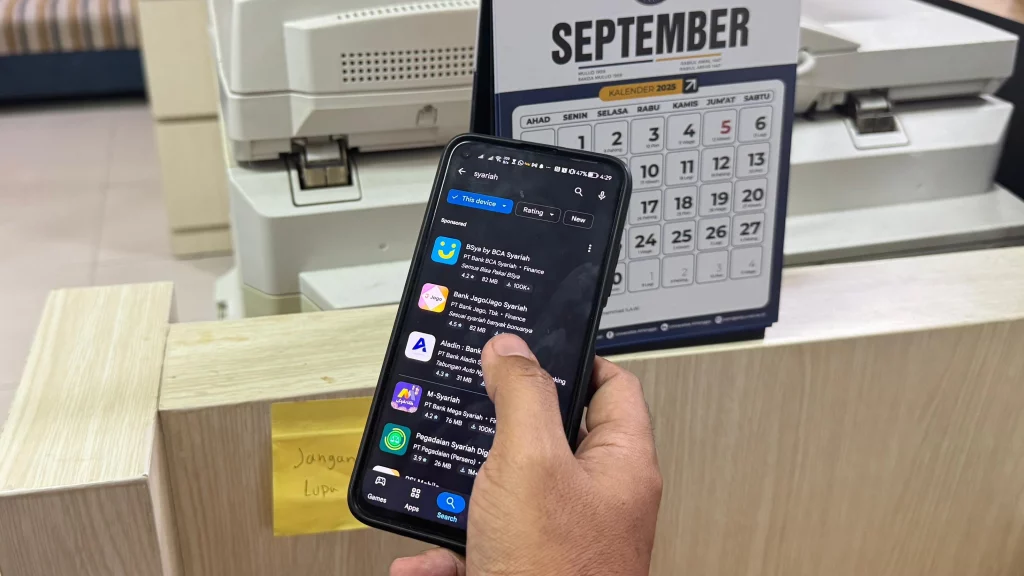
Besides literacy, another challenge is the inability of Islamic finance to provide services comparable to conventional banking, especially in technology-based services such as mobile banking. Although efforts have been made, obstacles in both technology and user adoption remain. Technology plays a vital role in shaping public perception and interest in sharia products, but research in this area is still limited. Previous studies have shown that the success of banking digitalization depends on technology quality, literacy, and customer understanding of Islamic banking concepts and products. Without adequate knowledge, people remain hesitant due to perceived risks.
Religiosity also influences individual behavior, encouraging people to adopt Islamic banking services. Beliefs rooted in religion strengthen self-confidence in financial decisions, shaping perceptions toward mobile banking. Prior studies suggest that integrating religious values into financial practices can increase trust and willingness to adopt Islamic systems. For example, students in Islamic universities, equipped with strong religious knowledge, are more likely to use Islamic banking services optimally.
This study aims to analyze the Factors Affecting Using Sharia Mobile Banking among Indonesian Muslim Students. The research utilized a quantitative method to collect empirical data on personal views about the use of Islamic mobile banking. The participants were students attending State Islamic Universities in East Java, a sum of 233 samples was gathered.
This study concludes that performance expectations, the most influential factor at 20%, drive the adoption of Islamic mobile banking among Indonesian Muslim students, followed by business expectations (15%), social influence (12%), and confidence in technology use (10%), interest in usage (18%), facilitating conditions (8%), behavioral use (5%), financial and technological literacy (7%), and religiosity (5%). A limitation of this study is that the sample consists of students from State Islamic Universities across East Java.
Based on the findings, it is recommended that further research be conducted to explore the relationships between factors influencing the use of information and communication technology Sharia mobile banking among Indonesian Muslim students. Additionally, using SmartPLS for analysis is suggested to obtain more comprehensive results.
Author: Dicky Andriyanto, S.E., M.S.A.
Details of the research can be accessed on: https://doi.org/10.57239/PJLSS-2024-22.2.001660