


African swine fever (ASF) is a highly contagious and fatal disease of domestic pigs and wild boars, causing major losses to pig production and global food security. It is caused by African swine fever virus (ASFV), a large double-stranded DNA virus of the Asfarviridae family. Clinical outcomes range from sudden death to chronic infection depending on viral genotype and host immunity. ASFV infects monocytes and macrophages, leading to lymphoid depletion, inflammation, and vascular damage through cytokine storms. The virus is environmentally stable and spreads through contact with infected animals, contaminated feed, fomites, and Ornithodoros ticks. Twenty-three genotypes have been identified, complicating diagnosis, control, and vaccine development.
ASFV has a multilayered icosahedral structure 260–300 nm in diameter and encodes 151–167 open reading frames, nearly half uncharacterized. Replication begins in the nucleus and continues in cytoplasmic factories. It infects monocytes, macrophages, and other cells, while lymphocytes undergo secondary apoptosis. ASFV is unique among DNA viruses as an arbovirus, persisting for years in ticks and months in pork products. It tolerates freezing but is destroyed by adequate heating.
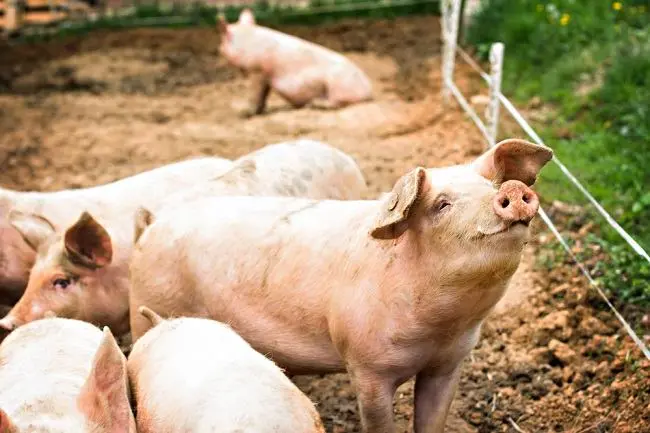
ASF affects only the Suidae family. Transmission occurs through contact with infected animals, secretions, swill feeding, fomites, and human activity, while ticks serve as long-term reservoirs. The first outbreak outside Africa occurred in Portugal in 1957, and since 2018 the virus has spread across Russia, China, Vietnam, and South Korea. Genotype I predominates in West Africa, while genotype II occurs in Madagascar, Mozambique, Russia, and Georgia. Environmental factors, wild boar density, and climate change support virus persistence and spread.
Clinical signs vary with virulence. Highly virulent strains cause acute disease with fever, anorexia, respiratory distress, abortions, cyanosis, and sudden death. Moderately virulent strains cause subacute infection lasting weeks with fluctuating fever, abortions, neurological signs, and 30–70% mortality. Low-virulence strains cause chronic ASF with intermittent fever, weight loss, arthritis, ulcers, and skin necrosis, with mortality below 30%. Survivors may become carriers.
After entering orally, nasally, or via ticks, ASFV replicates in tonsils and lymph nodes before spreading systemically. It suppresses apoptosis in macrophages and induces lymphocyte apoptosis and immune dysfunction. Cytokines such as TNF-α, IL-1β, and IL-6 trigger cytokine storms, vascular leakage, hemorrhage, and multi-organ failure. Lesions include hemorrhagic splenomegaly, lymphadenitis, pulmonary edema, and widespread hemorrhage in several organs. Chronic cases show granulomatous inflammation, fibrosis, and secondary infections.
Protective immunity remains poorly understood. ASFV proteins CD2v/EP402R and EP153R are linked to serogroup-specific responses, but cross-protection between strains is inconsistent. The virus alters cytokine regulation and weakens antibody responses. Antibodies against p32, p54, and p72 are detected, but their protective roles are unclear.
Diagnosis is vital for control. Polymerase chain reaction is the gold standard for genome detection, while ELISA aids antibody surveillance but is less sensitive early. Virus isolation is possible but difficult. Loop-mediated isothermal amplification combined with CRISPR/Cas12a offers rapid, sensitive field diagnostics.
Control depends on strict biosecurity, surveillance, and rapid culling. Measures include banning swill feeding, regulating movement, disinfection, quarantine, carcass disposal, and import restrictions. Early detection remains crucial. Vaccine research has progressed, and live-attenuated candidates such as ASFV-G-∆I177L in Vietnam show promise, though challenges persist due to genomic complexity and limited cross-protection.
ASF remains a major global threat. Its persistence, severe pathology, and absence of effective vaccines hinder eradication. Advances in molecular characterization, diagnostics, and vaccine development are significant, but key knowledge gaps remain. Integrated strategies combining diagnostics, vaccination, surveillance, and biosecurity, supported by international cooperation, are essential to mitigate ASF’s impact and sustain swine production worldwide.
Author: Tridiganita Intan Solikhah, drh., M.Si.
Detail artikel bisa diakses di: https://www.veterinaryworld.org/Vol.18/June-2025/19.php
Solikhah, T. I., Rostiani, F., Nanra, A. F. P., Dewi, A. D. P. P., Nurbadri, P. H., Agustin, Q. A. D., and Solikhah, G. P. (2025). African swine fever virus: Virology, pathogenesis, clinical impact, and global control strategies. Veterinary World, 18(6): 1599-1613.