

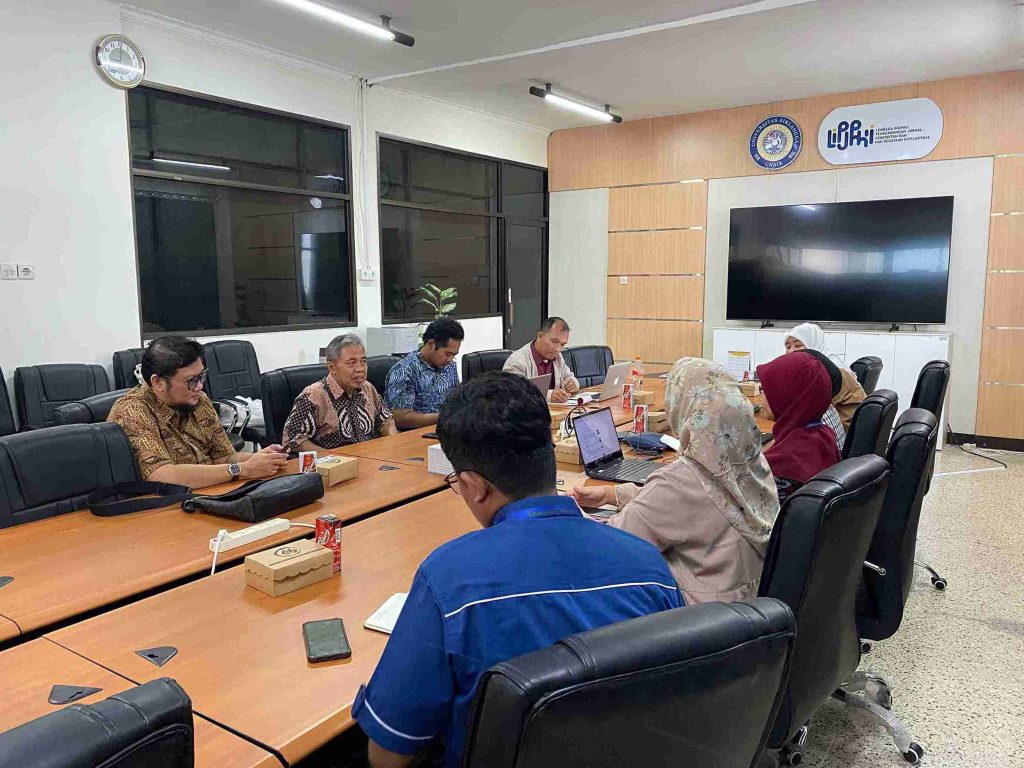
UNAIR NEWS – As Indonesia works to reinforce its intellectual property ecosystem, Universitas Airlangga’s Institute for Journal Development, Publication, and Intellectual Property Rights (LPJPHKI) hosted a visit from the National Research and Innovation Agency (BRIN). The meeting, held Wednesday (Nov 19, 2025) at the AUP Building on UNAIR’s MERR-C Campus, served as a strategic effort to strengthen IP initiatives through collaboration among LPJPHKI, Airlangga Enterprise, and the Center for Innovation and Business Acceleration (PASINBIS).
Importance of patents
The BRIN team was greeted by LPJPHKI’s Coordinator for Intellectual Property, Indria Wahyuni, SH, LLM, PhD. In her remarks, Wahyuni underscored the need to enhance the professionalism of UNAIR’s IP managers through certification. “Going forward, LPJPHKI will work closely with Airlangga Enterprise and PASINBIS to accelerate technology commercialization and reinforce intellectual property protection,” she said.
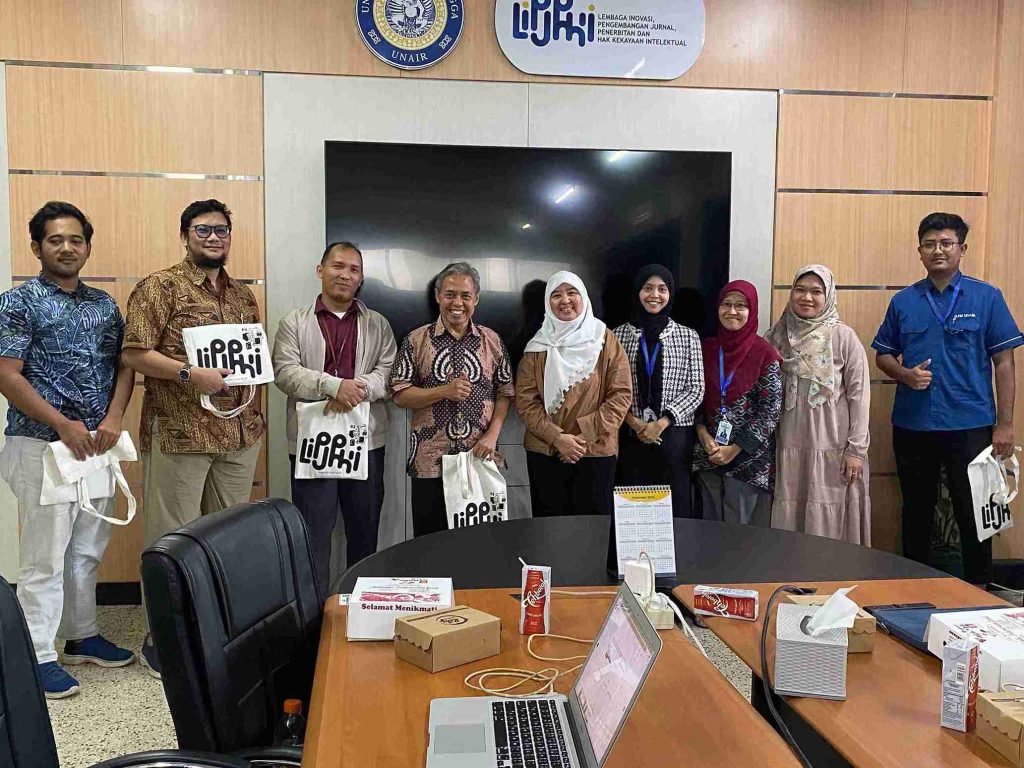
During the presentation session, several strategic ideas emerged, including a proposal from Prof Dr Gancar Candra Premananto, SE, MSi of Airlangga Enterprise. He suggested that UNAIR and BRIN co-host a workshop on patent evaluation and BRIN’s award program. “We are also open to broader collaboration, including patent valuator certification and expanding networks with PTNBH-status universities,” he added.
Meanwhile, Prof Nur Mahmudi of BRIN’s Directorate for Research, Technology, and Innovation Policy Evaluation emphasized the need for patents to hold both technological and economic value. He highlighted their strategic role, stating, “Patents are not only tools to safeguard research results, they can become business assets that fuel national technological and economic development.”
Growth in patent activity
In an evaluation briefing, Soni Candra Saragih, ST, MSc, from BRIN’s Directorate of Intellectual Property Management, presented data showing a significant rise in BRIN’s patent output. Despite a 98 percent satisfaction rate regarding evaluation standards, BRIN continues to face several challenges, including inadequate accounting methods, weak cost reporting, and limited evaluation personnel.
“This means BRIN must integrate both technical and economic parameters in a balanced manner, rather than focusing solely on research costs. BRIN and universities must also adopt flexible approaches according to the needs of each patent,” he explained.
Author: Adinda Octavia Setiowati
Editor: Yulia Rohmawati