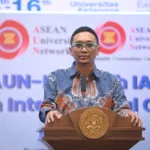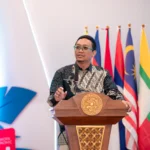
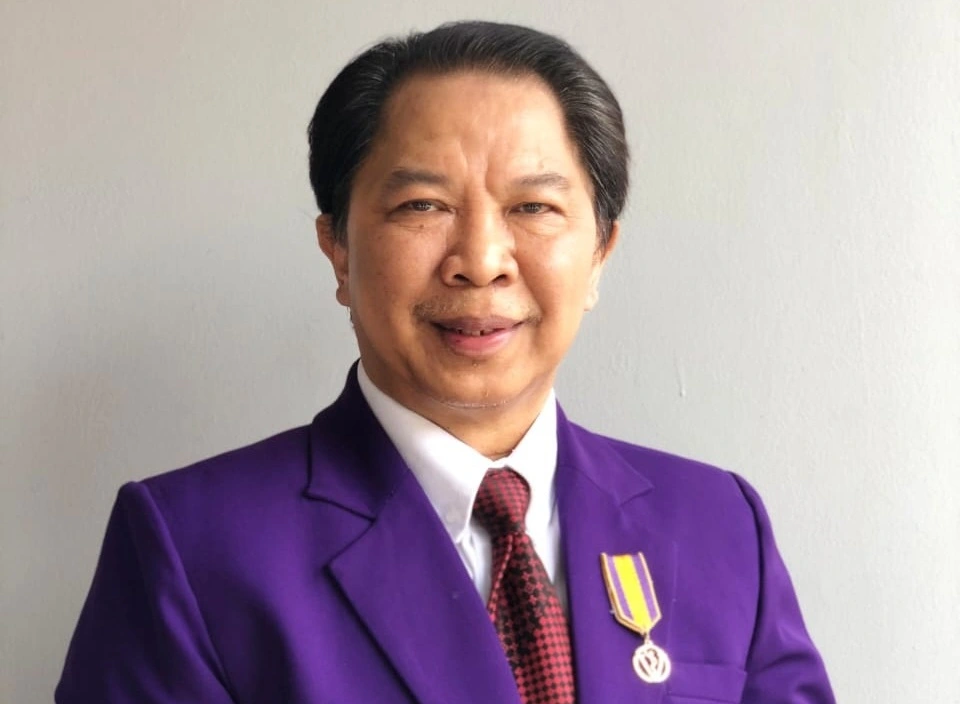
UNAIR NEWS – The role of veterinarians in maintaining food security and public health is often not fully reflected in policymaking processes. In fact, the profession is closely connected to issues of food safety, animal health, and public health. This situation has drawn the attention of Dr. drh. Muhammad Munawaroh, M.M.
The doctoral alumnus of the Faculty of Veterinary Medicine (FKH) Universitas Airlangga (UNAIR) believes that strengthening the profession cannot rely solely on individual efforts. Therefore, Dr. Munawaroh chose to actively engage in the Indonesian Veterinary Medical Association (PDHI), where he was eventually entrusted to serve as Chair of the Central Board for two terms.
His journey began after completing his veterinary education in 1991. Since then, Dr. Munawaroh has built a career as a practitioner while also developing businesses in the veterinary sector. Through his field experience, Dr. Munawaroh observed how veterinarians play key roles in animal health management and the supervision of animal-based products. However, their involvement in regulatory formulation has often remained limited.
“I feel that veterinarians have not been widely involved in drafting regulations. In fact, we work directly with issues related to animal health and food safety. Therefore, we want to contribute more broadly to society, the nation, and the state. From that point, I realized that the professional organization must first be strengthened,” he said.
Strengthening organizational governance
Dr. Munawaroh’s determination to strengthen the professional organization encouraged him to become actively involved in Indonesian Veterinary Medical Association (PDHI). His involvement later led to his appointment as Chair of Indonesian Veterinary Medical Association (PDHI) West Java V, which covers Bekasi and Karawang. The experience became an important stepping stone before he was entrusted to lead the organization nationally during the 2018–2022 period.
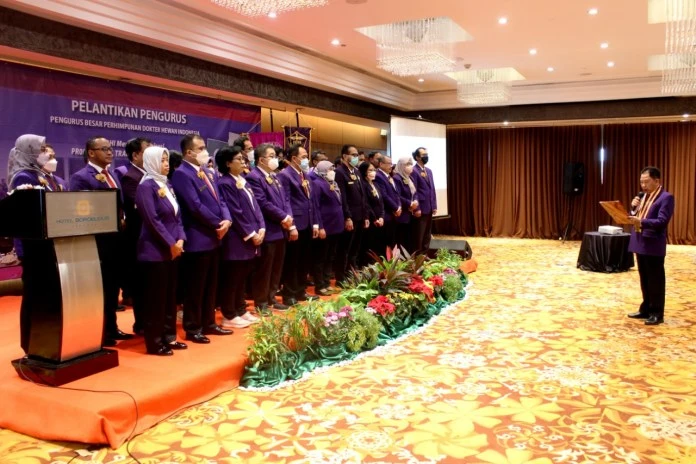
During his tenure at the national level, Dr. Munawaroh faced several internal organizational challenges. According to him, these conditions required comprehensive governance reforms so that the Indonesian Veterinary Medical Association (PDHI) could operate more transparently and professionally. As a result, he introduced an application-based financial system and initiated the digitalization of membership administration to strengthen the organization’s institutional foundation.
This approach aligns with his academic background as a Master of Financial Management, which he completed in 2007. The knowledge shaped Dr. Munawaroh’s perspective on managing organizations in a systematic and accountable manner.
“When an organization is managed through a clear and transparent system, members will develop a stronger sense of ownership. From there, trust grows and the organization can move forward more confidently. Fortunately, we have been able to overcome many challenges, and now we can assure members that Indonesian Veterinary Medical Association (PDHI) can become a better organization,” he explained.
These reforms have brought significant changes. Improved governance has strengthened the organization and encouraged further development. The increasing number of members in recent years has become one indicator of growing trust in the Indonesian Veterinary Medical Association (PDHI). This trust also led to Dr. Munawaroh’s re-election for the 2022–2026 period.
Regeneration and academic leadership
Entering his second term, Dr. Munawaroh has placed greater emphasis on regeneration and the participation of young veterinarians. He hopes to ensure that Indonesian Veterinary Medical Association (PDHI) is not merely an administrative organization but also a platform for professional development and protection for its members.
Amid his responsibilities leading the national organization, Dr. Munawaroh also completed his doctoral education at the Faculty of Veterinary Medicine (FKH) UNAIR in 2021 and was recognized as the best doctoral graduate. For him, leadership and education must progress hand in hand.
“Pursuing knowledge does not have to wait until becoming a lecturer. We learn to strengthen ourselves and to contribute more broadly. The wider our knowledge, the greater the impact we can make.
Author: Fania Tiara Berliana M
Editor: Yulia Rohmawati