


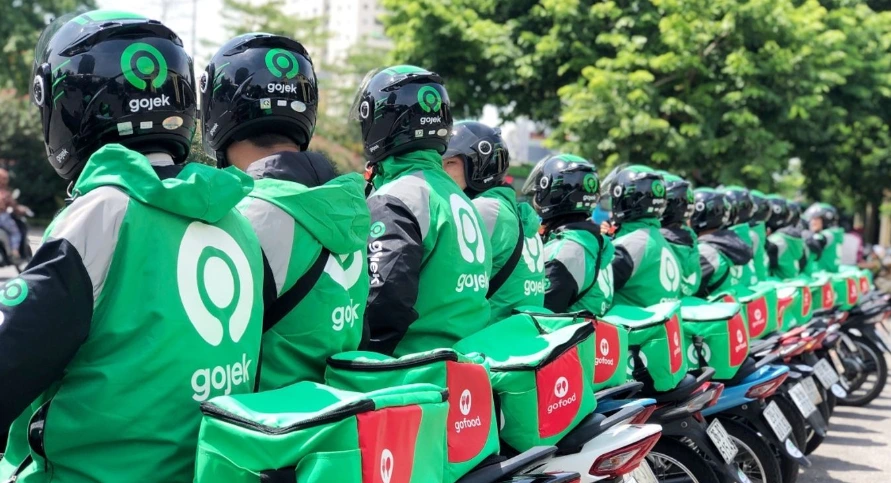
UNAIR NEWS – The government is currently considering a fare increase for online motorcycle taxis (ojol), claiming the move would improve the welfare of driver-partners. However, the policy has drawn scrutiny. Professor Dr. Rossanto Dwi Handoyo of the Faculty of Economics and Business at Universitas Airlangga urges a more cautious approach, noting that the decision impacts millions of informal digital workers and consumers.
“We need clarity—does this fare hike truly aim to enhance driver welfare, or will it simply place additional financial pressure on the broader public?” Prof. Handoyo asked.
He stressed the importance of transparency in explaining the policy’s objectives and implementation. In practice, he noted, fare increases do not necessarily lead to higher driver earnings.
“The discussion should go beyond fare hikes and focus on ensuring a minimum income per transaction for drivers,” he said. “Without a well-structured system, higher fares may fail to improve drivers’ livelihoods and could instead burden consumers.”

Growing risk of poverty
Prof. Handoyo warned that the most concerning outcome would be a rise in poverty if driver incomes fall below the basic needs threshold for families.
“The government cannot afford to let ride-hailing drivers become part of a new wave of working poor,” he said.
He explained that the current poverty line in Indonesia is roughly IDR 600,000 per capita per month. For a household of four, this means at least IDR 2.4 million is needed to meet minimum living standards. If a driver is the sole provider and earns less than this, their family would fall below the poverty line.
“If a full-time driver can’t generate enough income to support their household, the system is clearly flawed. This issue is not just about digital efficiency—it’s about economic fairness,” he added.
Government must take action
The economist emphasized that the state must actively regulate the digital economy to prevent rising inequality. Without fair oversight, digital platforms could exacerbate socio-economic gaps—particularly for informal workers like ojol drivers.
“If we leave it entirely to the market, the strong will only grow stronger. The government must intervene to restore balance,” he stated.
He also urged that the policy not be viewed as a short-term fix but rather as part of a broader strategy to develop a digital transportation system that is inclusive, equitable, and sustainable.
Author: Rosali Elvira Nurdiansyarani
Editor : Khefti Al Mawalia