

UNAIR NEWS – The Community Service Team from the Undergraduate Veterinary Medicine Program at Faculty of Health, Medicine, and Natural Sciences (FIKKIA), Universitas Airlangga (UNAIR) Banyuwangi, has conducted a mapping project to identify livestock potential in one of its partner villages. The initiative focuses on Sumberagung Village, Pesanggaran Subdistrict, Banyuwangi Regency, and runs from June to December 2025.
Digital mapping with GPS Technology
Project leader Drh. Faisal Fikri, MVet, explained that the mapping and data collection are designed to establish a comprehensive baseline of the village’s livestock conditions, covering aspects such as livestock production, milk output, and the use of agricultural by-products.
He emphasized that the data gathered will serve as a foundation for future community service and long-term research programs. “The profiling results will be highly useful for both farmers and academics to advance local development,” he said.
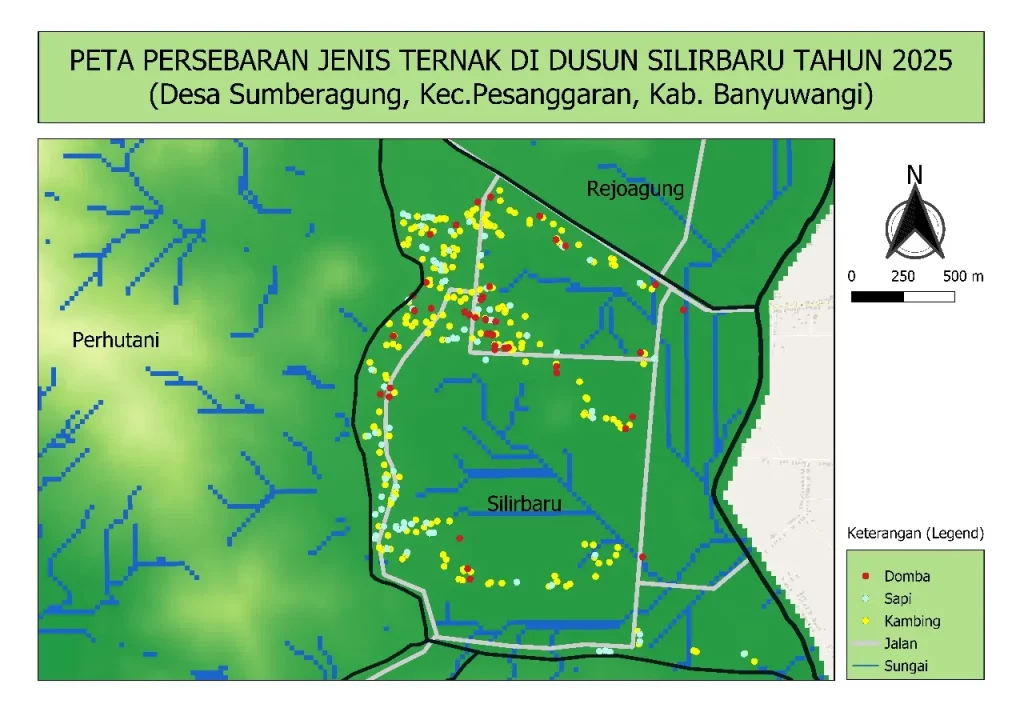
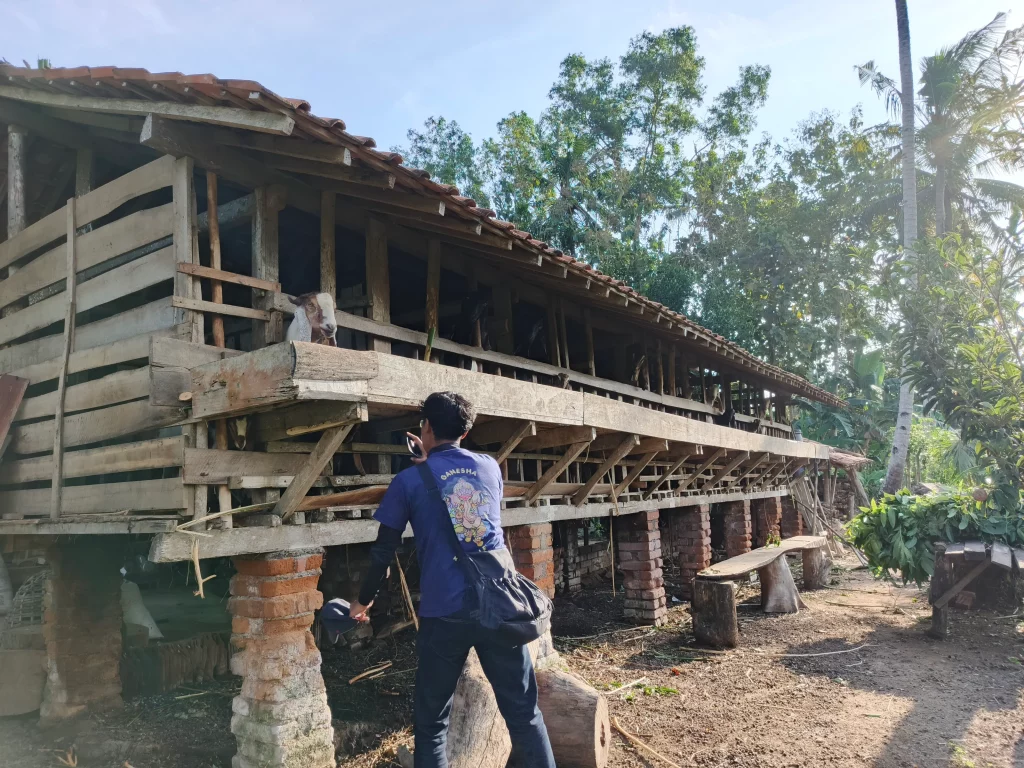
The survey was carried out using a Geographic Information System (GIS) combined with a door-to-door approach. The activity involved students, local livestock groups, and village officials. Each farmer was interviewed in person, and GPS coordinates were recorded to develop a detailed map of farm locations and livestock profiles.
“The door-to-door method allows for accurate data collection, comprehensive profiling, and precise GPS mapping,” said the lecturer from FIKKIA’s Department of Basic Veterinary Medicine.
Enhancing income and reducing waste
The department head added that one of the upcoming focuses of the community service program will be processing livestock by-products, including feed waste and animal manure. Effective waste management, he noted, can help boost farmers’ income while promoting the zero-waste principle in rural livestock operations.
This initiative aligns with UNAIR’s commitment to supporting village development through scientific and collaborative approaches, demonstrating the university’s tangible contribution to addressing real-world community challenges in accordance with the Tri Dharma of Higher Education—education, research, and community service. “Going forward, farmers are encouraged to process livestock by-products more efficiently to improve their livelihoods and help achieve zero-waste livestock practices,” he concluded.
Author: Azhar Burhanuddin
Editor: Yulia Rohmawati