


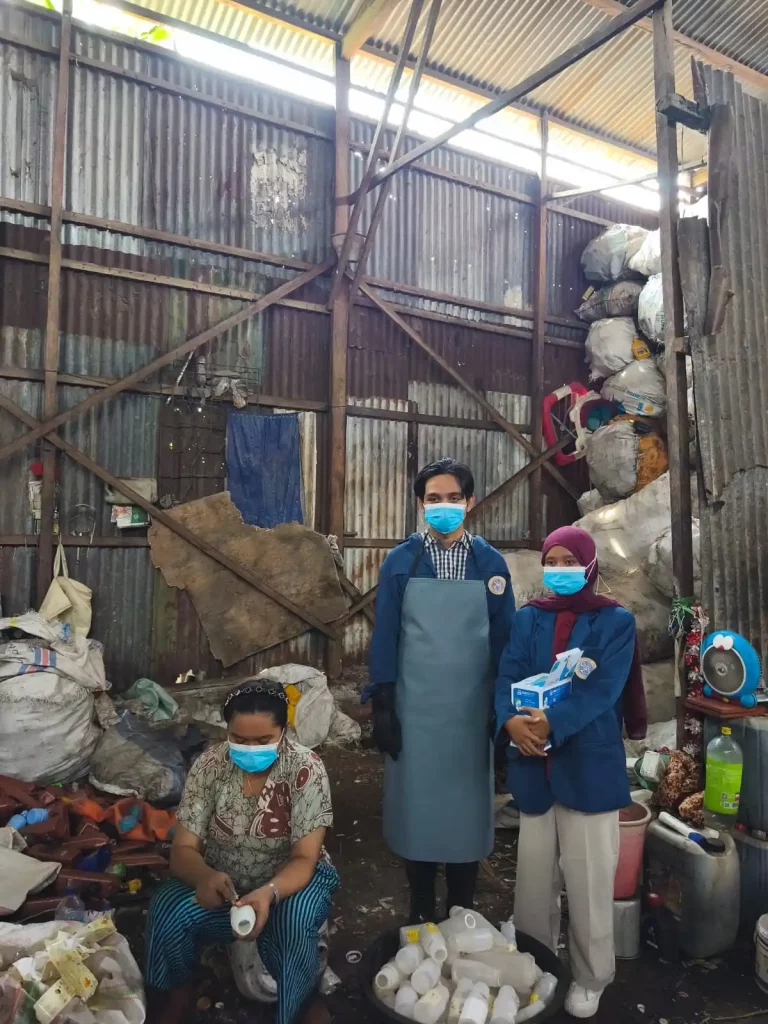
UNAIR NEWS – Waste sorting plays a vital role in protecting the environment, yet for the workers who perform it, the task carries serious health and safety risks. Every day, waste pickers handle inorganic materials such as plastic, metal, and glass, often mixed with dust, grime, and even hazardous waste. Fine airborne particles can cause respiratory issues, while exposure to chemicals from household and industrial waste may lead to skin irritation or long-term health problems. The open and unsterile work environment further increases these risks.
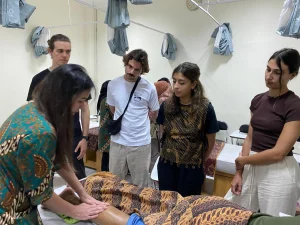
A community service event held on Saturday (September 6, 2025) centered on the theme “Safety Demonstration Tools for Personal Protective Equipment (PPE) for Waste Pickers in Indoor Pollution Environments.” The activity took place at CV Arista Langgeng in Sidoarjo and brought together 33 waste pickers, with 29 participants (87.9%) from Sidoarjo and 4 (12.1%) from surrounding regions. Most participants were local residents who actively engaged in the program. The initiative was led by Assoc. Prof. Dr. R. Azizah and involved around 12 alumni as well as undergraduate and graduate students of Environmental Health from the Faculty of Public Health (FKM), Universitas Airlangga (UNAIR).
Genuine commitment to the planet
Waste pickers who collect and sort inorganic materials such as plastic, cans, glass, and metal are often overlooked, yet they play a crucial role in environmental preservation. Through perseverance and hard work, they separate non-biodegradable waste for recycling and reuse. Their efforts are not only a means of livelihood but also a meaningful expression of care for a planet increasingly polluted by inorganic waste. Every separated can or bottle is a small but significant contribution to reducing landfill burdens and environmental contamination.

Behind what appears to be a simple job lies a powerful commitment to sustain the earth’s natural balance. These workers understand that discarded plastics and metals can contaminate soil, water, and even the food chain. They show that caring for the environment can begin with small, consistent actions. From the waste they sort each day, they help create a cleaner, healthier, and more sustainable world, urning what was once considered worthless into resources that benefit society.
Occupational hazards and PPE role
Waste pickers are also exposed to physical hazards such as cuts from broken glass, sharp metal edges, and rusted objects that can cause infections or serious injuries. To prevent these risks, proper personal protective equipment (PPE), including thick gloves, masks, boots, and protective clothing, is essential. PPE not only protects workers from injury and illness but also represents professionalism and awareness of workplace safety. With the right equipment, waste pickers can perform their work more safely and continue contributing as environmental champions.
According to the FKM UNAIR academic team’s analysis of questionnaires, access to and consistent use of PPE significantly reduce the risk of illness among waste pickers working in the informal sector.
“There must be an integration between infrastructure, safety measures, and proper work behavior. PPE is not just a protective tool.It symbolizes awareness and care for personal health and safety. Care for the environment begins with caring for yourself,” said Assoc. Prof. Azizah.
Supporting Sustainable Development Goals
Waste sorting directly supports Sustainable Development Goal (SDG) 12: Responsible Consumption and Production, which promotes efficient resource management, waste reduction, and sustainable production and consumption patterns.
By sorting waste at its source, communities help reduce the amount of trash sent to landfills, increase recycling rates, and minimize pollution. The practice also aligns with SDG 3 (Good Health and Well-being) by preventing disease through cleaner environments, SDG 11 (Sustainable Cities and Communities) by promoting livable and clean cities, and SDG 13 (Climate Action) by reducing greenhouse gas emissions from waste decomposition and incineration.
In essence, waste sorting is far more than a routine task. It is an integral part of global efforts to achieve sustainable development and preserve the planet for generations to come.
Author: Assoc. Prof Dr R Azizah
Editor: Yulia Rohmawati