

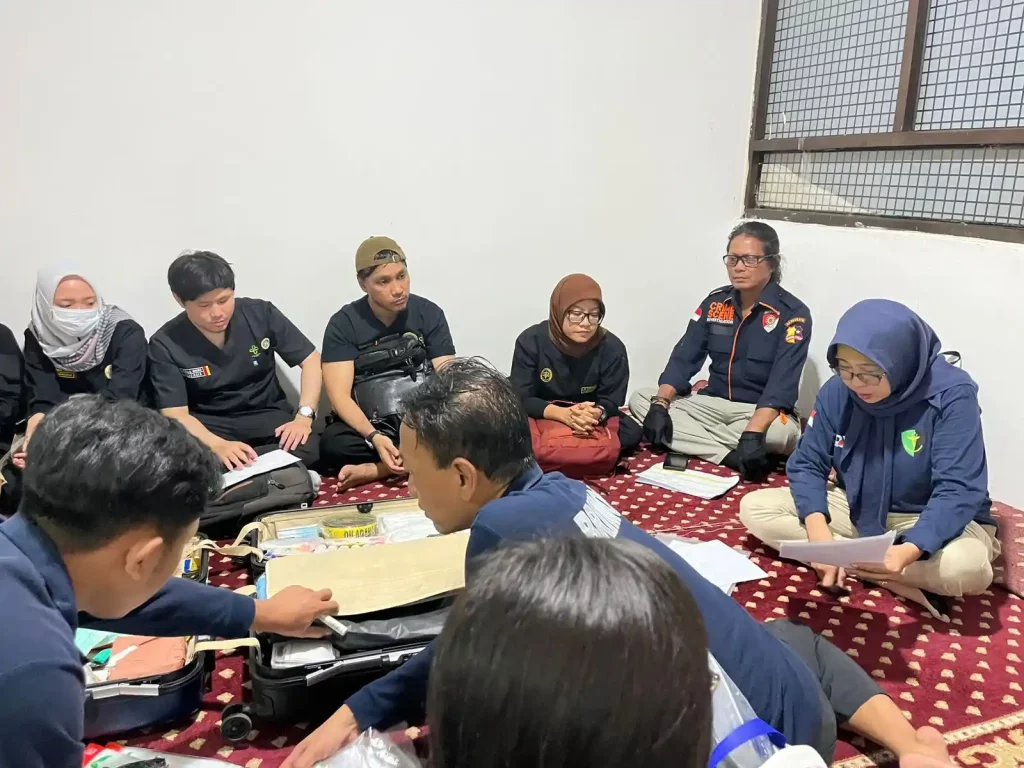
UNAIR NEWS – Graduate students from the Master’s Program in Forensic Science at Universitas Airlangga (UNAIR) are contributing meaningfully to a humanitarian mission. Four students, currently interning at the Identification Unit of the East Java Regional Police’s Criminal Investigation Directorate, assisted the Disaster Victim Identification (DVI) team and other agencies in the recovery and identification of victims from the KMP Tunu Pratama Jaya ferry disaster.
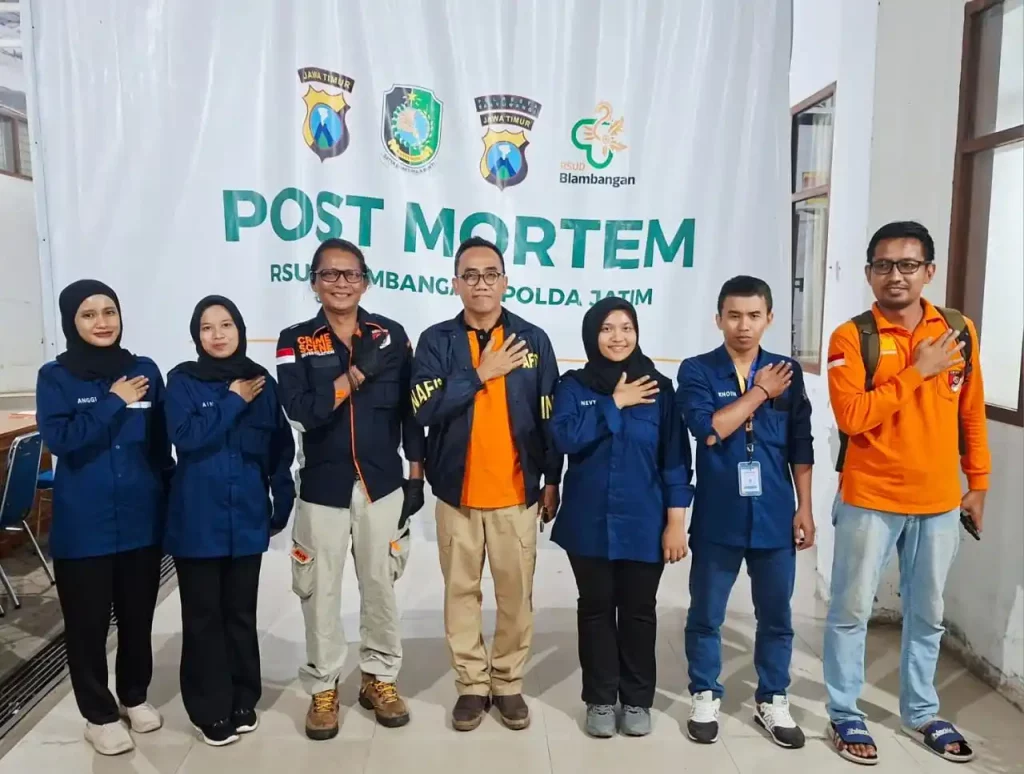
The students were stationed in Banyuwangi from Thursday (July 3, 2025) to Monday (July 7, 2025), where they worked alongside the DVI team as part of the property identification unit—an essential component of the operation. Muhammad Khoiri, one of the students, explained that their duties involved collecting, documenting, and identifying personal items found at the scene.
“Through strong collaboration between the property and identification teams, the identification process became more thorough and accurate. This provided clarity for the victims’ families and supported ongoing investigations,” he said.
Challenges in property identification
Khoiri noted several challenges during the property identification process. Prolonged exposure to seawater caused significant damage to many of the personal belongings. Ocean currents also scattered these items far from the incident site, making recovery efforts more difficult.
“Environmental contamination posed additional issues,” he explained. “Mud, oil, and chemical pollutants at the site could obscure, damage, or alter the appearance of objects, making recognition difficult. Many items also lacked clear identifying markers—such as rings without engravings or bags without names.”
Despite these obstacles, Khoiri said the experience deepened his understanding of forensic science in real-world contexts. “This experience helped me see how essential the documentation and handling of victims’ property is to the identification process—especially when biological identification is no longer possible,” he added.
Final act of respect
Qurotul Aini, another graduate student involved in the mission, shared her experience in helping restore the identities of the victims. She said the entire identification team worked closely and supported one another emotionally throughout the difficult process. “The field mentors and identification team were very open and supportive. Even though we were working with victims and grieving families, the atmosphere remained respectful and compassionate,” she shared.
Aini said the experience expanded her perspective on the role of forensic science, calling it a bridge between the victims, their families, and justice. “Not every victim can speak for themselves, but forensic science gives them a voice. It’s not just a scientific discipline—it’s a final tribute to the victims and a source of answers for their loved ones,” she concluded.
Author: Mohammad Adif Albarado
Editor Yulia Rohmawati