



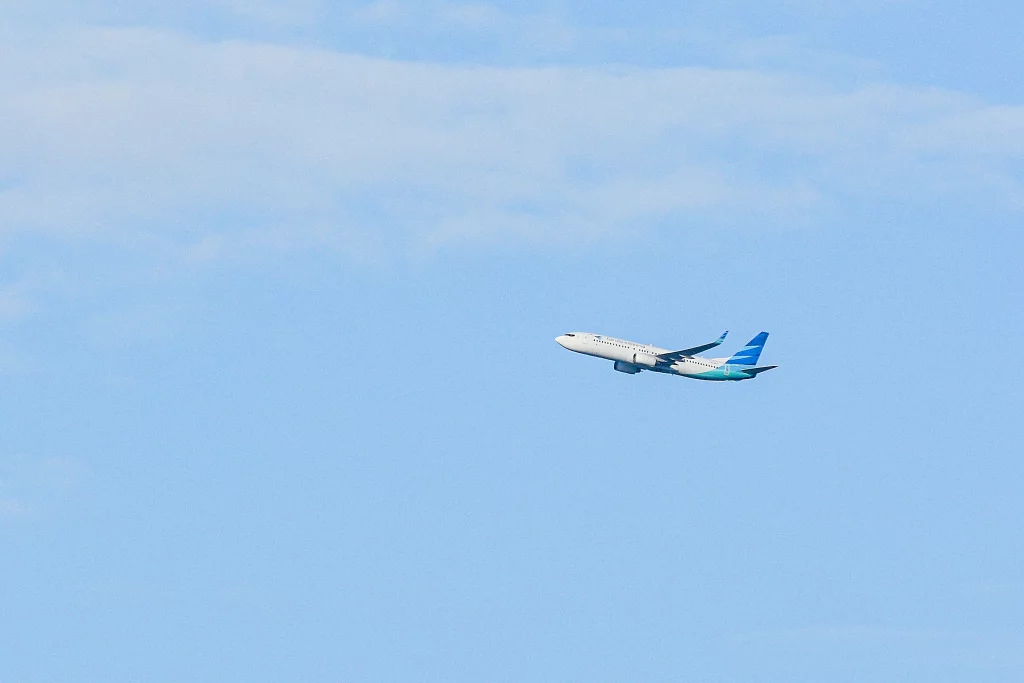
Indonesia’s Aviation Act No. 1/2009 has played a transformative role in the nation’s civil aviation sector. Following its enactment, Indonesia significantly improved its global safety ranking, culminating in a notable performance in the 2017 USOAP audit. This Act replaced the outdated Aviation Act No. 15/1992, which was deemed insufficient to support the modern aviation industry’s growth and safety needs.
The Act’s creation was catalyzed by a series of severe aviation accidents in 2007 that drew international attention. In response, the government implemented a safety categorization system across Indonesian airlines, although no airline—including state-owned Garuda Indonesia and Merpati—met the top safety tier. At the time, Indonesian carriers operated internationally, including to Europe, prompting the European Union to ban all Indonesian airlines from its airspace. The United States Federal Aviation Administration (FAA) also initiated investigations, and ICAO conducted a USOAP audit that revealed major deficiencies in legislation, licensing, operations, and accident investigations.
This audit sparked awareness among Indonesia’s executive and legislative branches, which then agreed on drafting a new law to overhaul aviation safety and regulation. The resulting 2009 Act introduced strict requirements, such as mandating new airlines to operate at least ten aircraft—five of which must be owned—reflecting the government’s prioritization of safety over deregulation.
However, this regulatory tightening had economic consequences. While it raised safety standards, it also led to the collapse of numerous low-cost carriers (LCCs) and contributed to higher ticket prices. The Indonesian Competition Commission (KPPU) criticized the government’s involvement in setting fare limits, arguing that it interfered with market competition.
The 2009 Act aimed to improve Indonesia’s compliance in the 2014 USOAP audit. Surprisingly, the audit revealed only 45% compliance, down from 54% in 2007, highlighting persistent legislative shortcomings. Despite this, Indonesia reached the global minimum safety standard in the 2017 audit—still without revising the 2009 Act.
Accident data from Indonesia’s National Transportation Safety Committee (KNKT) showed a peak in 2018, with subsequent fluctuations. Although this study does not explore causality behind these trends, it emphasizes the need for legislative improvements to keep pace with industry developments and international obligations such as the Montreal Convention 1999 and the Montreal Protocol 2014.
Analysis and Discussion
Jurisdiction in aviation law is rooted in state sovereignty over airspace, encompassing the authority to regulate aircraft operations and enforce legal measures. Indonesia’s Aviation Act attempts to address this through provisions covering public security, such as hijacking and sabotage (handled by police), and unruly passenger behavior (investigated by civil aviation officers from the DGCA’s PPNS unit). This framework was shaped in part by jurisdictional confusion following the 2007 Garuda Indonesia crash.
However, a legal inconsistency arises in defining the jurisdiction of “Indonesian aircraft.” Article 1(6) of the Aviation Act requires both the PK-registration code and national markings, while the Criminal Code (Article 95a) permits recognition based on operational control—even for aircraft registered abroad. This discrepancy creates ambiguity, especially under the Montreal Protocol 2014, which defines jurisdiction based on the “state of the operator.” As a result, jurisdiction over leased foreign aircraft operated by Indonesians is uncertain.
Compounding this, Indonesia ratified the Montreal Convention 1999 via Presidential Decree, which holds a lower legal rank than the Aviation Act. In the AirAsia QZ 8501 case, compensation was awarded under national regulations instead of the Convention, indicating domestic law may override international commitments in practice.
National Airspace Security
The enforcement of airspace violations reveals additional challenges. Although civilian authorities retain jurisdiction, only the military has the operational capacity to intercept unauthorized aircraft. Yet, military intervention in civil aviation law enforcement lacks legal backing in the Act.
In 2019, the Indonesian Air Force intercepted an unauthorized Ethiopian Airways cargo flight. The resolution—a minor fine—sparked calls for a new law to empower military investigators and formalize cooperation with civilian agencies. A draft Law on National Airspace Management has since been proposed to address this legal gap.
The growing use of drones further complicates matters. As unmanned aircraft differ fundamentally from conventional planes, they demand tailored regulation. While drones are currently governed by ministerial rules, the Aviation Act lacks specific provisions for their safety, privacy, and operational standards—necessitating legislative updates.
Deregulation and the Job Creation Law
Indonesia’s aviation sector has swung between regulation and deregulation. The early 2000s saw a surge of low-cost carriers after fleet ownership rules were relaxed. Rising accident rates, however, led to the 2009 Aviation Act, which imposed stricter safety and capital requirements, including the ownership of at least five aircraft.
The COVID-19 pandemic caused significant disruption. Airlines downsized or ceased operations, prompting the passage of Law No. 11/2020 on Job Creation, which reduced fleet ownership requirements. Government Regulation No. 32/2021 now requires only one owned and one controlled aircraft.
This deregulatory shift conflicts with earlier Constitutional Court rulings (Decision No. 29/PUU-XIII/2015), which emphasized safety over ease of market entry. Harmonizing these conflicting frameworks will require legislative refinement to uphold safety without stifling industry recovery.
Delegation of Air Navigation to Singapore
In 2022, Indonesia renewed its agreement with Singapore to manage air navigation in sectors of Indonesian airspace up to 37,000 feet. The agreement includes a framework and a technical LOCA. However, jurisdiction in the event of an incident remains unclear—especially if Indonesian ATCs operate within Singaporean territory, potentially subjecting them to foreign laws.
Article 458 of the Aviation Act required reevaluation of such agreements by 2024. Yet, Indonesia extended the arrangement instead of reclaiming full control. The Act lacks provisions on jurisdictional protection for ATCs or immunity from foreign prosecution, raising concerns about compliance with ICAO’s Chicago Convention (Article 28) and national sovereignty.
Legal Remedies and the Path Forward
To address these regulatory gaps, legislative reform is essential. The Aviation Act must be updated to align with international standards, harmonize definitions, and accommodate technological advances such as drones and RPAs. Jurisdiction over shared airspace and legal protections for air traffic personnel must also be clarified.
Indonesia could adopt a strategy similar to South Korea’s IASTFT, which successfully aligned domestic aviation law with ICAO standards. A comparable task force, involving legislators, regulators, and academics, could facilitate reform.
Given the urgency of these issues, the government may consider issuing a Government Regulation in Lieu of Law (Perppu) as a temporary measure—constitutionally justified under Article 22 of the Indonesian Constitution and supported by the public’s right to safety under Article 28G. Such an instrument could serve as a legislative bridge until a full amendment to the Act is enacted.
Conclusion
While Indonesia’s Aviation Act No. 1/2009 has made strides in improving safety, it remains inadequate in addressing jurisdictional complexity, integration with international treaties, and evolving aviation technologies. With over 15 years of application, the Act requires comprehensive reform to meet current demands. A coordinated effort among government, parliament, industry stakeholders, and academia is essential to revise the Act and align Indonesia’s aviation law with global standards and future challenges.
Author: Adhy Riadhy Arafah
Details of the study can be viewed on:
https://scholar.unair.ac.id/en/publications/indonesian-and-the-quest-aviation-for-reform-act-12009-in-certain