


UNAIR NEWS – Measles remains a contagious disease that continues to pose a significant public health threat in Indonesia. In Sumenep Regency, Madura, recent outbreaks have sparked public concern, especially since children are the most vulnerable to infection. The situation highlights that measles remains dangerous without adequate immunization coverage.
Importance of immunization
Prof. Dr. Irwanto, dr., SpA(K), a pediatric expert from the Faculty of Medicine Universitas Airlangga, explained that vaccination is the most effective way to prevent measles. Low immunization rates in several areas, including Sumenep, have contributed to the rapid spread of the disease. “Some communities still refuse vaccines, even though immunization has been proven to reduce the risk of severe complications,” he said.
Recognizing risk factors
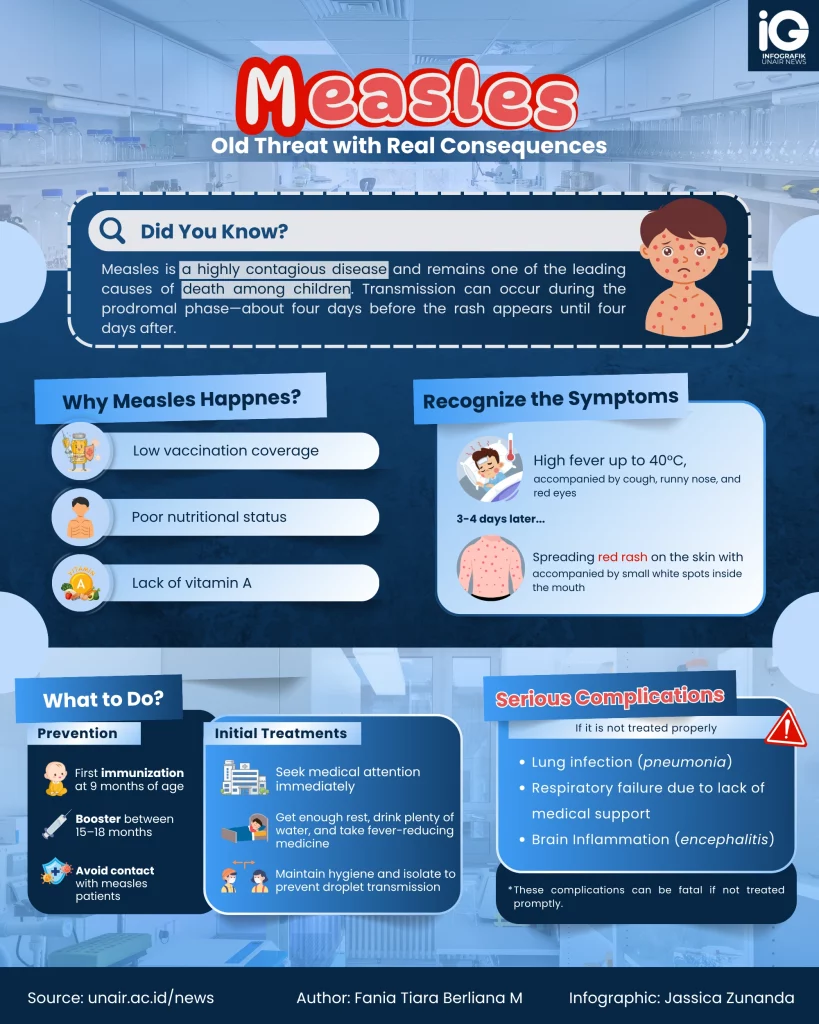
Vaccine refusal is not the only factor driving the rise in cases. Malnutrition and vitamin A deficiency also increase children’s vulnerability. A weakened immune system allows the virus to attack more easily and cause serious complications such as pneumonia, respiratory failure, and brain inflammation (encephalitis). Without prompt and proper treatment, these complications can be life-threatening.
Early detection and response to symptoms
Prof. Irwanto emphasized the importance of recognizing early signs of measles. Initial symptoms typically include high fever, cough, runny nose, and red eyes. After three to four days, red rashes spread across the body, often accompanied by small white spots inside the mouth, known as Koplik spots. Parents are urged to take their children to a doctor immediately for accurate diagnosis and medical care.
Aside from medical attention, parents can also provide basic home care by ensuring the child gets enough rest, drinks plenty of fluids to prevent dehydration, and takes fever-reducing medication as advised. Maintaining eye hygiene and practicing isolation are also essential since measles can spread easily through droplets from coughing or sneezing.
Strengthening prevention efforts
As long as vaccination coverage remains inadequate, measles will continue to endanger communities. The Ministry of Health recommends that children receive their first measles vaccine at nine months of age, followed by a booster at 15–18 months. Prof. Irwanto urged communities, healthcare professionals, and government bodies to work collectively to expand immunization coverage and prevent future outbreaks.
Read also:
Surge in measles cases: Pediatric expert emphasizes the importance of prevention and immunization