


Today, climate change has become a concern of the global community. To overcome this, the Paris agreement gathers nations to reduce global greenhouse gas emissions in the effort to limit global temperature rise below 2 degrees Celsius or further 1.5 degrees Celsius. One of the prominent ways to achieve this target is to reduce the use of fossil fuel and utilize a low emissions source in energy sectors. This effort looks promising as based on the data from International Renewable Energy Agency (IRENA), in 2020, renewables energy accounted for more than 80% of power capacity addition, of which more than 90% of that capacity is for wind and solar energy including rooftop solar PV.
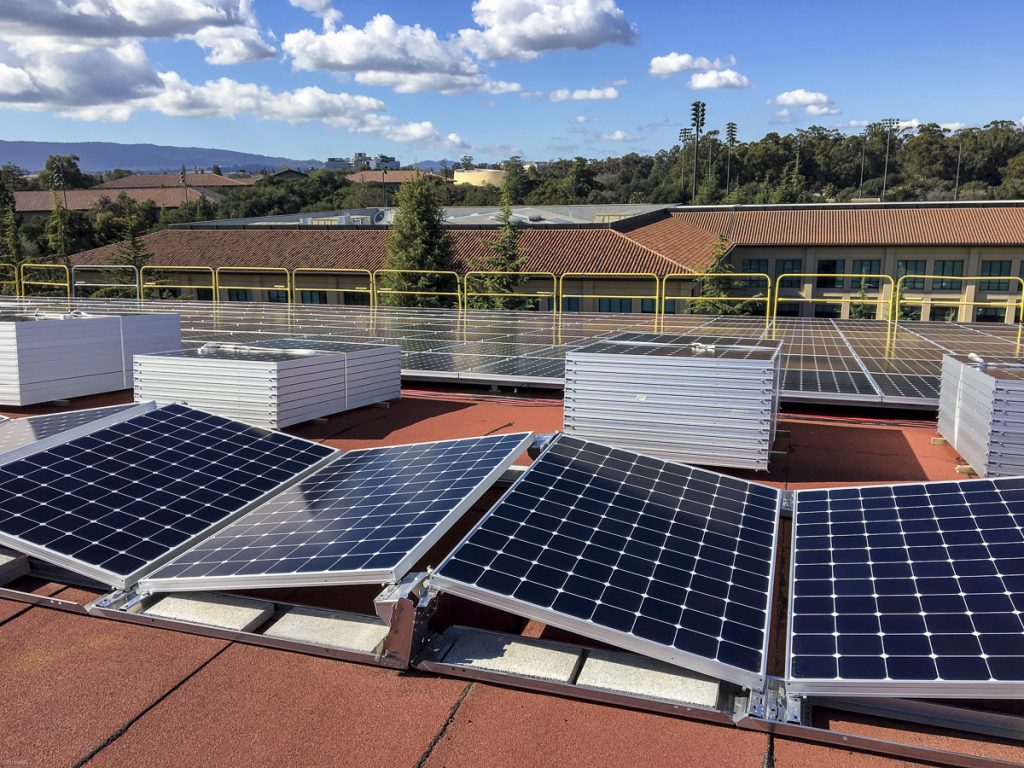
Rooftop solar PV is expected to play an important role in reducing greenhouse emissions from energy sectors in the future especially with sufficient policies and supportive measures. While, in developed countries, rooftop solar has significant capacity contribution in their electricity system (i.e., Australia with 14.7 GW rooftop PV compared to 32 GW peak load). Developing countries such as Indonesia still have low rooftop solar capacity. Nevertheless, the progress on rooftop PV adoption in Indonesia looks promising. State Power Company (PLN) accounted that the installation number jumped by more than 700% from 2018 to late 2020.
In general, high uptakes of residential rooftop PV in housing are caused by some factors, such as support by government as subsidies, expanded awareness of energy use, bill thrift, perceivability of the home exterior as a societal position symbol, and environmental advantages of diminishing nearby contamination. One interesting finding in Sri Lanka suggests that middle-aged inhabitants who are educated as well as retirees also have the tendency to install rooftop PV at their households.
On the opposite side, there are also barriers that make people reluctant to install rooftop PV, such as high real and perceived initial costs incurred to install and the quality of the PV system, inconsistency of policy, which may cause uncertainty for electricity bills, lack of knowledge about PV technologies and risks associated with the technology, and a poor view of the aesthetic on the rooftop for certain house types. In addition, the trust issue and inadequate nature of the contractor worker labor force also discourage homeowners from purchasing a solar PV rooftop.
In the light of supporting rooftop PV uptakes in Indonesia as one of the ways to achieve the Indonesian renewable energy target of 23% in 2025, several studies regarding rooftop PV is necessary to be done. Therefore, Shochrul Rohmatul Ajija, SE., M.Ec, lecturer of the Department of Economics, Faculty of Economics and Business, Universitas Airlangga together with a team of researchers from PLN Research Institute and Bandung Institute of Technology, conducted the research and published in The Journal of Economies Volume 9, Issue 4 with the title “The Analysis of Residential Rooftop PV in Indonesia’s Electricity Market” with the aim of knowing the profile of customers and prospective customers of rooftop PV and analyzing factors that affect the rooftop PV installation in Indonesia.
The study conducted used primary data through conducting a survey of the existing and potential rooftop PV users in 2020 in Jakarta, Banten, West Java, East Java, and Bali provinces. We performed a survey on those areas because, based on data recorded by PLN (2020), around 92.64% or 2355 out of 2542 rooftop PV users in Indonesia are in those areas. Specifically, there are 755 users in Jakarta, 673 users in West Java, 632 users in Banten, 199 users in East Java, and 96 users in Bali. Using a 95% significance level and a 6% margin error from 117 million people in those areas, we obtained a recommended sample size of 267. However, we obtained potential users in order to analyze the impact of demographic background on the probability of respondents that are interested in installing rooftop PV in their homes. Meanwhile, using the 95% significance level and 10% margin error from 2355 rooftop PV users, the sample size recommended was 93, and we obtained 121 respondents of rooftop PV users in order to know the reasons for using rooftop PV.
Based on the results that we conducted, Factors that affect people’s interest in using rooftop PV are education, residence location, and income. The higher the level of education, the higher the probability of installing rooftop PV. Furthermore, people who live on the outskirts of the city, the possibility to install rooftop PV as a source of electricity will be even greater. Income is also one of the determinant factors in rooftop PV installation. Rooftop PV =is categorized as luxury goods, therefore the higher their income is, they are more likely to be interested in using rooftop PV.
In analyzing the preference of rooftop PV’s installation, we also asked the existing users. There were 121 existing customers, consisting of 89 respondents from households and 32 respondents from industries. Most of these users were from Bali (49.6%), Jakarta and Banten (38.8%), and East Java (11.6%). Around 70.2% of respondents were male and 29.8% were female. According to their age, 30.6% of respondents were 20–30 years old, 23.1% were 30–40 years old, 31.4% were 40–50 years old, 12.4% were 50–60 years old, and 3.3% were more than 60 years old. Most respondents lived in suburban and rural areas, i.e., 57.9%, and the rests were in urban areas.
There are various factor that represent the reason for PV rooftop use in Indonesia. These factors are cultural factors, environmental awareness, technological knowledge, and loyalty. The first factor was the culture and surrounding environment encouraging someone to use rooftop PV. In this factor, the reason that has the highest loading value is that rooftop PV is easily found in residences or industrial locations, and the surrounding environment already uses rooftop PV. The second factor illustrates the reasons for concern and environmental awareness that one wants to contribute to a better environment. Some people use rooftop PV for reasons that they want to reduce air pollution, save fossil energy, green energy, and sustainable energy. The third factor illustrates the knowledge of current emerging technological trends as a reason for the use of rooftop PV. The fourth factor is loyalty, which is that respondents generally choose to keep using rooftop PV even though the price is still relatively expensive.
Moreover, we also questioned the weaknesses of installing rooftop PV to the respondents. Overall, both the household and industrial respondents answered that the main weakness of installing rooftop PV is that the price of the rooftop PV installation is relatively costly. Rooftop PV is considered expensive by the customers because of two main reasons, i.e., the limited availability of supporting materials and the maintenance of rooftop PV. Rooftop PV service providers have to import the PV materials from abroad, such as China and Germany. Additionally, they also stated that the participants did not intend to adopt due to its dependency and its frequent overheating during usage.
Regarding the PV rooftop customer satisfaction, most of the respondents both from household and industry answered that they were satisfied with their rooftop PV (77% were satisfied and 17% were very satisfied). Consumers say that the benefits they obtain are comparable to the required installation costs, and generally, the return period of installing rooftop PV in Indonesia was around 6 to 10 years. The majority of consumers also said that the rooftop PV worked well and did not require many repairs every month, so consumers did not need to spend a lot of money on it.
Strengthening policy connectivity and coordination between energy and the rest of the economy will draw maximum systemic benefits from the energy transformation. There are several policy recommendations that can be applied based on the analysis results: (1) reducing the cost of installing PV rooftops, as decreasing the price of rooftop PV per year and government subsidies on rooftop PV prices; (2) providing education to increase awareness and concern for the environment; and (3) providing long-term stability of policy instruments.
Author: Shochrul Rohmatul Ajija, SE.,M.Ec
Journal link:
ID Scopus link: