


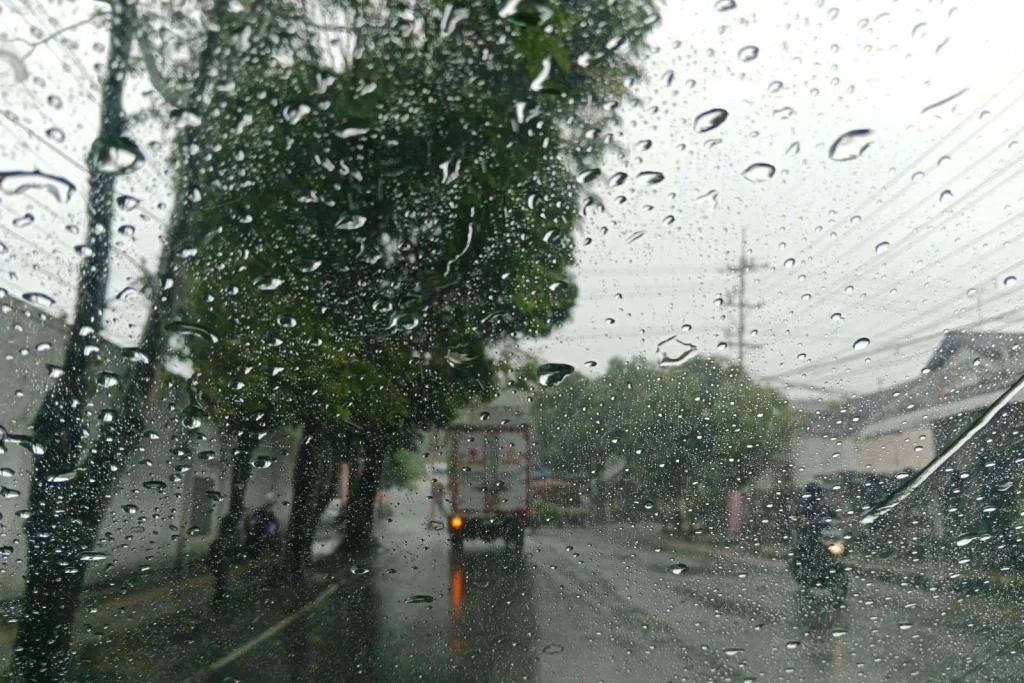
Climate change due to human activity has significantly impacted increasing global average temperatures, including in Banyuwangi Regency, East Java. The impact is felt in several sectors, such as agriculture, tourism, and health. As a preventive measure to minimize the adverse effects that will occur in the future, an accurate prediction of the average temperature of Banyuwangi Regency is needed.
This study investigates the prediction of average temperatures in Banyuwangi Regency, East Java, using the Seasonal Autoregressive Integrated Moving Average (SARIMA) method. Climate change, driven by human activities such as fossil fuel combustion and deforestation, has significantly increased global temperatures, affecting sectors like agriculture, tourism, and health. In Banyuwangi, these impacts are evident, with reduced rice productivity during El Niño events and potential risks to tourism sustainability. Accurate temperature forecasting is therefore crucial to mitigate future challenges.
The research employs monthly secondary data on average temperature from the Central Statistics Agency (BPS) of Banyuwangi Regency, spanning January 2012 to December 2023. The data were divided into training (2012–2022) and testing (2023) sets. Following the Box-Jenkins approach, the analysis ensured data stationarity through differencing and transformation, and candidate SARIMA models were tested for parameter significance, residual white noise, and normality. Among several models evaluated, the probabilistic SARIMA (1,0,0)(0,1,1)12 was identified as the best fit. This model not only accounts for seasonal patterns but also incorporates probabilistic elements, treating parameters and forecasts as probability distributions. Forecasting results for 2023 achieved a Mean Absolute Percentage Error (MAPE) of 1.63%, indicating an accuracy rate of 98.37%. Compared with a non-seasonal ARIMA model, SARIMA demonstrated superior forecasting performance.
The findings confirm that SARIMA is effective for localized climate forecasting and can serve as a reliable tool for supporting adaptive strategies in agriculture, tourism, and policy planning. By providing highly accurate forecasts, this study contributes to better preparedness against the uncertainties of climate change at the regional level. Future research is encouraged to apply this model to longer datasets and different regions to enhance its robustness and generalizability.
Author: Idrus Syahzaqi
Details of the research can be viewed on: https://scholar.unair.ac.id/en/publications/prediction-of-average-temperature-in-banyuwangi-regency-using-sar