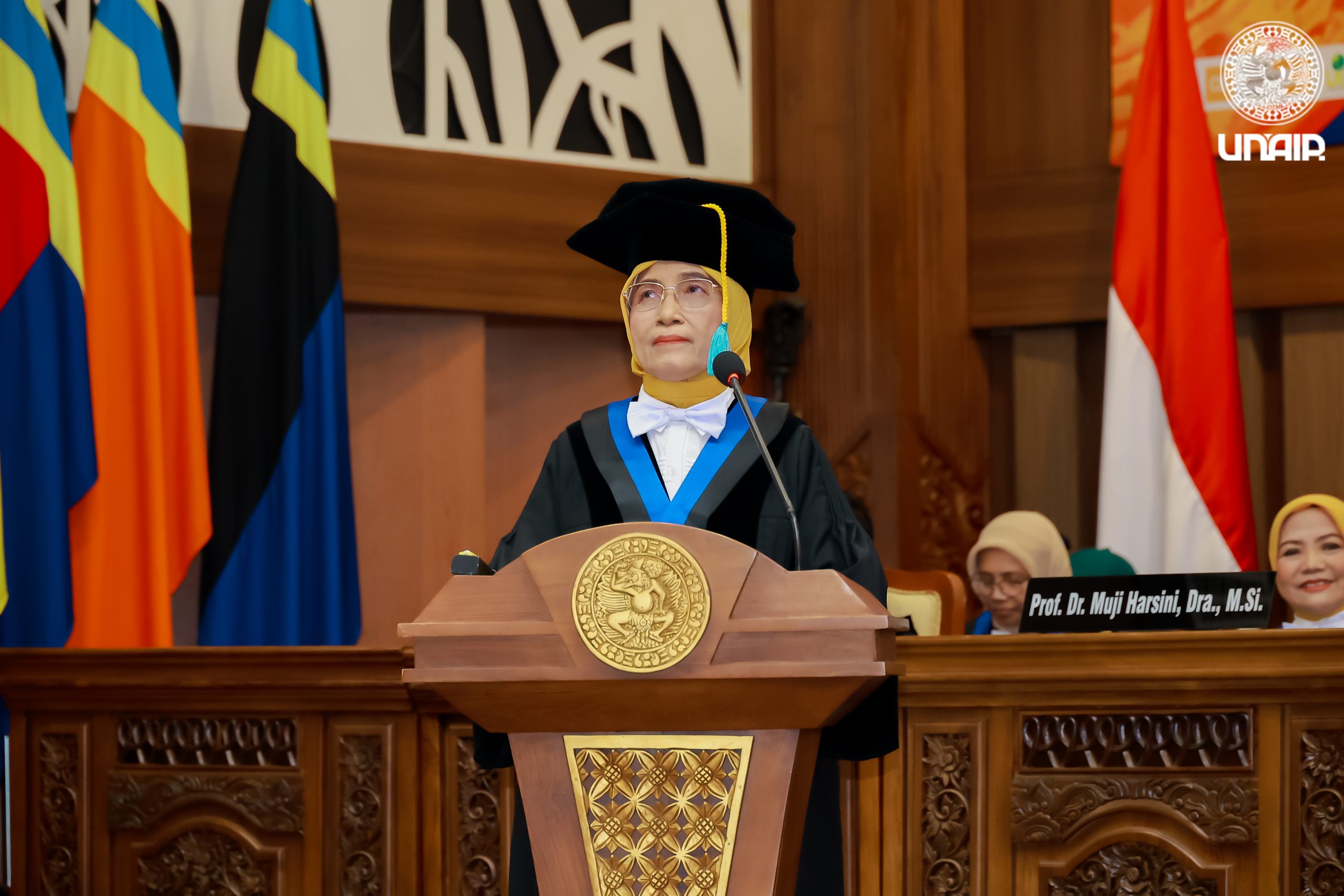
UNAIR NEWS – Lipase is emerging as a highly versatile chemical compound with significant eco-friendly advantages. This potential was the focus of Prof. Dr. Sri Sumarsih, Dra., M.Si., during her professorial inauguration at Universitas Airlangga (UNAIR) on Thursday, May 8, 2025, where she delivered a scientific address on her research findings.
Appointed as a full professor in enzyme technology, Prof. Sumarsih presented her oration titled Innovation in Developing Superior Lipase Through Microbial Screening and Gene Cloning Technology. She explained that lipase serves multiple functions beyond fat hydrolysis—it also facilitates alcoholysis, esterification, and transesterification reactions.
“These properties make lipase an essential catalyst in the production of biodiesel and valuable in industries such as food, pharmaceuticals, detergents, and cosmetics. It also plays a key role in sustainable waste treatment and environmentally conscious paper manufacturing,” she said.
Industrial potential of lipase
Microbial sources of lipase, such as bacteria and fungi, hold strong industrial potential due to their cost-effective, scalable production and capacity for genetic modification to enhance efficiency. Prof. Sumarsih emphasized that the use of enzymes in various industries is growing in response to increasing demands for cleaner, more sustainable processes.

Despite its biodiversity, Indonesia has yet to fully capitalize on this opportunity. “Currently, Indonesia remains dependent on imported enzymes for industrial use. Achieving independence in enzyme production is therefore a strategic goal that must be prioritized,” she remarked.
Advancing lipase research
Prof. Sumarsih outlined two primary strategies for discovering and developing high-quality lipase enzymes: microbial isolation and metagenomic approaches. Microbial isolation involves sourcing microorganisms from natural environments, screening them, and selecting the best strains for laboratory and industrial production.
“In contrast, metagenomics bypasses the need to culture microbes. DNA is extracted directly from the environment—such as soil—and used to create a metagenomic library. This library is then screened for lipase activity, followed by optimization and enzyme characterization,” she explained.
Once promising lipase genes are identified, cloning is essential for replicating and inserting them into host bacteria like E. coli to enable large-scale enzyme production. Prof. Sumarsih cited her collaborative research with the FST UNAIR Biology Department, which successfully expressed lipase genes from Serratia marcescens through gene cloning.
In closing, Prof. Sumarsih encouraged ongoing research and experimentation in lipase development. “Indonesia possesses an extraordinary reservoir of microbial resources. By leveraging modern biotechnological methods, including metagenomics and genetic engineering, we can produce domestically sourced enzymes, reduce reliance on imports, and strengthen national industrial resilience,” she concluded.
Author: Selly Imeldha
Editor: Yulia Rohmawati