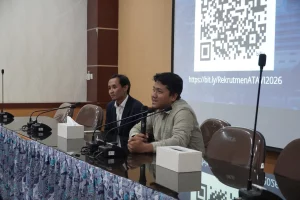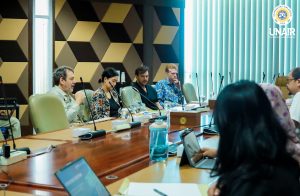


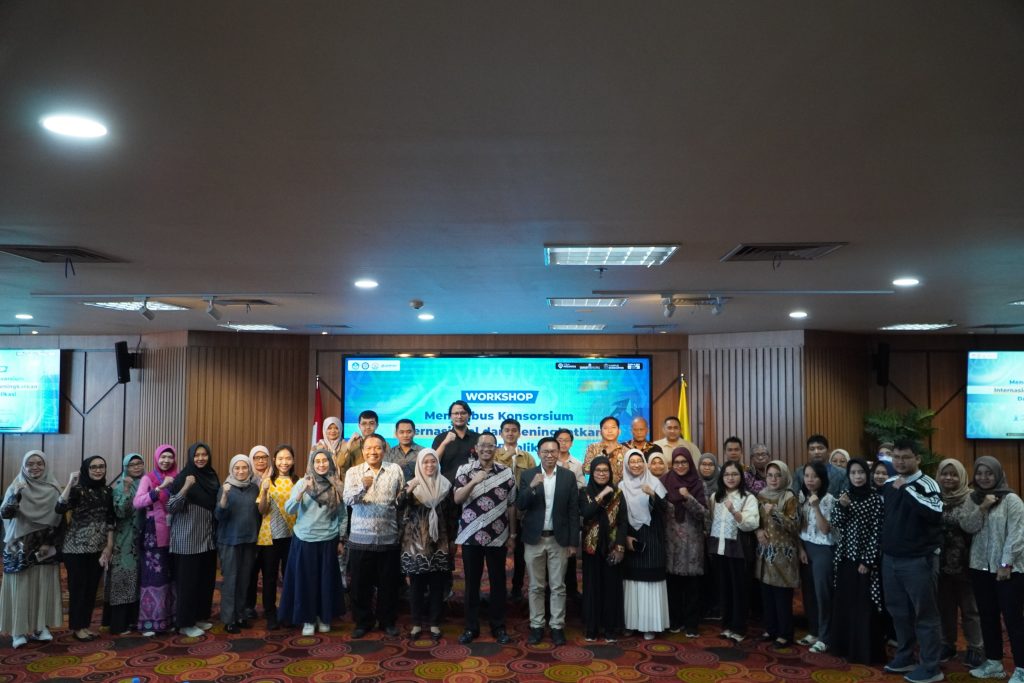
UNAIR NEWS – In an effort to expand international research partnerships, Universitas Airlangga (UNAIR) hosted an introductory workshop on the Global Burden of Disease (GBD) consortium. The event featured Prof. Dr. Muhammad Miftahussurur, MKes, SpPD-KGEH, PhD, FINASIM, Vice Rector for Research, Innovation, and Community Development (RICD) at UNAIR, as the keynote speaker. The workshop was held on Tuesday (January 20, 2026), at Majapahit Hall on the fifth floor of the ASEEC Building, Dharmawangsa-B Campus, and was attended by around 100 faculty members from various academic disciplines.
Workshop highlights GBD Collaboration Framework
The workshop provided faculty members with an overview of the Global Burden of Disease (GBD) as an international research consortium that connects researchers across countries and fields of study. The speaker emphasized that GBD prioritizes data sharing, the use of standardized research methodologies, and collaborative scientific publications within an established and unified data framework.
Through the presentation, participants gained a clearer understanding of the collaborative structure of GBD and the opportunities available for faculty engagement in global research networks. The consortium involves a broad range of institutions, including universities, research centers, ministries of health, and international organizations, all working together as active partners.
“GBD is an international and interdisciplinary research network built on data collaboration, standardized methodologies, and joint publications,” said Prof. Dr. Muhammad Miftahussurur.
Tutorial on becoming GBD collaborator
In the following session, participants joined a technical tutorial that explained the procedures for registering as a collaborator in the Global Burden of Disease consortium. The session introduced the registration process and outlined how researchers can participate in the international research network.
Faculty members were guided through the registration steps, which include accessing the official GBD website, checking registration status, and completing required personal information. The process requires details such as institutional affiliation, language proficiency, and the submission of a curriculum vitae as part of the initial application.
Participants also received an explanation of the consortium’s membership requirements. One key condition is the completion of a mandatory one-month training program before becoming actively involved. Accounts that fail to meet this requirement may be deactivated, highlighting that registration alone does not automatically grant active collaborator status.
Through this workshop, Universitas Airlangga aims to provide faculty members with a comprehensive understanding of international research collaboration mechanisms. The initiative is expected to encourage greater faculty member participation in global academic networks and further strengthen UNAIR’s role in international, cross-institutional research partnerships.
Author: Era Fazira
Editor: Ragil Kukuh Imanto