


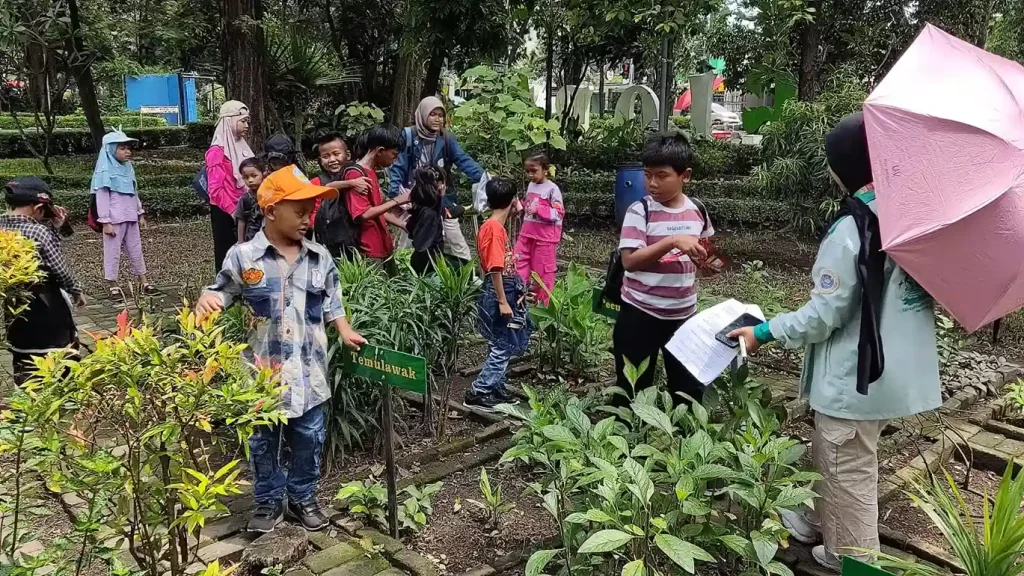
UNAIR NEWS – The Research and Development Department of SCOLAH-UNAIR Mengajar for the 2025/2026 term organized an educational activity titled Educational Visit: Early Preparedness for Building Resilient, Environment-Centered Generation. Held at Taman Flora Surabaya on Sunday (11/30/2025), the program brought together 51 children from Rumah Belajar Insani Panjang Jiwo and Rumah Belajar Surga Sukomanunggal, both of which are supported by the organization.
Upholding Tri Dharma of Higher Education
Shafrina, Head of SCOLAH-UNAIR Mengajar 2025/2026, said the activity serves as a tangible expression of student involvement in carrying out the Tri Dharma of Higher Education. “We are carrying out community service with a focus on basic education. Through education, we build the nation from its foundation—its children,” she emphasized.
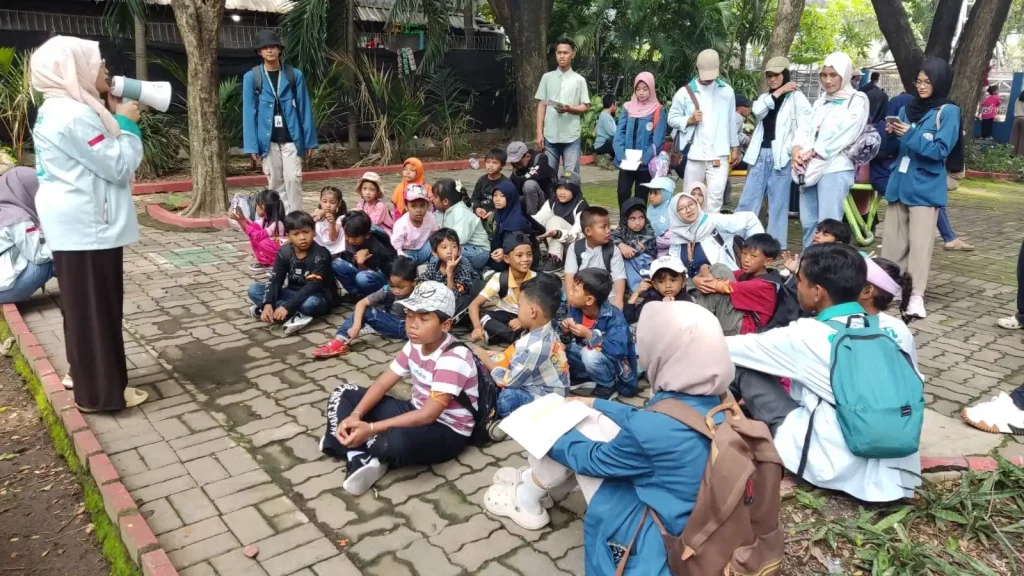
She added that many children in Surabaya do not have the same access to schooling or outdoor learning opportunities. As a result, UNAIR Mengajar strives to open doors and provide memorable new experiences. “Many of them have never taken part in a field-based study tour. We want them to experience something that not all children can,” she said.
Beyond expanding knowledge, the program also aims to enhance public literacy. According to Shafrina, their educational efforts continue even after the activity ends. “We always follow up with written reports and educational content on Instagram, Medium, and YouTube. That way, our work in the field is supported by efforts to raise broader public awareness,” she explained.
Encouragement and environmental education
Ilham Insanul Rajizi, the Program Lead for the Educational Visit, added that the initiative also serves as a token of appreciation for children who consistently attend learning center sessions. During the visit, they were introduced to local plants and animals, from species living within Taman Flora to medicinal plants found in the Taman Toga area. “Flora and fauna are part of our everyday environment, yet we often feel disconnected from them. In reality, environmental quality depends heavily on how humans interact with nature,” he said.
Rajizi emphasized that the program is entirely free to help sustain the children’s enthusiasm for learning. “We hope the kids become more aware of their surroundings, whether animals or plants. By protecting their ecosystems, we can ensure a better quality of life for ourselves in the future,” he concluded.
Author: Panca Ezza Aisal Saputra
Editor: Yulia Rohmawati