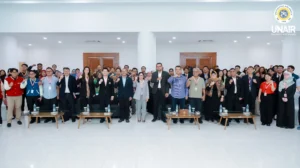


UNAIR NEWS — The 17 Sustainable Development Goals (SDGs) outlined in the global agenda have become a major priority for Universitas Airlangga (UNAIR), which continues to take strategic steps to contribute meaningfully to these goals. One such initiative is the Training of Trainers (ToT) on SDGs, held over two days—Monday, July 21, and Tuesday, July 22, 2025—at the Bayu Kinara Room, Airlangga Convention Center (ACC), UNAIR’s MERR-C Campus.
Hosted by the UNAIR SDGs Center, the event aimed to strengthen UNAIR academics’ capacity to support the implementation of the SDGs. Through the 2025 ToT program, participants are expected to create real-world impacts and contribute to building a sustainable future. The training also reaffirms UNAIR’s ongoing commitment to advancing the SDGs on both a local and global scale.
Embracing role as agents of change
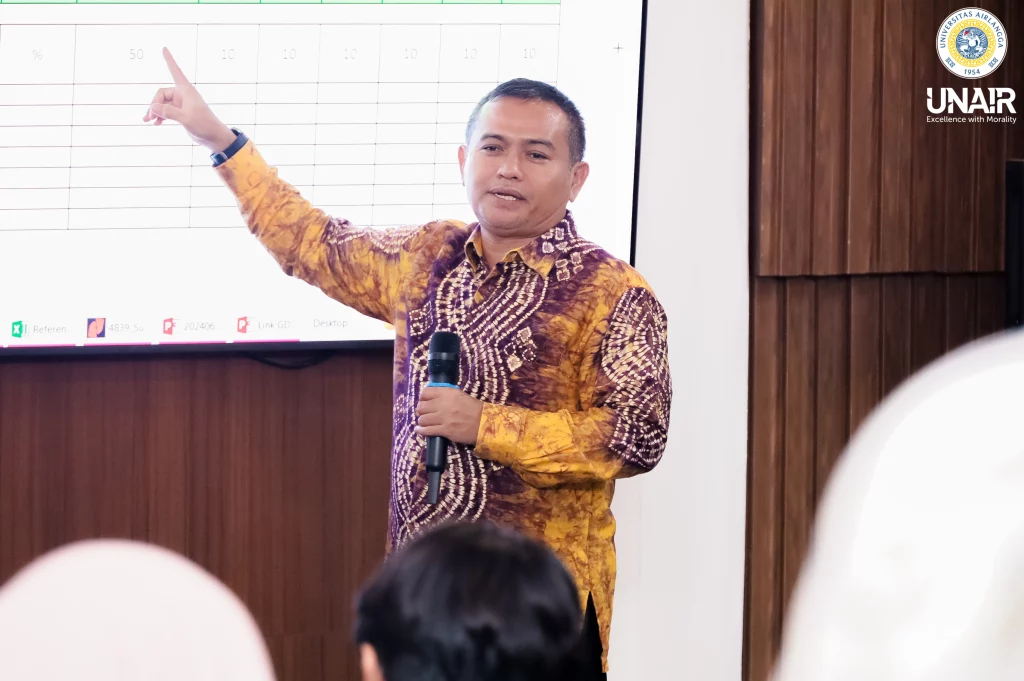
The second day of the ToT included a hands-on session on developing Regional Action Plan (RAD) matrices and conducting monitoring and evaluation (Monev), facilitated by Rachman Kurniawan, Manager of the Environmental Development Pillar at the National SDGs Secretariat (Bappenas). He introduced the platform sdgs.bappenas.go.id, which offers a comprehensive collection of resources such as regulations, technical guidelines, reports, and downloadable SDG data.
Kurniawan discussed two approaches to regional development under the SDGs framework: the technocratic approach, which is grounded in academic research, and the political approach, which aligns with the vision and mission of local government leaders. He noted that regional legislative bodies (DPRD) are responsible for overseeing the execution of such policies.
Kurniawan also shared his hopes for the attendees and explained the rationale behind the broad establishment of SDGs Centers across Indonesia. “We genuinely hope all of you become agents of change in your respective regions. From past experience, we’ve seen that trained individuals often move on from their roles, leading to a loss of valuable knowledge. That’s why we’ve expanded the SDGs Centers — to ensure that knowledge is preserved and institutionalized,” he said.
Follow-up and ongoing support
To ensure lasting impact, the ToT program includes a follow-up and monitoring phase. Selected participants will receive ongoing support and periodic assessments to help them apply and disseminate SDG knowledge within their professional communities and sectors. The training concluded with a ceremonial exchange of souvenirs from the UNAIR SDGs Center to Bappenas, symbolizing their shared commitment to advancing sustainable development.
Author: Khumairok Nurisofwatin
Editor: Khefti Al Mawalia