

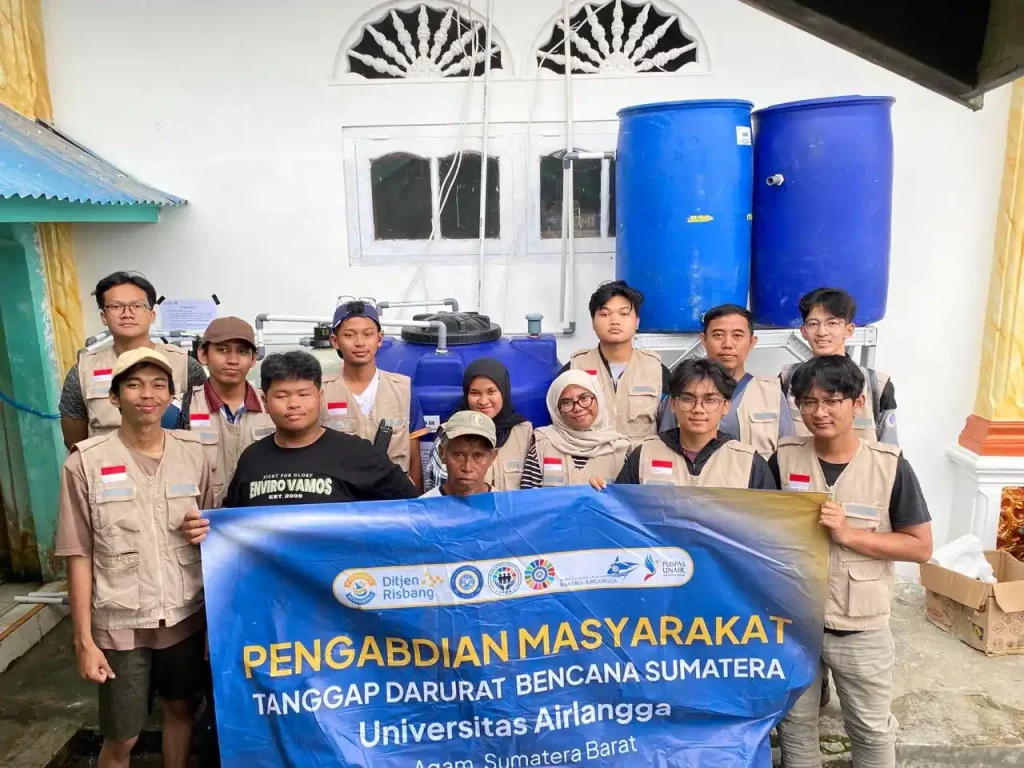
UNAIR NEWS – Nearly three weeks after devastating floods and landslides, several basic services in affected areas have yet to fully recover. In addition to damaged roads and collapsed bridges that continue to disrupt mobility, access to clean water remains a pressing issue. In Limo Badak Hamlet, Malalak Subdistrict, Agam Regency, residents are still struggling to obtain safe water after their primary sources were contaminated and damaged by the disaster.
Responding to the situation, lecturers and students from Universitas Airlangga’s (UNAIR) Faculty of Science and Technology (FST), who are also part of the university’s Disaster Emergency Response Team, moved quickly to support recovery efforts by installing a water filtration system. The team traveled from Surabaya to Padang on Saturday (13/12/2025) and carried out site assessments, installation, and final system setup, which was completed on Thursday (18/12/2025).
Installation process
Danar Arifka Rahman, ST, MT, an FST lecturer who was directly involved in the fieldwork, said the filtration system was designed to help restore access to clean water and proper sanitation for residents affected by the disaster. He outlined the installation stages, including selecting the installation site and identifying viable water sources. Limo Badak is among the hardest-hit areas in Malalak Subdistrict, where residents set up a communal kitchen near a mosque that also functions as a gathering and evacuation center.
“For clean water distribution, we utilize a community water reservoir fed by a continuous flow from higher ground. The water is collected in a storage tank and then pumped through the filtration unit. The filtered water can be used for cooking, drinking, and other daily needs,” Rahman explained.
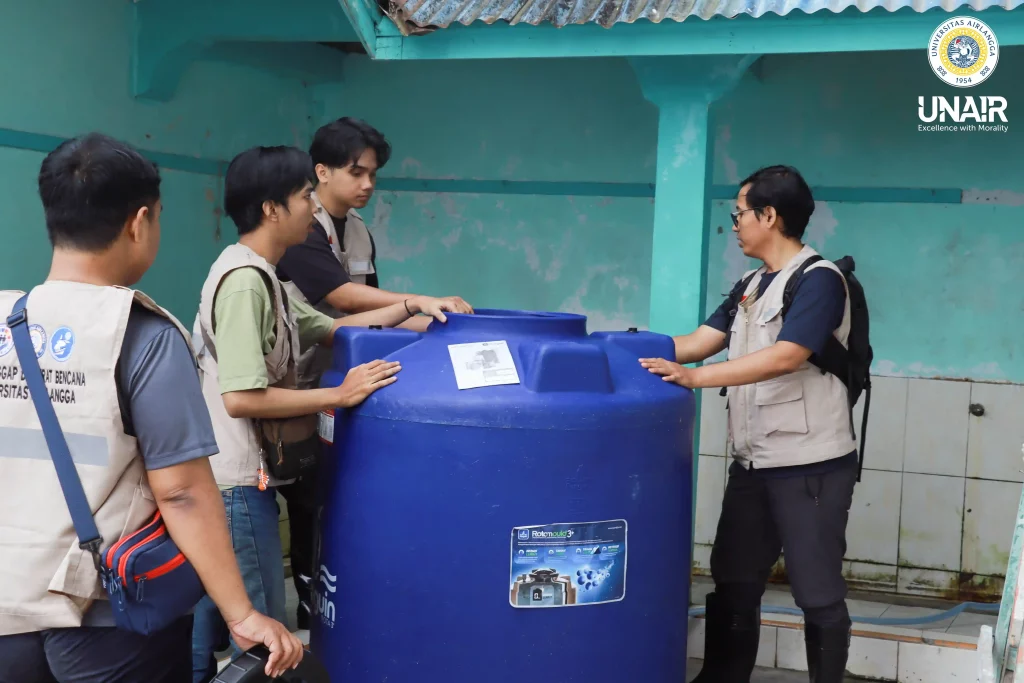
To ensure the system operates effectively over the long term, the team also conducted community outreach on proper maintenance. “We’ve shown residents how to clean the filters so the system can remain in use. With routine maintenance, the installation can last for many years,” he said.
New source of hope
Rahman expressed hope that the filtration system would ease daily hardships for the Limo Badak community as they recover from the disaster. “I hope this modest effort can truly help the people here. With proper guidance on its use, we expect the system to remain durable and continue serving the community,” he said.
For residents such as Rio Hanafi, the new filtration facility has been crucial in sustaining everyday life. In the aftermath of the disaster, many routine activities were disrupted when local water sources became unusable.
Hanafi said he hopes the system can be maintained and used collectively by the community. “People in Limo Badak are committed to working together to care for this facility. We hope it can continue functioning and benefiting the community for years to come,” he said.
The installation of the water filtration system reflects progress toward several Sustainable Development Goals (SDGs), particularly SDG 6 on Clean Water and Sanitation, by restoring access to safe water for flood- and landslide-affected communities. The availability of clean water also supports SDG 3 on Good Health and Well-Being, as the filtered water is used for drinking and cooking. In addition, post-disaster recovery efforts that restore essential services align with SDG 11 on Sustainable Cities and Communities and SDG 13 on Climate Action as adaptive responses to disaster impacts.
Author: Yulia Rohmawati