

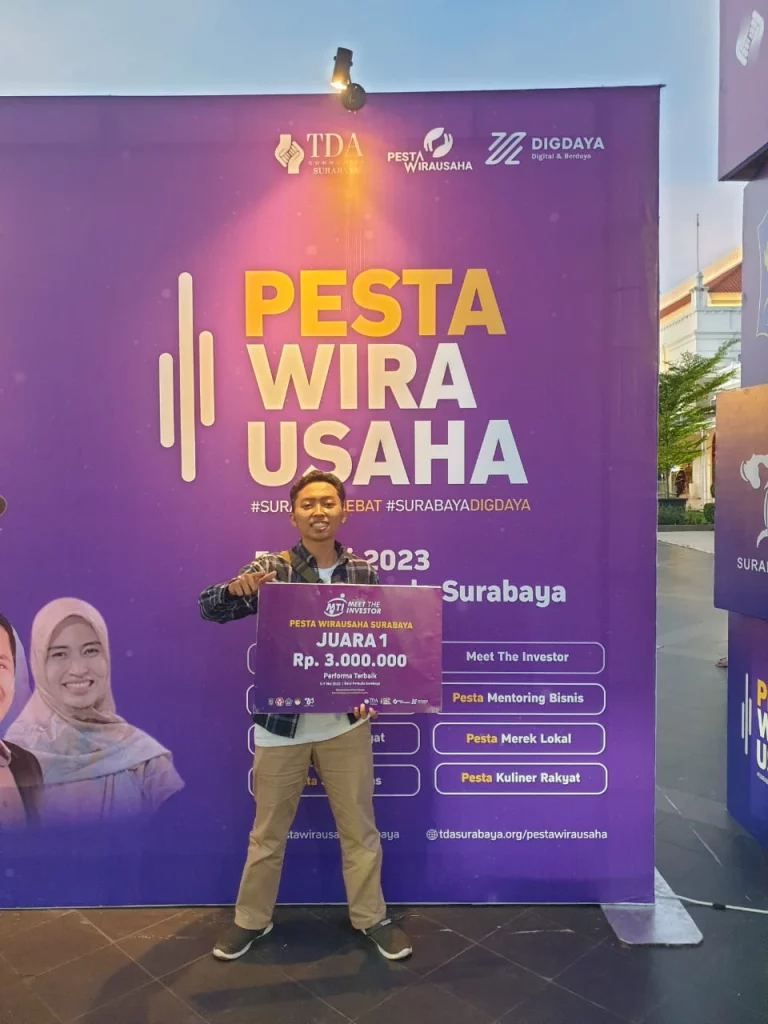
UNAIR NEWS – Entrepreneurship is more than a pursuit of profit; it is a long journey marked by challenges, courage, and continuous learning. That journey reflects the experience of Difandi Wahyu Hibatur Rahman, a Mathematics alumnus from UNAIR’s Faculty of Science and Technology (FST). He successfully built MASPOKAT, an avocado–shake business that now operates multiple outlets across Surabaya and Sidoarjo.
Turning hardship into opportunity
Rahman explained that the origin of MASPOKAT was rather unexpected. He first launched a custom notebook and binder business called Tribook.id with his high-school friends. However, the COVID-19 pandemic and the resulting mobility restrictions caused the business to decline. Refusing to give up, Rahman and his team worked to transform adversity into opportunity. Their efforts eventually led to the launch of a new venture in 2020.
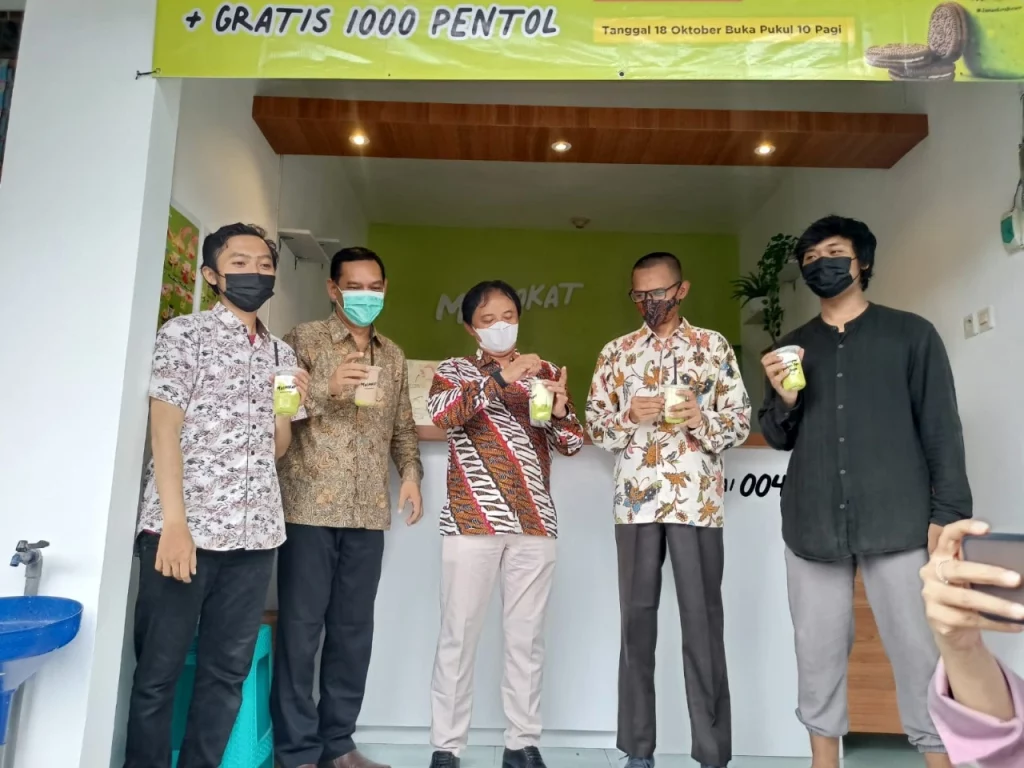
Before starting MASPOKAT, he conducted market research targeting Generation Z. Through surveys, he found that Gen Z consumers had begun to grow tired of once-popular drinks like boba. “So I researched avocado-based drinks on YouTube and Google. We experimented, tested them in the market, gathered feedback, evaluated what needed improvement, refined the product, and launched it again,” he said.
Launching a business at such a young age was not easy. As a student, Rahman had to manage his time, energy, and focus so that both his academics and business could progress together. “My biggest challenge during college was time management. I was studying, running a business, and serving as the student association chair. It was tough. But I was helped a lot by my team, we delegated responsibilities and worked efficiently,” he explained.
Creating impact
Today, Rahman’s business continues to grow. MASPOKAT not only generates financial profit but also contributes to economic, social, and environmental development. Economically and socially, the business has empowered avocado farmers and created job opportunities for young people.
“We also empower those around us, such as recent vocational-school graduates who are looking for experience or work. We train them to become MASPOKAT baristas so they can build foundational skills and gain experience for future job applications,” he said.
Environmentally, MASPOKAT minimizes waste. Avocado pits left after processing are not discarded; instead, they are returned to farmers as seeds for replanting. “In my conversations with farmers, many told me they often struggle to find avocado seeds. As for the skins, we use them as livestock feed,” he added.
He hopes his business will continue to grow and expand its positive impact. “My hope is to help more people and create meaningful benefits for the environment,” he said.
Author: Yulia Rohmawati