

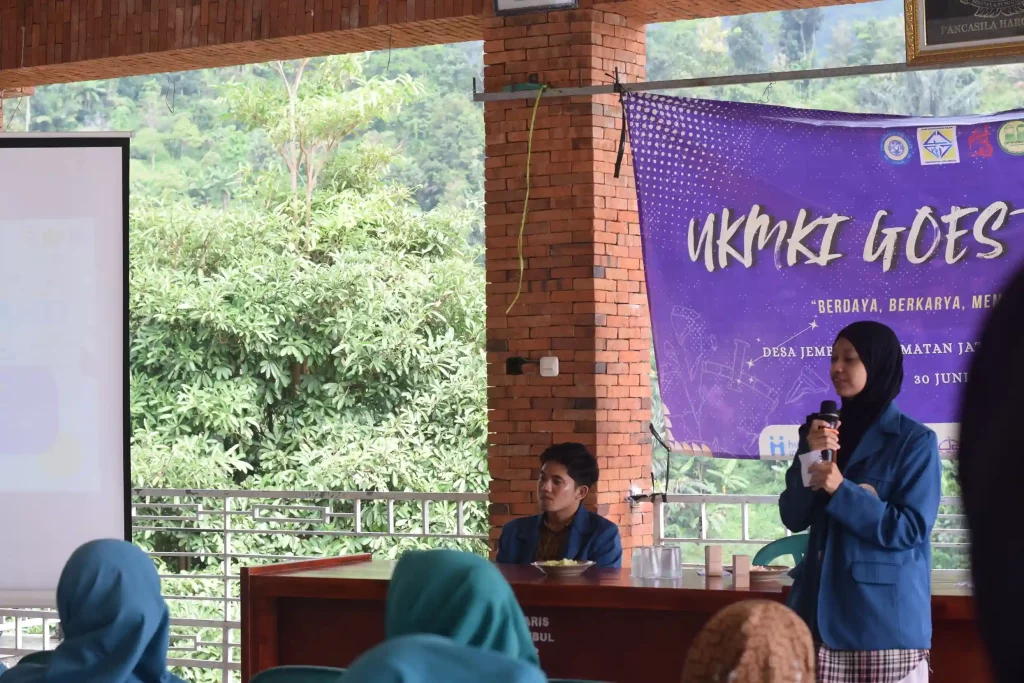
UNAIR NEWS – Coffee husks, once considered useless agricultural waste, are now becoming a new source of income for residents of Jembul Village, Mojokerto. Through a training program organized by Universitas Airlangga’s Islamic Spiritual Student Activity Unit (UKMKI UNAIR), villagers are learning how to turn post-harvest coffee waste into aromatic candles with commercial value.
Held over three days—from Tuesday to Thursday (July 1–3, 2025)—at the Jembul Village Hall, the program engaged 43 participants, including women from the PKK (Family Welfare Movement) and youth from Karang Taruna. Employing a community-based training (CBT) approach, the initiative went beyond teaching technical skills by equipping participants with business and sustainability know-how.
Held over three days—from Tuesday to Thursday (July 1–3, 2025)—at the Jembul Village Hall, the program engaged 43 participants, including women from the PKK (Family Welfare Movement) and youth from Karang Taruna. Employing a community-based training (CBT) approach, the initiative went beyond teaching technical skills by equipping participants with business and sustainability know-how.
Three days toward economic empowerment
The first day of training focused on introducing the concept of a circular economy. Participants were taught about the lifecycle of coffee husk waste and the opportunities that arise from sustainable waste management.
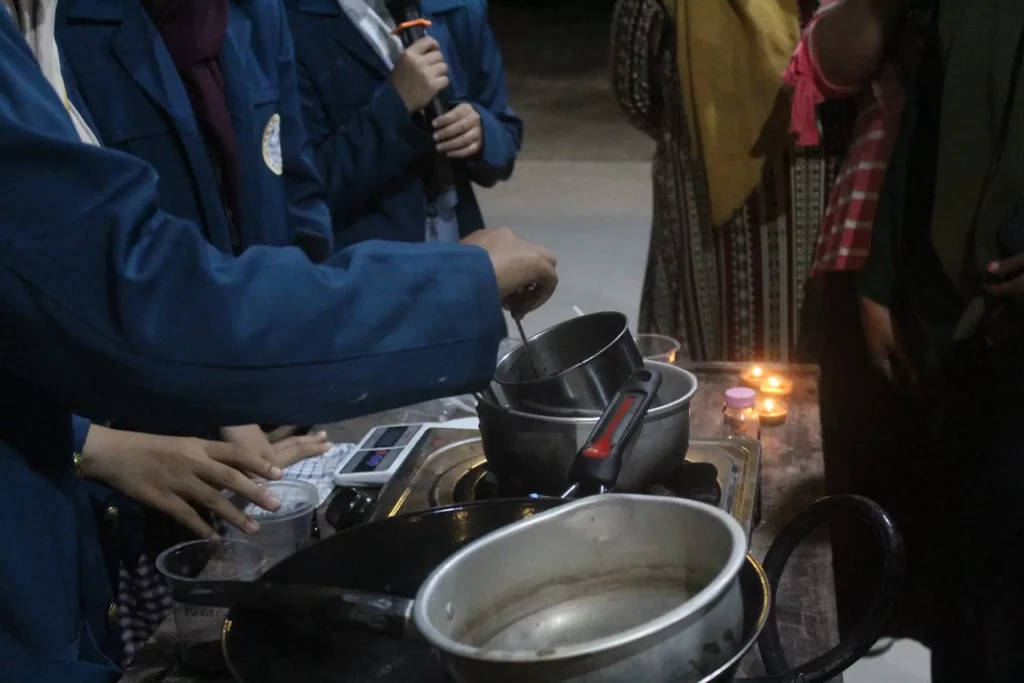
On the second day, participants engaged in hands-on practice, learning the full candle-making process—from blending ingredients and formulating mixtures to molding and packaging. The standard formula used was developed through eight rounds of testing and includes soy wax, paraffin, ground coffee husks, and coffee-scented essential oils.
The third day focused on branding and digital marketing. Participants received training on how to create appealing product visuals, develop brand identities, and sell products via social media platforms. The ultimate goal was to spark independent entrepreneurship at the village level.
“By teaching not only how to make candles but also how to brand and market them, this program lays the groundwork for sustainable village enterprises,” said Habib Muhammad Al Khaq, Student Coordinator of UKMKI’s ‘Goes To Village’ initiative.
Lasting impact and SDGs commitment
This initiative addresses real challenges in Jembul Village, including excessive coffee waste and limited income among farmers. It is projected to boost participant income by up to 20% within the first six months. Environmentally, the program could reduce waste by as much as 90%, while socially, it aims to raise entrepreneurial interest by 50%.
It also supports key United Nations Sustainable Development Goals (SDGs), particularly: SDG 1, No Poverty – by improving household incomes; SDG 8, Decent Work and Economic Growth – through entrepreneurship training; SDG 12, Responsible Consumption and Production – by promoting circular waste management. “What sets this program apart is its comprehensive approach. It doesn’t just teach how to make a product—it teaches how to build a business around it,” said Al Khaq.
Community response has been highly positive. Several Karang Taruna members who initially attended out of curiosity ended up actively participating in the candle-making process. To ensure continuity, UKMKI UNAIR is encouraging the formation of a Joint Business Group (KUB) so that coffee-based candle production can continue independently and become a signature economic activity of Jembul Village.
Author: Samudra Luhur Pambudi
Editor: Yulia Rohmawati